
12 Dec 2025

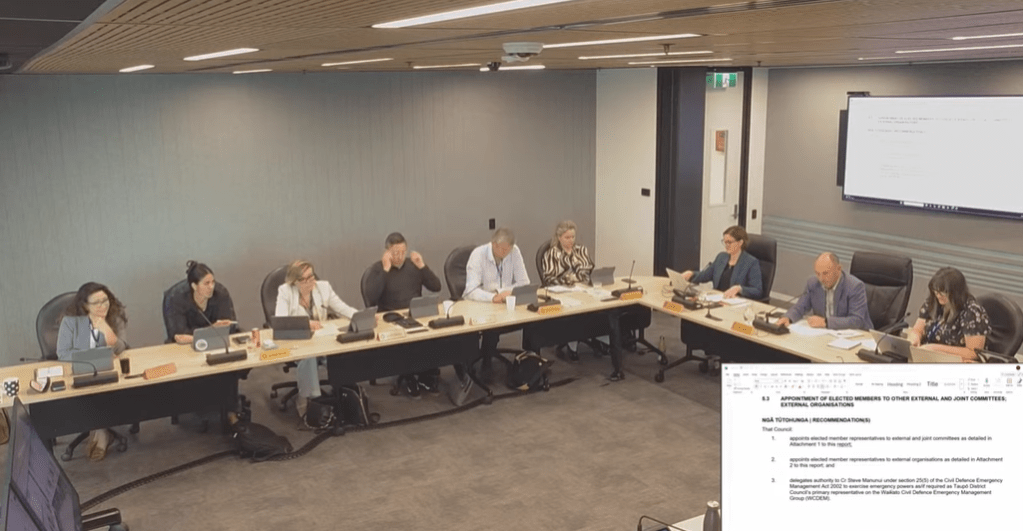
Councilor Duncan here again, and although it has got a little cooler outside in the last 24 hours it hasn’t much in Council Chambers. Less than one week to go before we break until February, I know Council stuff can get pretty tiresome and a lot of you are already tuning out with Christmas nearly upon us, but here it is anyway.
We have the last full Council Meeting at 1pm next Tuesday 16 December, and you can have a look at the agenda here. The only thing I have spotted of much interest is Item 5.9 being the approval of elected members salaries (and only the Mayors is a set number, the rest are subject to negotiation with the only limit being that the total must equal our mandated pool of $569,734) – because until we do that we won’t be getting any money in our bank accounts for the good work we do. But there are also a couple of other things happening next week which may be of interest.

The first is on Thurs Dec 18 from 10.30 am which is a 30 min presentation open to public viewing and being live recorded on the topic of the Joint Management Agreement (JMA). The presenter is one Paul Beverley, an experienced Treaty lawyer based in Wellington. I did a google research on Mr Beverley, and it seems that typical with this sort of thing, he is not exactly coming from a completely unbiased viewpoint as this article pointedly asserts (I have heard him described as just another lawyer on the Treaty gravy train).

I think one of the first things that needs to be established about this JMA, and which has previously been very muddied, is to establish what are the mandatory matters which Council has to sign up to, and what are the optional extras we don’t? On that point elected members were recently sent this very well put together two-page document from the Taupo Residents Group which makes some very reasonable assertions. However, my request to our Chief Executive to get a written response from Mr Beverley in advance of the meeting has been steadfastly refused, and it seems that flying him up from Wellington for what I suspect is intended as a 30 minute public relations exercise is more important instead. So my advice for this second round of the JMA saga going forward: Be prepared for more doses of spindoctoring. That way you won’t be disappointed, and can be pleasantly surprised if it goes any different.

Also on Thursday and immediately after the JMA session, elected members are having a workshop induction session on Procurement and Delegations (public excluded). This issue of elected members only getting cursory overview of significant financial and infrastructure decisions has been bugging me for a some time now (if any of you have noticed), and one of my 2025 campaign pledges to rectify is to take back control from staff via these Delegated Authorities (i.e. making elected members the signatory approvers of individual items). Because if we don’t get some more accountability of the spending to start happening, I see little hope in getting your rates bill down.

So I started to do a little research on how the current situation came to be, whereby the only real financial oversight we are granted is once a year during a rushed Annual or Long Term Plan exercise when there is never enough time to properly scrutinise even a fraction of the hundreds of line items run past our noses in the space of just a few weeks. And as it turns out, this current setting came about only not long before my inauguration in 2022! Because in item 4.9 of the Council meeting of 25 November 2021, the then elected members effectively handed financial oversight almost completely over to the Chief Executive! This is smoking gun evidence indeed, and if you find this hard to believe then I suggest you read the full item here. This was the adopted recommendation from 2021:
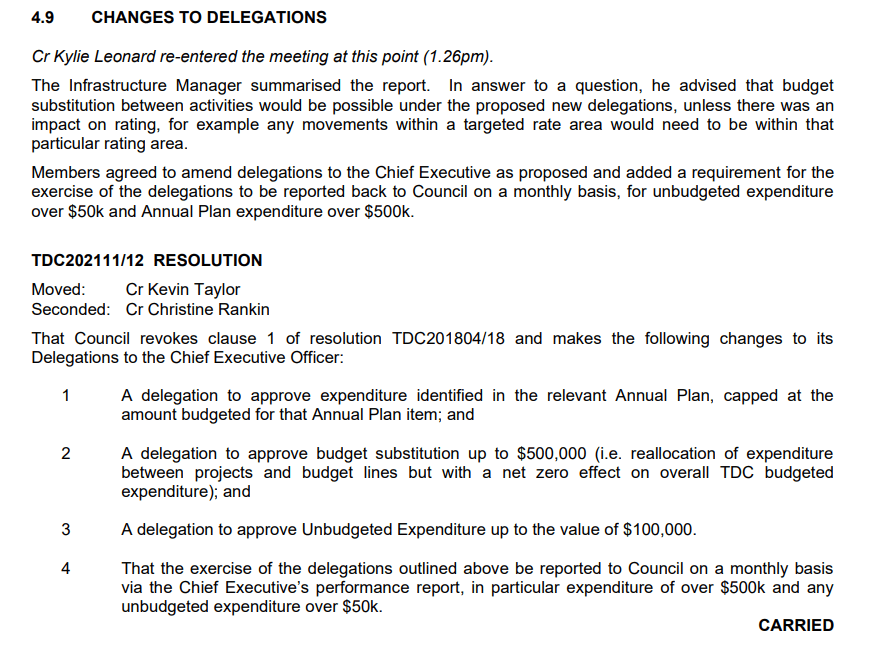
I must say they made it sound quite dandy that Council could be more efficient if staff have less paperwork justifying what they get up to, and only at the seemingly trivial expense of more comprehensive scrutiny by elected members. But the staff presented summary for that 2021 paper fairly well spells it out if you read between the lines, so I really cannot blame them:
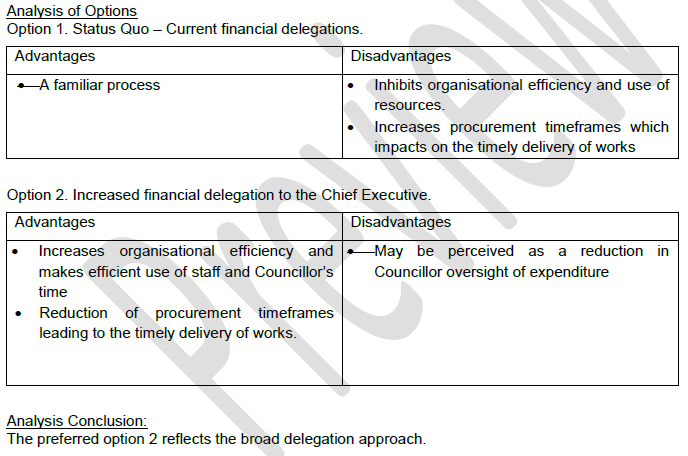
So from that day onward the Chief Executive effectively gained almost complete control of expenditure, and now only has to check in with elected members if a line item exceeds $500K more than what was allocated for it in an Annual or Long Term Plan (and they can shuffle money around up to that figure, provided it does not exceed the total Council budgeted annual expenditure). Prior to November 2021, it looks as if any item over $500K was subject to at least some level of scrutiny by elected members because it required their official approval before it could happen, and although the Chief Executive had previously tried the same thing on in April 2018 (Item 5.14) elected members of that time only partially relented by increasing his spending limit from $250K to $500K).
I have also discovered that many Councils have what is called a Finance and Performance Committee, which means that any expenditure over a certain value and whether or not it is already approved on an Annual or Long Term Plan, must be run past that committee first (for example here is the Christchurch City Councils terms of reference document). But Taupo District Council has clearly headed in the completely opposite direction, with the concluding statement from November 2021 more or less stating that such scrutiny is an unnecessary burden:
“The suggested change increases organisational efficiency, makes efficient use of staff and Councillors’ time and enables the timely delivery of works”.

I say: What a load of complete codswallop. It is a simple fact of human nature that if you make people more directly responsible for something then you will get more scrutiny and accountability happening – and that applies to elected members just like anybody else. In my own professional area of traffic design, I have come across works which could have been done for a fraction of the price and be just as or nearly as effective. That alone gives me little confidence that unrestrained spending isn’t happening elsewhere, and speaking as an engineer/consultant/former Council staffer – I know there is little incentive in the machine of local government to do things cheaper or outside the square. Elected members need to get back in there and take back the reins from staff, and it simply has to happen if we are going see any meaningful reduction in unnecessary expenditure. So wish me luck next Thursday when this thing gets debated behind closed doors.
Apart from the above, I could only find a few of things worth mentioning:

Resource Management Act (RMA) getting scrapped: For all you need to know about the RMA reforms, this article from Crux is as good a guide as any. I don’t have any firm opinions on this, except as a practicing engineer who does dabble in consent applications from time to time, I must say it will make life a lot simpler when every Council doesn’t have its own bespoke District Plan to sift through like they do now. But Taupo District Councillor Wahine Murch also gives her fair enough summary here, and in particular how she perceives it might affect Tangata Whenua interests.
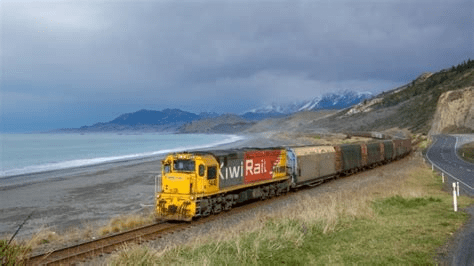
NZTA can do better: I attended the Waikato Regional Transport Committee Meeting in Hamilton on Monday where a few things got discussed including the revelation that improving State Highways only diminishes the competitiveness of rail freight, and next year we will be reviewing the six-year Regional Land Transport Plan (RTLP) – so this group might be able to help push local projects like improvements to the Turangi-Taupo SH1 connection if we can convince the other member Councils they will also benefit (which doesn’t seem a very easy thing to do). In the meantime, through our Regional Council rates we are all subsidising the Hamilton to Auckland rail commuter service to the effect of $30 per passenger every weekday that it operates (around a few hundred passengers a day for a 2.5hr trip each way).
But most substantially noticed was the unscheduled and unadvertised 50min complete stop for roadworks I experienced coming home in the late afternoon on SH1 just north of Oruanui Road. It seems to me that nowadays travelling on SH1 north of Taupo has become quite unpredictable in the roadworks summer seasons especially, and evidence is suggesting that more and more people are regularly settling on alternative routes on our local roads to avoid it.

The only people who can do anything about all this is NZTA because they control their works schedule, and even though they are are offering compensation to Councils for the damage these diversions cause to local road networks (exact figures were not mentioned), I think we as a Council could start considering Heavy Vehicle Restrictions on some of our local roads (relevant outside the times of complete SH1 closures). NZTA will also need to consider doing more of their works at night as happens like clockwork on the Auckland Motorways, and there is not much doubt that they need to vastly improve their communications to the public.
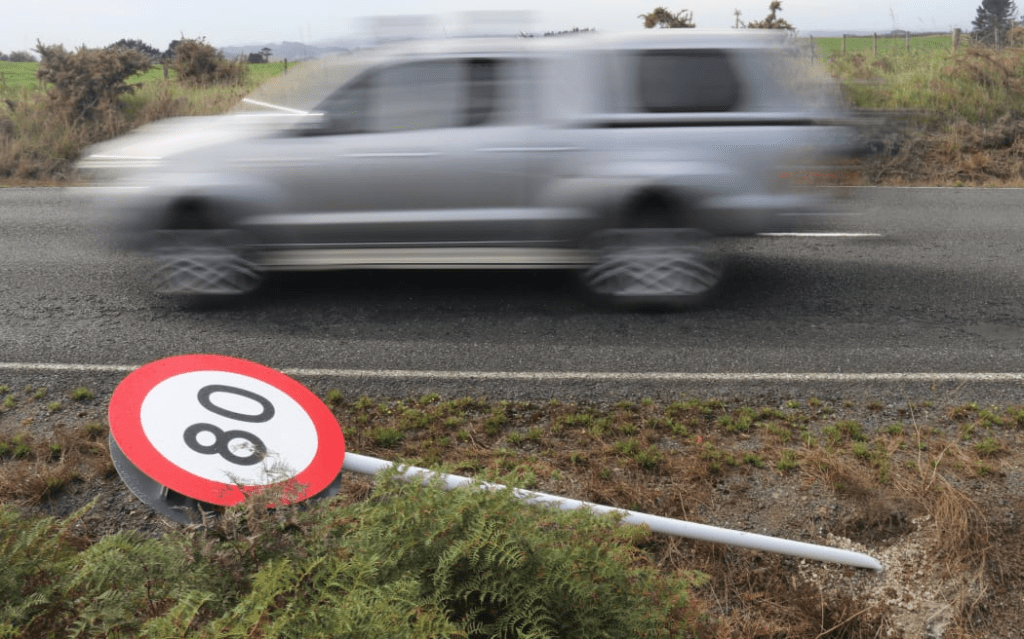
Motutere reverts back to before: Breaking news is that the 60 km/hr speed limit is going to be back at Motutere before Christmas as per this Herald report which includes a typo of 50 km/hr. I don’t think anybody is going to be very disappointed in that.

Financial debate of the century? Sounds like the mooted debate between Finance Minister Nicola Willis and Taxpayer Union’s ex-Finance Minister Ruth Richardson is getting tricky to arrange, but I do hope it goes ahead because it sounds as if it could be quite interesting.
Fridays nostalgic groove from a long way away and a long time ago:




































































 duncandoestaupo.com