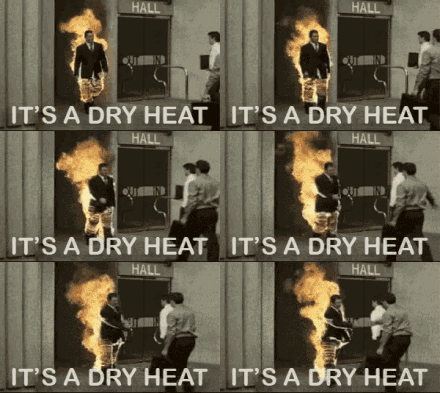
Friday Wrap – This Council is Broken

15 August 2025

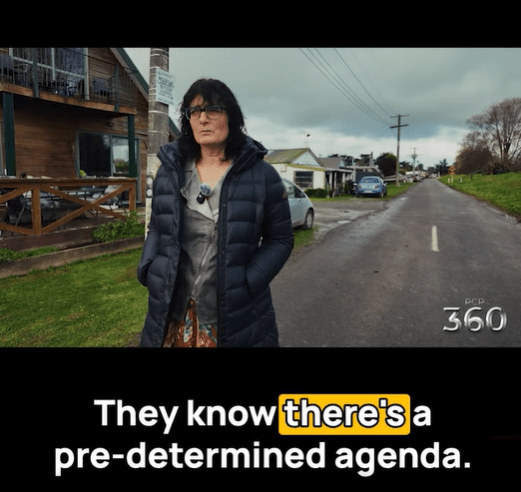
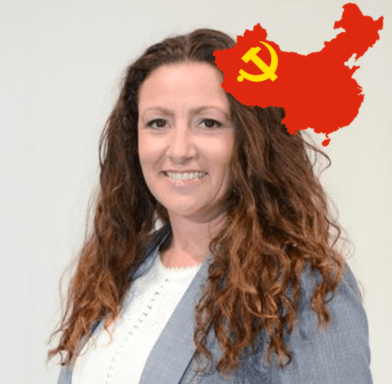
Councillor Duncan here once again, and now we’re heading into the front end of the election campaign some new faces are starting to appear. One of them, Māori ward candidate Wahine Murch, is calling for a revolution in democracy, governance, and leadership. I may not agree with her on everything, but on this point we’re aligned – this Council is a poor imitation of what it is meant to be for the people it purports to represent, and it has been going on for way too long. It is broken and needs to be rescued.

But talk is cheap, and especially at election time. Belief in good ideas is one thing – delivering under pressure is another. Voters should ask candidates, and especially incumbents who should have been evidencing this to you already: When did you last hold your ground against determined opposition? When did you stand apart from the herd? Walking the talk is harder than it looks, and if you dislike playground politics, you may dislike the reality of local government even more.

Meanwhile, Council is in near-hibernation because our illustrious Mayor apparently finds it too uncomfortable to meet and talk about any issues before the election. Still, a few things are going on:

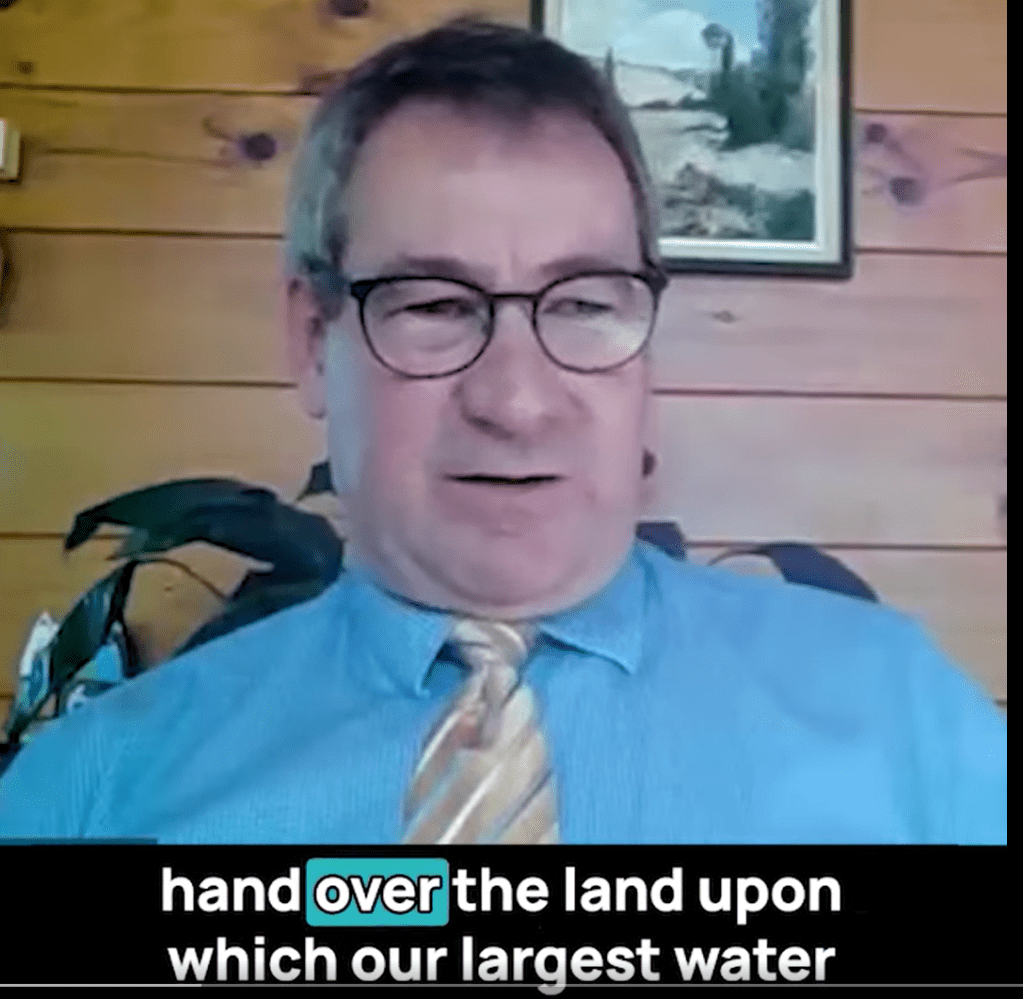
Councillor Duncan speaks out – Here is my interview with Erica Harvey of Tauranga based Lobby For Good covers how local government protects itself from scrutiny – from both the public and elected members put in there to govern.

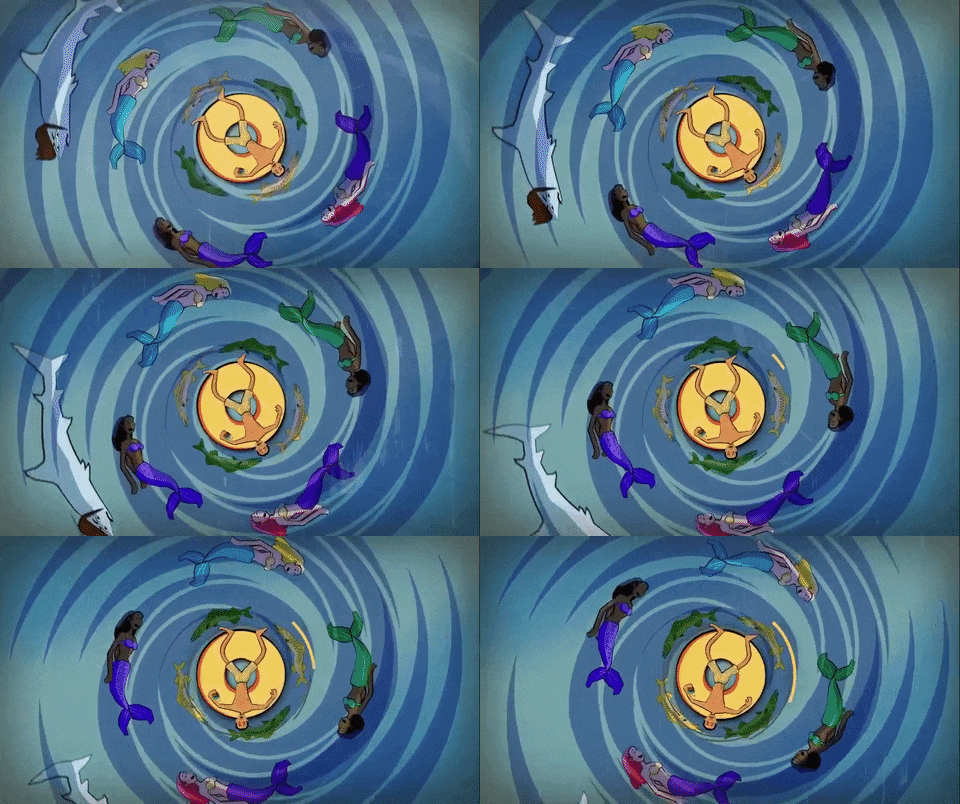
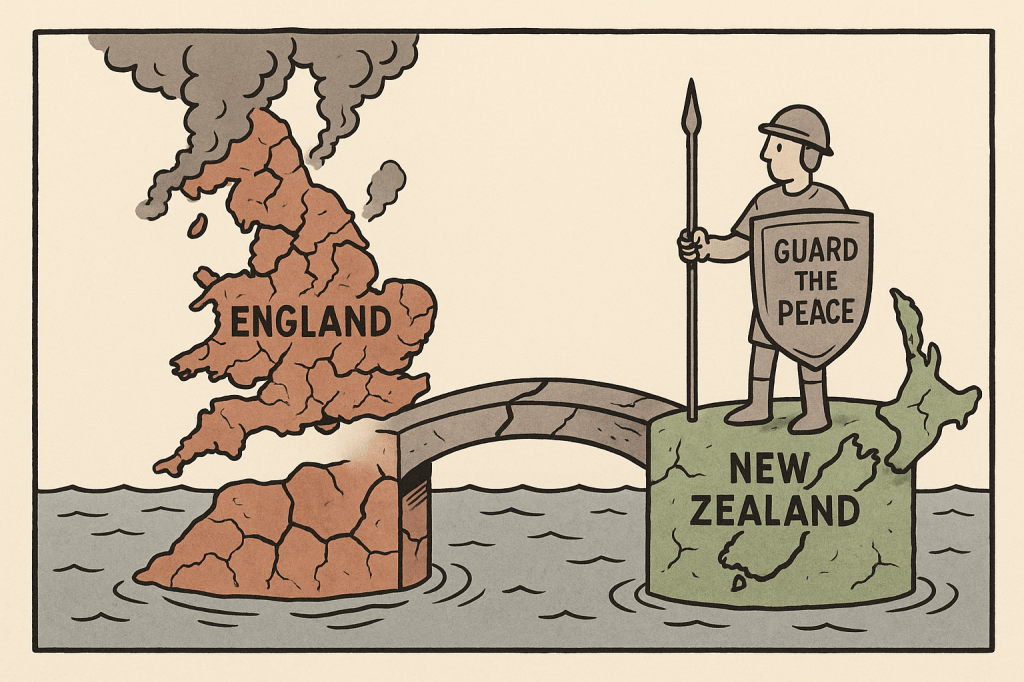
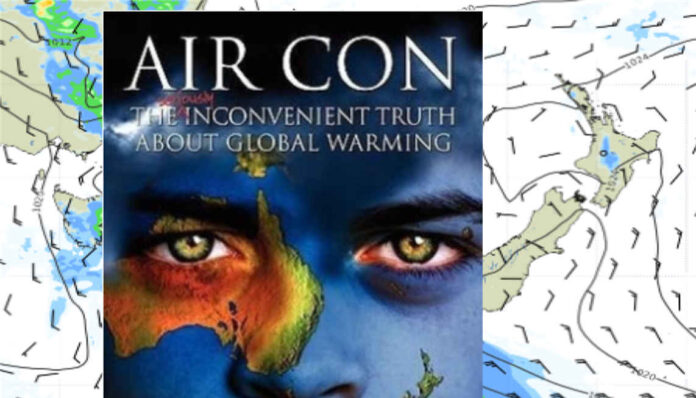
JMA sentiments continue to disturb This document sent to me by a constituent claims ~90% public opposition to the JMA was ignored. I can’t verify the author or data, but the gap between public concern and Council action is clear enough – and a good reason to keep pressing candidates on this. Oh, and we just have to make mention a very special Facebook post with the graphic below by an anonymous identity known as Lake Taupo which shows how much fun AI can be. However, it is quite apparent that some person(s) has reported it to Facebook as a rule breach (which it isn’t, because these are public figures and it is satire), because yesterday afternoon the Lake Taupo identity was deleted. I will probably do a fuller post about this next week, but let me tell you that censorship of that kind is one of the most insidious enemies of your local democracy and we should all be abhorring it. A California based company like Facebook cannot be relied upon to tell the difference.

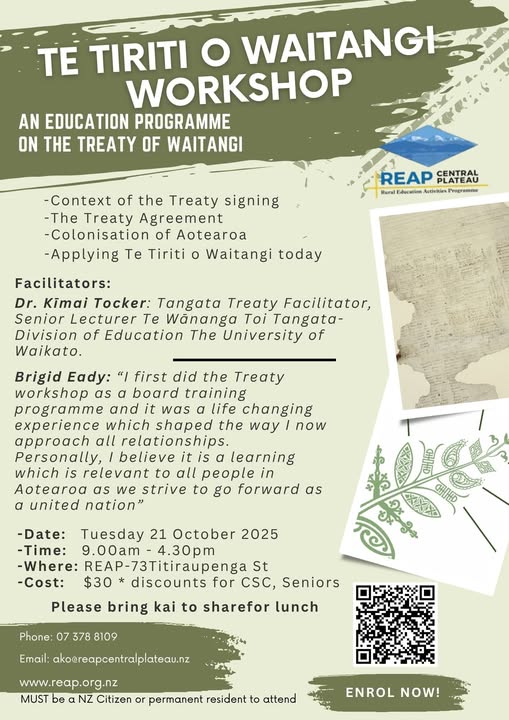
Kaipara kicks back to the Treaty – Kaipara District Council has adopted an independent legal opinion on Māori obligations that avoids locking in governance  ‘partnerships’ not required by law, and some people aren’t very happy about it. In the past I have questioned some of the terminology in Taupō District Councils own planning documents, but have been abruptly flipped off with comments like: ‘go read some history’. It is quite clear to me now that statements in the Long Term Plan such as ‘Taupō District Council is committed to meeting its statutory Tiriti O Waitangi obligations and acknowledges partnership as the basis of Te Tiriti’ are there by political choice and not any legal necessity. Now that Kaipara has demonstrated that Councils can meet obligations without embedding partnerships into governance, I believe we should revisit these policies to reflect the law and the will of the whole community – and this has clear relevance to things like the proposed JMA partnership deal with Tūwharetoa Maori Trust Board.

Local government under the microscopeManagement consultant Kathryn Ennis-Carter offers us a blunt assessment of why change is urgently needed. Worth a listen, especially for any newbie candidates before they get thrown in the deep end.

Signs of silliness – New signs at Five Mile Bay remind people it’s illegal to drive on a footpath, which it always has been. Yet despite a five-page staff paper in May to justify why the signs are needed, people still do it – just amazing, isn’t it? Anyway if you come across such activity and you don’t like it happening, please just report it to the Police.

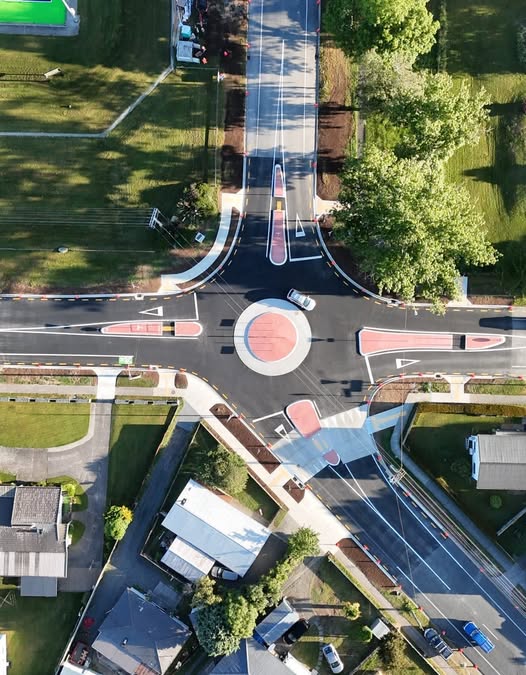
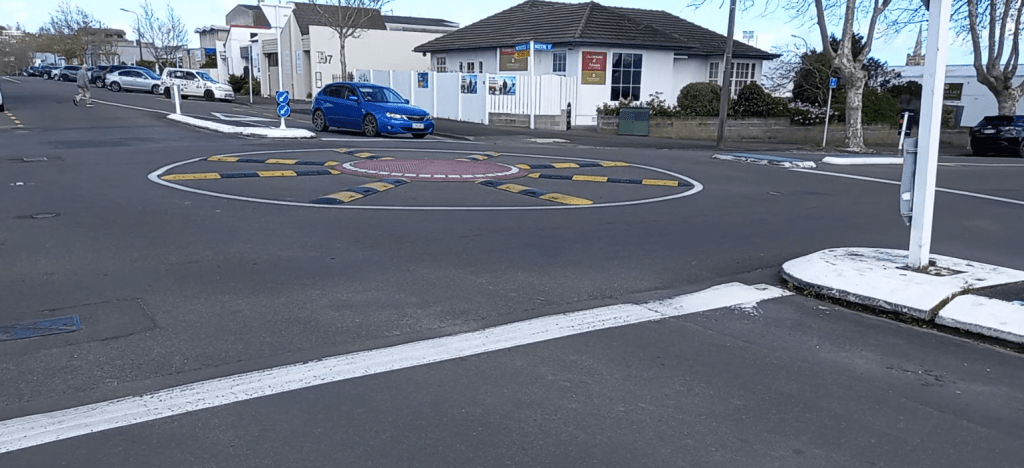
Roundabouts right, or roundabouts wrong?  Someone asked me about the two Council planned roundabouts the other day, and do they really have to be so expensive at $1.6 M and $3M apiece? The short answer is: No they don’t. To put into context, when I was a Council engineer at Waitakere City pop. 300K, I was in charge of an annual safety budget approx. $2M (2025 dollars) from which we would get at least a dozen projects including at least a few of this nature. Because civil engineering infrastructure like this contribute a mighty portion of Council debt, it is important to employ staff who really know their stuff, and I can’t help but also think that perhaps tools like rates caps would better motivate some lateral thinking.

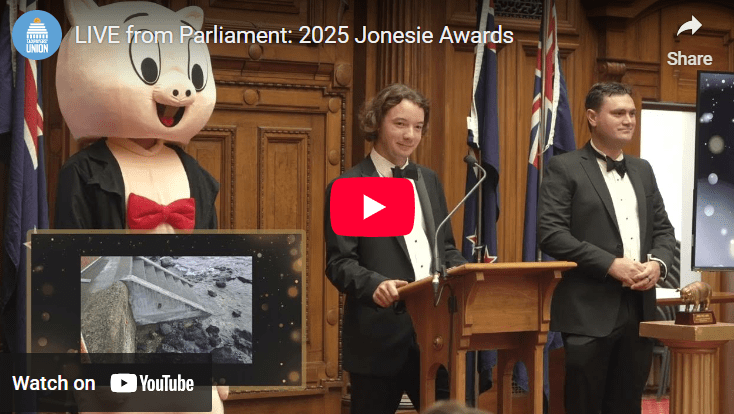
Pukenamu pushes back – while we’re on the subject of roundabouts, the Environment Court has set a 9th September hearing date for constituent Ivan Jones’ challenge to the Pukenamu Rd roundabout. Back in January I called this exercise a $300K harassment of a residential street — and if it proceeds, it’s being submitted straight to the Taxpayers’ Union Jonesie Awards as an example of wasteful spending.

DIA financial snapshot – The Department of Internal Affairs has just released a set of financial metrics comparing councils nationwide. One figure that stands out for Taupō District Council is our revenue-to-operating-expenses ratio, which has dropped from 121% in 2022 to just 93% in 2024. In plain English, that would appear to mean that we’ve gone from a healthy surplus to barely breaking even – with not much buffer for unexpected costs. At election time, that should make you ask whether the current spending mix is sustainable, or whether we’re quietly setting ourselves up for either more debt or more rates hikes – yet one more argument for rates caps.

Taupo Airport rejig shelved – last month or so an initiative to change Taupo Airport to a full Council Control Organisation (CCO) with independent directors was squashed by several elected members including the Deputy Mayor even before they got to read the 95% prepared staff paper, I say quite transparently because it was felt that the predicted controversy might compromise their chances of getting re-elected. Yes kiddies that is how things work in this town, and I bet those same elected members are now wishing they did the same for the JMA.

Berms and bureaucracy – not that we are so short of space in the Taupo region and the soil is pretty awful anyway, but I think this Aucklander who took on the bureaucracy of Auckland Council to plant a garden on Council berm deserves a medal.  After all if you are expected to maintain it, why can’t you choose what grows there?

Fridays flippant fancy: Why can’t we be more like the French?

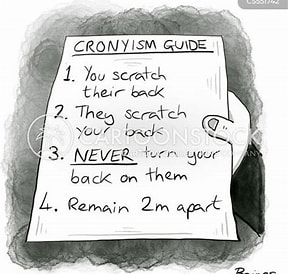
Friday Council Circus – Purple Sky Who Can Deny

8 August 2025

Councillor Duncan reporting again, this week we have:

JMA keeps on giving: Earlier in the week there was my JMA debrief, and here is the latest Duncan Garner interview with Christine Rankin on the hospital pass to the next Council along with a message from promising Mangakino electorate hopeful Hope Woodward. I believe this will remain a live election issue, and choose to believe that the majority of voters will act wisely if they are properly informed. Around here that hasn’t been happening for quite some time now, so I hope this JMA saga will be a blessing in disguise for some change to really happen.

Conflicted or conflated interests? An interesting blog put out by local Sophie Smith is inferring some conflicted interests with regard to Taupo District Councillors Danny Loughlin and Yvonne Westerman. Now this is a topic I have come to recognise as quite a grey area indeed. As far as I can tell, the only practical way that non-declared conflicts of interest for elected members get dealt with is: (i) by way of legal hindsight e.g. expensive judicial review; (ii) by way of independent legal foresight; or (iii) public humiliation to exert influence at the next election. On that note, I have submitted a complaint to the Auditor-General to investigate breach of conflict-of-interest obligations with regard to Councillor Danny Loughlin, who despite being a significant party to both sides of the JMA agreement did not recuse himself from the voting. Even though he declared himself not conflicted, just because I say the sky is purple doesn’t make it true either.

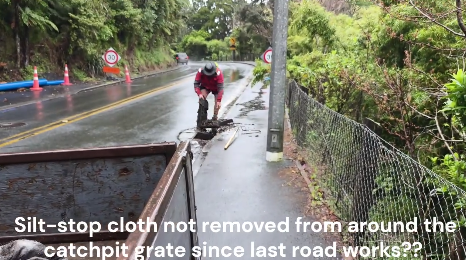
Road cone hotline: yes you heard that right, if you spot excessive road cone use anywhere in New Zealand there is now a hotline you can now call to make things right. So don’t be afraid to dob in Taupo District Council or NZTA for wasting your time and money.

Join the dots for your own Council: Department of Internal Affairs (DIA) has just released its long awaited financial metrics for you to be able to compare with other Councils around the country.  I haven’t looked at them yet and am no financial genius anyway, but there will be people out there giving it a crack – so why not have a go yourself?

Conspiracy to take over local government? For a good laugh, you might like to read this attempted hit piece on freedom movement tainted electoral hopefuls from the mainstream media that reads more like a campaign endorsement to me.

Need more money or just wiser decision-making? A new July 2025 report by consultants Martin Jenkins confirms what many locals already suspect: New Zealand’s councils are chronically underfunded compared to their international counterparts. While the report recommends more flexible financing tools and debt options, the real takeaway is this – councils are being asked to do more with less, often without telling the public what trade-offs are on the table. So now more than ever, if local government is to truly serve local people, we need stronger democratic guardrails, greater public input, and clearer political accountability. Did we see any of that during the recent JMA debacle?

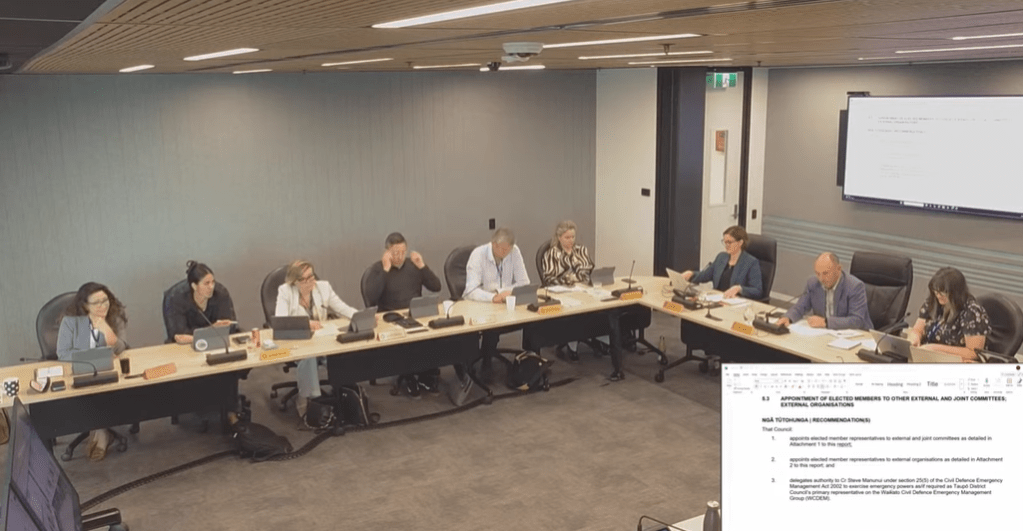
Public forums for all to see?  I should probably mention that it is not normal for public forums at Taupo District Council to be recorded for public viewing as happens at many if not most other Councils in New Zealand. I believe it should be standard practice and have tried to argue the case before, but for the public forum at last weeks Council JMA meeting I made a specific request through the Mayor for this to happen. I think everyone deserves the same opportunity not just mayoral candidates or ex-CEO’s, and would like the practice to become standard. Because your voice matters too.

If you want to receive these updates or want others to also receive them, don’t forget to press the subscribe button below and do tell others to do the same.

Friday Art Corner: Truth Coming Out of Her Well by Jean-Léon Gérôme. To further explain: sometimes truth can offend and truth can hurt (that’s what the whip is for).

JMA Debrief

6 August 2025

The highly anticipated Council meeting to decide the fate of the draft Joint Management Agreement (JMA) was held last Thursday 31 July. The outcome – though not final- marks a critical juncture in what has become an increasingly controversial and politicised process.

It also draws a line in the sand for voters: how seriously do your current elected members take representative democracy? Based on the results, for many of them it is quite clearly: not very.

Decision: Deferment to the Next Council

After a packed and emotionally charged meeting, Council narrowly voted for Option 4: to defer the JMA decision to the incoming Council after the October election. This avoided immediate ratification of a flawed agreement, but failed to include any binding conditions. Therefore the door remains wide open for the next Council to proceed without public consultation or legal review.

A motion to make public consultation compulsory was supported only by Councillors Campbell, Rankin, Shepherd, Greenslade and Leonard – and opposed by Taylor, Williamson, Loughlin, Fletcher, Westerman, and Mayor Trewavas. Democracy lost that vote – so please take note.

The final votes on Option 4:

  • For deferment (Option 4): Mayor Trewavas, Councillors Campbell, Shepherd, Rankin, Greenslade & Leonard
  • Against (preferring adoption now): Councillors Taylor, Loughlin, Fletcher, Westerman & Williamson

The Strategic Dance of Deferral

Let’s be blunt: several councillors clearly voted strategically ahead of the election. For example:

The Mayor, who has consistently defended the JMA, now claims he voted to defer merely in order to ‘address public confusion’. Given that his was a deciding vote we can be grateful that expressed public wishes were at least heeded, but to me that just comes across as damage control and not wise or firm leadership.

The Deputy Mayor, who tabled Option 4 as his own idea to the rest of elected members just one week earlier, subsequently voted against it. That action seems less one of principle and more like election optics.

So can we please recognise that this decision wasn’t just about governance – it was also about some people hedging their bets for October.

Conflict of Interest – Councillor Danny Loughlin

Equally troubling was the participation of Councillor Danny Loughlin – a current Board Member of the Tūwharetoa Māori Trust Board, which is one half of the JMA agreement. Despite this fairly apparent non-financial conflict of interest, Councillor Loughlin did not recuse himself.

In the week or so leading to the vote, I requested two things from the CEO:

  1. That legal advice be provided in advance regarding potential conflict of interest issues of elected members; and
  2. That legal representation be present at the meeting if needed.

Both were refused, although I recently discovered that we did indeed have a Council lawyer present at the meeting (who didn’t pipe in to answer any questions).

Under the Local Authorities (Members’ Interests) Act 1968, Councillor Loughlin’s dual governance role appears to breach both ethical norms and legal expectations. Public trust in Council depends on both the appearance and reality of impartiality. This was neither.

Formal letters of complaint have now been submitted by myself to the CEO and Auditor-General, seeking a full investigation.

Legal Advice or Legal Disguise?

During the meeting I also did motion for an additional clause to be added to Option 4, so that Council:

Commissions an independent legal review of the draft JMA and makes it publicly available, with particular focus on:

(i) Conflicts of interest;

(ii) Legal implications of the expanded scope (LakeTaupō and ‘Further Matters’); and

(iii) Compatibility with national legislative changes including the RMA freeze“.

Perhaps confusing things though and a reason this motion did not receive support from any other elected members, earlier in the meeting a supposedly independent legal review from Buddle Findlay partner Paul Beverley was referenced in absentia. This previously unmentioned document was subsequently found to be a single-page memo only, which confirmed the JMA’s compliance with statutory requirements – but said nothing about risk, process integrity, or governance exposure. It was inferred in the meeting as ‘independent legal advice’ – but in practical terms functions more as a superficial legal cover than actual legal review.

It has now been confirmed that two law firms advised Council throughout this process: Buddle Findlay supported the internal drafting and negotiation of the JMA, while Simpson Grierson provided advice on the ‘assessment of significance and engagement’ – in other words, justifying why no public consultation was legally required. Neither firm was engaged to provide an independent review. Both operated within the Council’s mandate, not outside it. So if or when the public asked: ‘Who’s keeping this process honest?’ the uncomfortable answer is: No one. Council’s legal strategy wasn’t about testing risk, it was about minimizing pushback.

Contrast this with comparable cases:

Why is Taupō District Council being so reckless to settle for less? Perhaps you had better ask your elected members that question, because it won’t be them who picks up the expensive tab for any future legal challenges – it will be yourselves the ratepayer.

If any outsider or a future Council down the track is opposed to the JMA as signed up to in its current form, their best option could be to initiate a judicial review. This would challenge the legality of the agreement’s process, particularly the inclusion of non-mandatory provisions like the expansion to Lake Taupō and the vague but sweeping ‘Further Matters’ clauses. Clear weaknesses are if the public do not get consulted, and if any elected members are found to have conflicted interests. Legal costs of such an exercise could easily be in the six figures to both sides.

Public Input Dismissed

To make matters worse, the Mayor, Deputy Mayor, and senior staff framed the entire controversy as the product of ‘misinformation‘ and ‘public misunderstanding‘.

That is not only patronising – it’s dangerous. It dismisses over 500 pages of public correspondence as the confused rantings of an ignorant mob. Deputy Mayor Taylor mentioned that the views were ‘fairly evenly split’ – but that is a disingenuous claim, because around 100 templated submissions from TMTB arrived just one day prior to the meeting. In the weeks before, those in opposition outnumbered support by around ten to one.

What This Vote Really Means

This decision is a pause, not a solution. No conditions. No community assurance. No leadership.

By deferring the JMA without requiring legal review or public consultation, the current Council has simply passed the political burden to whoever wins in October. It’s not a compromise – it’s a live grenade. Elected members could have made a real call to sign up to it, put it out for public consultation, or scrap it altogether and start again. Instead, temporary shelter has been taken in the delay, hoping public anger will cool and putting it onto the next Council to clean up the mess. That isn’t governance – it’s cowardice camouflaged as caution – and make no mistake, it will be costing you.

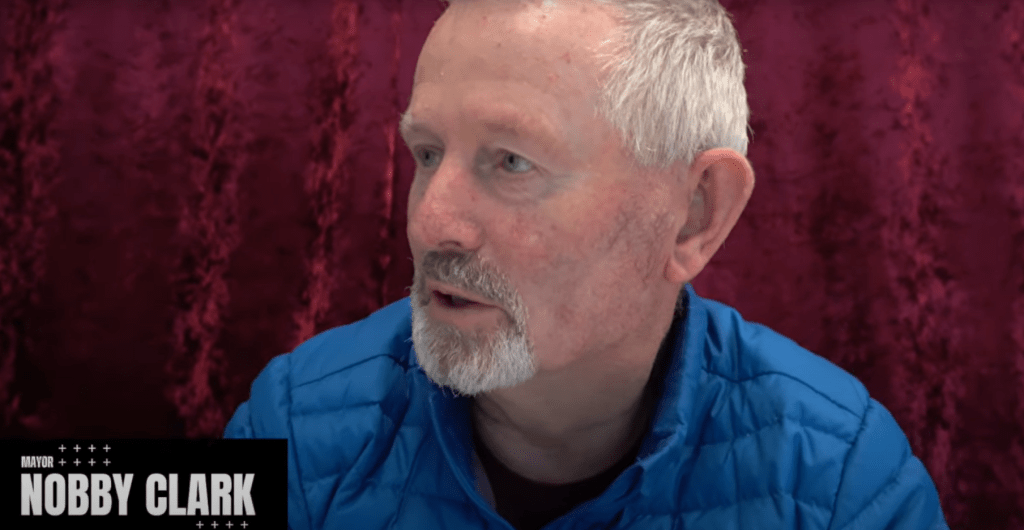
Mayor Trewavas could probably have deferred this decision months ago – just as Invercargill Mayor Nobby Clark did in a comparable case. He didn’t.

Instead, we witnessed a major policy vote held less than 24 hours before election nominations closed. That’s not just bad timing, it was arguably strategic. The public backlash which did happen was completely unexpected, primarily because the public wasn’t meant to even be fully aware of what was really going on.

This entire saga has laid bare how such a herculean effort is required to push back against a staff-led recommendation, crafted behind closed doors by those with all the resources and levers to control the narrative. That alone should be a very red flag. Now imagine what could happen when staff from a partnering corporate entity are embedded into Council operations, as was proposed and which so very nearly got signed off. Who do you think is driving policy then, and who’s left to scrutinise?
This isn’t over. The next chapter depends entirely on who voters choose to write it.

What’s Next?

  • Public scrutiny must stay high
  • Council candidates must be questioned
  • Transparency must be demanded from day one

As for me? I’ve witnessed more stupid and pre-meditated decision making in the past three years at this Council than I figure most endure in a lifetime, all wrapped in glorious red tape and presented to you as sane governance.

Friday Council Update: Mayhem and The Madness

25 July 2025

Councillor Duncan here with your Friday Council round-up.

Politics never used to interest me much, and office politics even less. I left corporate life in 2015 for freedom and not committees, so how on earth did I end up here? Because after moving to Taupō, my engineering brain concluded that if you want something fixed, you can’t just complain about it – you have to get your hands dirty.  I don’t regret that decision at all, but I’ll be honest: the path forward after October is looking pretty murky.

The future of Mayor David Trewavas is uncertain in the wake of the JMA fallout. So far, only Zane Cozens is officially in the race, but I’m aware of at least two serious contenders waiting in the wings, and yes – some are encouraging me to also throw my hat in the ring. But the mayoralty is no small job, the pay’s fine but it’s not about the money – it’s about whether you believe you can steer the ship any better than the other guy or gal.

Meanwhile, things in Council chambers have gotten… strange. The Mayor has without explanation abruptly cancelled our regular Tuesday elected member meetings until after the election. I’ve never been a fan of those closed-door catchups anyway, but the timing feels off. There seems to be some acrimony in the air, or is it just me?

Anyway, to the updates:

Let’s Go Taupō Public Meeting – Right On!

On Monday night, Hope Woodward, Ann Tweedy, and Rebecca Stafford of the Let’s Go Taupo team hosted a powerful evening on rates, debt, and the need for change.

  • Hope called for people-first leadership and questioned inflated priorities (for original video see here).
  • Ann exposed the compounding rate hikes and the illusion of fiscal responsibility.
  • Rebecca broke down unsustainable debt ratios and the lack of transparency.
  • Myself also proposed smarter alternatives to overblown infrastructure and called for a culture shift from spending back to service (transcript here).

The vibe was serious but hopeful. Taupō people seem to be waking up, and are tired of being treated like they’re not – finally. Watch the entire meeting here: Part 1 | Part 2

JMA Update – Vote Looms but Questions Remain

The agenda for the 31 July Council meeting is now out, with staff still recommending we adopt the JMA in full. We now are presented with an Option 4 to defer until after the election – which sounds like a compromise, but without commitments to public consultation or independent legal review, I say that deferral is just kicking the can. I’ve also raised concerns about:

  • The Govt’s recent freeze on RMA plan changes,
  • Potential conflicts of interest involving some elected members closely linked to TMTB.

The responses so far? Vague or none at all, and no doubt you’ll probably be hearing more about this topic before the meeting next Thursday.

Trees Get Real Democracy (even if you don’t)

This week, Council spent nearly 40 minutes debating the fate of a few trees in Ferney Place Reserve. The original request? Topping them to improve mountain views for a resident 500m away who is prepared to pay.

The outcome? A full-on misfire, staff treating it as a removal request, and a debate that took twice as long as approving a multi-million-dollar water reform initiative.
The verdict? The trees are staying – for now anyway. Watch it here, much better than anything on Netflix.

Lake Terrace Silver Birches – Going, going, gone

As for the three silver birch trees being removed this week from Lake Terrace, I didn’t support it back in May due to insufficient information and posted my reasons at the time here

LGNZ Decision Clarified

Contrary to earlier reports, Waikato Regional Council is staying with LGNZ—but just barely.

Enrolment Reminder

Not yet enrolled to vote? Deadline is 31 July. Especially for non-resident ratepayers of whom too few take advantage – this is your chance to be heard so enrol here

Tools for the Troublemakers

Looking to challenge authority more effectively? These Council run workshops next week cover information about how to form an incorporated society – which can limit your legal exposure in a dispute with Council or government. Know your rights and get informed.

Friday Funny (or is it?)

I didn’t make this AI image and probably shouldn’t post it, but it’s already doing the rounds so what the heck.

Humour aside, if it’s hinting at something deeper – a merging of performance, power, and perception – then what does that say about local politics in Taupō?

Still Missing in Action: Public Consultation on the JMA

7 July 2025

Thank you to everyone who turned up or tuned in to last Thursday’s Council workshop on the draft Joint Management Agreement (JMA). The public gallery was packed, and clearly this issue has touched a nerve—not just locally, but nationally too. But before another week rolls over this issue, let’s pause and look closer—because the fine print always matters.

Let’s be clear: no final decision has been made yet. But what concerns me—and many others—is the way this process has unfolded. The 2025 draft agreement expands the scope of the 2009 JMA considerably, yet it was progressing quietly behind closed doors. Only when outside attention was forced upon it did this matter finally surface in a more visible way.

Unfortunately, some of the information now coming from Council leadership is adding to confusion. For example:

  • The Mayor erroneously stated in a recent media interview that the JMA would help clean up emergency spills into Lake Taupō. In reality, this is a Regional Council responsibility—just like the threatened gold clam invasion. These are pointedly not covered by the JMA, even though they easily could be if that were the goal. In fact, as a purported mechanism for keeping Lake Taupō clean and green, I have doubts that this JMA contributes anything too meaningful.
  • He also referred to Lake Taupō as a “private lake,” which is not only legally debatable but contextually misleading.
  • The Mayor claimed the 2009 JMA was never consulted on. Yet records indicate it arose from a series of public hui and community engagement processes connected to the 2005 plan change. It may not have met a strict legal definition of consultation, but it certainly reflected a more community-facing era.

Another point worth clarifying: It’s often claimed that iwi or Māori entities own 60–65% of the land in the district, including the lakebed. However, the most reliable figure available for communally owned Māori land is closer to 35%, even with Lake Taupō included. In terms of financial contribution, this equated to just 4.15% of total Council rates intake in 2023/24. That gap between land ownership and fiscal input is worth bearing in mind when we talk about “partnership”.

And then there are the words of one of our own councillors, spoken at the workshop itself:

“Can this documentation be weaponized? Absolutely.”

That should raise more than eyebrows. It should raise accountability.

Bottom line: If the public is confused, they should be invited in—not shut out. If the agreement is sound, it should stand up to scrutiny. But if it contains embedded obligations or shifts in governance, then we owe it to Taupō residents to test that publicly—before it gets signed, not after.

Council staff say that doesn’t need to happen. I disagree.

The JMA will be tabled for decision at the next full Council meeting on 31 July. Councillors will have three choices:

  1. Sign the agreement by majority vote
  2. Defer it until after the election
  3. Open it up for public consultation

You can read the source material for yourself here:

Recent media coverage: here, here & here

As always, I welcome feedback directly—respectful disagreement included.

Let’s not sleepwalk into a governance shift without the public’s eyes wide open. 

“Let’s be careful out there” – and not just on the streets.