This is my brief take on Māori wards, and why I think they aren’t a healthy way forward. A lot of people have already made up their mind and some have even already voted, and that’s just fine. This is only one person’s point of view which you can take or leave – and either way, I don’t think it will be a train smash if Māori wards stay or go – least of all for Māori.
We could get into all sorts of questions like what was or wasn’t committed to in the Treaty of Waitangi, but Māori wards are really just about one thing: representation in a democracy. If that’s not happening as has been claimed, then it’s a problem that deserves to be fixed. But the issue with Māori wards as I see it, is that they cannot – and will not – do that.
Democracy only works if people show up to vote and understand why they’re voting. I worry that carving out separate electoral wards for any group not only doesn’t strengthen that process, it is actually a recipe to weaken it. It creates a space where voter engagement can wither even further, and where candidates can succeed not through broad support but because of low turnout and political alignment with specific vested interests. That will be a cost for all of us to bear.
We should also take a few lessons from history.
Māori seats in Parliament were introduced in the 19th century as a very practical way of giving Māori men without individual land titles the ability to vote. But what was originally intended as a temporary fix has now become a permanent feature, and one that arguably hasn’t delivered on its promise of better outcomes for Māori.
And remember when New Zealand went nuclear-free in 1987? Can anyone even recall the actual reasons why? For a refresher, you can read about it here. Ever since then, I believe we’ve been basking in a kind of self-righteous glow that often outweighs the practicalities. Māori wards risk heading down the same track — symbolic, entrenched, and ultimately ineffective at solving the real issues (if they even get remembered).
The reality is there is no such thing as a ‘temporary fix’ in politics. Once baked in, a thing can hang around long after its purpose is done.
Māori are not children, and yet Māori wards treat them as if they are – that’s demeaning to everyone. Life throws challenges at all of us in different ways, but the most important breakthroughs don’t come from handouts – they come from within.
There’s a well-known proverb: “If you give a man a fish, he will be hungry tomorrow. If you teach a man to fish, he will be richer forever.”
Māori wards are like giving the fish, and I think we can do much better than that.
Councillor Duncan with another Friday update with the latest election and local happenings, as I see things anyway. Is Taupo the centre of New Zealand politics? It certainly feels that way to me, but perhaps I am a little biased. After 11 October, I wonder if things are going to quieten down? I might even take a holiday.
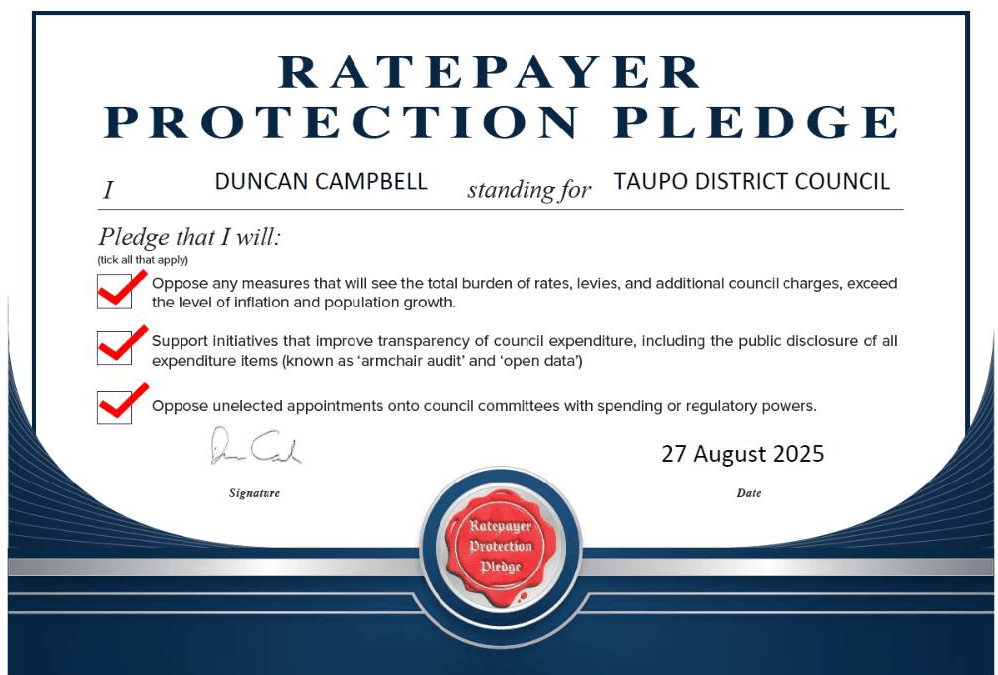
I have been getting a few people asking for voting advice lately, so I will try to spell it out now. I reckon either John Funnell or Zane Cozens would make fine Mayors and it greatly helps that like me both of them have signed the Taxpayer’s Union Ratepayer Pledge committing to tie rates to inflation as much as possible. Of the existing Councillor candidates, the only ones I can say have been more on the useful side are Christine Rankin, Sandra Greenslade, and Rachel Shepherd. Of the newbies, I am optimistic for the Let’s Go Taupo team of Ann Tweedie, Rebecca Stafford and Hope Woodward, with the rest a bit of a guessing game because I simply am not acquainted enough. Steve Punter seems as if he could be quite useful as the experienced governance and conflict resolution guy, and Wahine Murch looks as if she might be both smart and sensible even if she is quite young. But I am sure many of the other candidates have great potential, and in this sort of role it’s only under fire do peoples true dispositions get revealed.
My advice to voters: Don’t tick all the boxes just because you can, only tick for the people you really want to get in. In the Taupo ward especially, things are looking quite competitive and every vote could matter.
Okay this week we have:
Tūwharetoa Chief moves on to a better place?Sir Tumu Te Heuheu Tūkino VIII, the ariki and paramount chief of Ngāti Tūwharetoa, has died at 84, RNZ media release is to be found here.
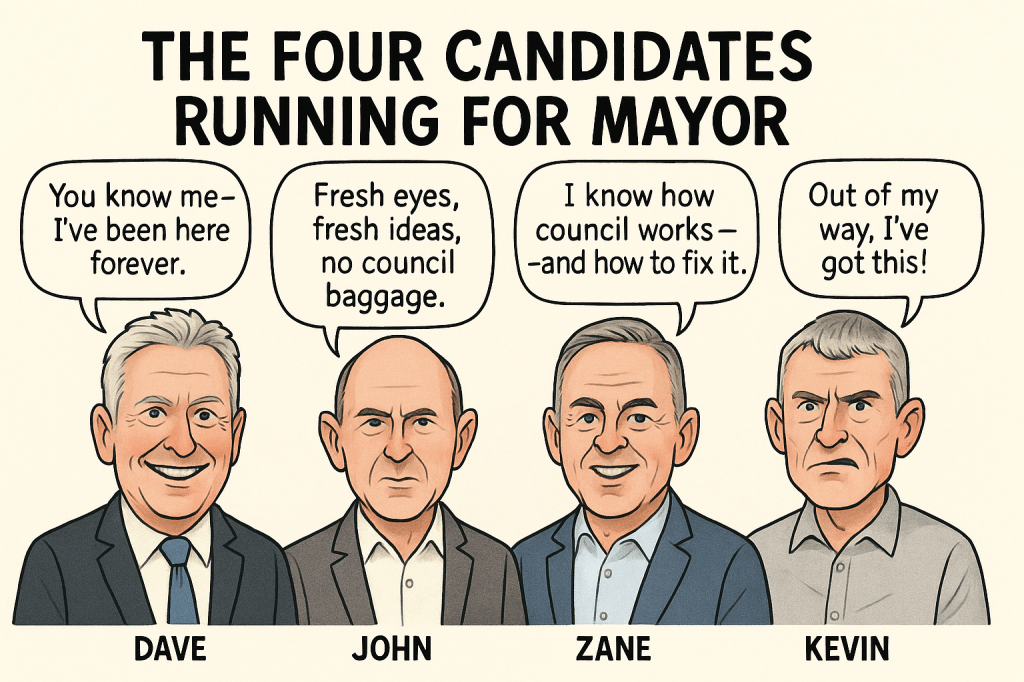
Pitch to the business leaders: On Wednesday night at the Cosmopolitan club there was a candidate event put on by Town Centre Taupo and the Taupo Business Chamber, with food and even complementary drinks as well. It was mostly just the Taupo ward candidates who turned up, but in her 2 min speech about reducing bureaucracy, Rebecca Stafford of the Taupo East Rural ward did make an impression with her intriguing account of paperwork that a prospective contractor for this Council was expected to fill out which even included stuff about child trafficking! But the evening was really mostly about the banter between Mayoral candidates David (what on earth is the problem) Trewavas; Kevin (government is coming to get us but trust me because my fingers are in everything) Taylor; Zane (100 day plan to fix this place) Cozens; and John(it could take 3 years to fix this place) Funnell. A transcript of my own mildly well received 2 min speech can be found here, and I am not sure if there are any recordings.
Smoke and mirrors: Here we have an interview with Danny Loughlin – 2025 Taupō District Te Papamārearea Ward Candidate, who just like Deputy Mayor Kevin Taylor keeps on conflating the mandatory requirements of the JMA with all the optional extras (like that little thing called ‘Lake Taupo’) to justify why the public don’t need to be consulted. I really wish these guys would stop treating everyone like they are stupid.
Maori wards on Monday: This coming Monday 29th September there is a helpful information evening from 5.30pm at Waiora House if anybody is interested, I plan to go along myself.
Code of Conduct unbecoming? Today is the last day for submissions to the Local Government Commissions attempt to standardise a Code of Conduct (CoC) for elected members. Currently each Council is left to their own devices on this, and even though obliged to sign I know there have been ruptures in the past – with Rotorua Lakes Council elected members failing to sign theirs this last term because it was so oppressive. There are some elements in this new DRAFT version which I have concerns about, including Treaty of Waitangi provisions, opening up for complaints to be made by members of the public and staff, and also an introduced ‘collective responsibility‘ which infers that elected members should shut up if decisions are made which they don’t agree with – just imagine that!
My own submission you can read here, and I am also using this opportunity to suggest that non-financial conflicts of interest also be seriously addressed in this document following the recent situation we had here with the JMA – which I reckon was akin to a bank manager saying they are not conflicted even if they are also sitting on the board of a company applying for a loan. This is the sort of thing which would never be accepted in the private sector, but somehow gets waived in local government.
Wisdom of age or just too old? Mayoral candidate John Funnell put out a recent post about his age of 75 years and some public commentary about it. I reckon the late President Ronald Reagan came up with a hilarious riposte to that chestnut of an argument (actually I think it was one of his speechwriters beforehand) and you can watch as it was delivered in a presidential debate here. Folklore says that his political opponent Walter Mondale knew after this gag was delivered he had lost the race.
AirBnB paying its way? Last week John Funnell mentioned the Queenstown rates model to try and generate more income from BnB operations for the district, and I believe he said it could generate well over $1M annually if it were implemented. For anyone wanting to find out more about the Queenstown model, here is the link to check it out. One feature I found interesting in the Queenstown model is a stipulated annual survey of neighbours to assess if things aren’t going awry (like all night parties etc). I am not 100% sure if it is a good fit for Taupo, but it definitely deserves to be looked at more closely.
Debs is my kind of gal: I really don’t know much at all about Deb Mair candidate for Waikato Regional Council, but I do like her minimalist style and am quite happy to have one of my own placards alongside hers
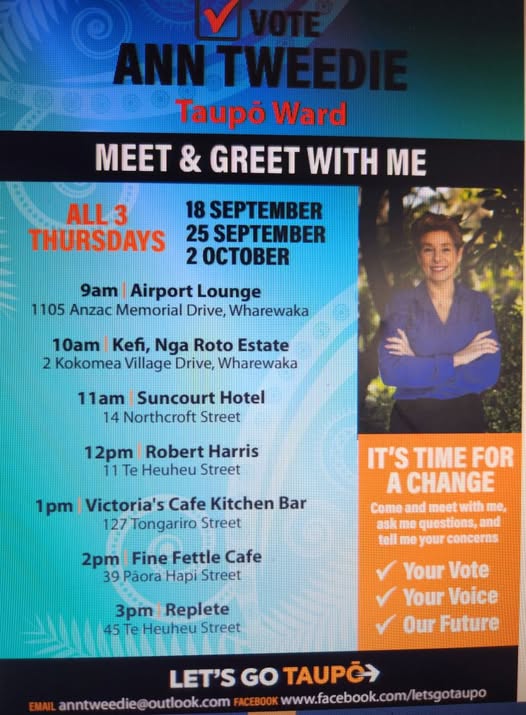
Ann’s out and about: Its not really my thing but Taupo ward candidate Ann Tweedie has been making a good effort these last few all-day Thursdays to meet and greet to find out what’s on people’s minds. I will try to at least be there at the 9am next Thursday 2 October at the Airport, because it is out and out by far my most favourite cafe in town with a great outlook and so very quiet too.
Vandals strike:Sophie M Smith put out what looked to be a very handy online poll on candidates earlier this week, but it seems the vandals got in there to try and distort the results. A bit of a shame as it could have been quite useful, but I guess in this day and age it is only to be expected. I reckon polls like happen for national elections could also be a thing for these local government ones, and could even get people more interested in voting. Sophie also just put out an interesting perspective of the false promises some candidates do make (myself included, apparently) which is worth a read.
Why aren’t they signing? A recent RNZ- Reid poll says 75% of voters support a rates cap, so why aren’t more candidates signing the Taxpayer’s Union Pledge to do just that? I reckon that to not have rates capped to the inflation that consumers experience is simply unsustainable, and it is too important to rely on fickle governments to address. Perhaps look at it this way: Should voters put up with candidates who promise to kick pensioners out of their own homes unless they have a small fortune set aside? Because that is what it really means if we carry on the way we are. You can read more about it here as my own #3 Campaign Priority.
Idle words apart: Facebook message (since deleted) from Maori ward Councillor Danny Loughlin to Mayoral candidate Zane Cozens on 11 September: “Given your attacks on Maori and Tuwharetoa to pander to the racist vote, I won’t waste any more time on you. If you don’t want to engage then you can always quit again…You can chat with Dunkin Donuts”.
Auckland Transport over the top (again): I just had to throw this in here because even though it has little to do with Taupo, it just goes to show what a big mean bureaucracy like Auckland Transport (AT) can get up to. Here we have a media report of a man very unhappy at a speed hump put in directly outside his house because it has apparently caused $40K damage to his home. Noise and vibrations from passing trucks is something I actually approached AT senior management about around 2018, because although somewhat of a previous influencer in that field I just knew it would blow up sooner or later because things were going a little too far. Anyway things have transpired pretty much as I predicted, with even the incoming government putting a temporary moratorium on them for State Highways the year before last.
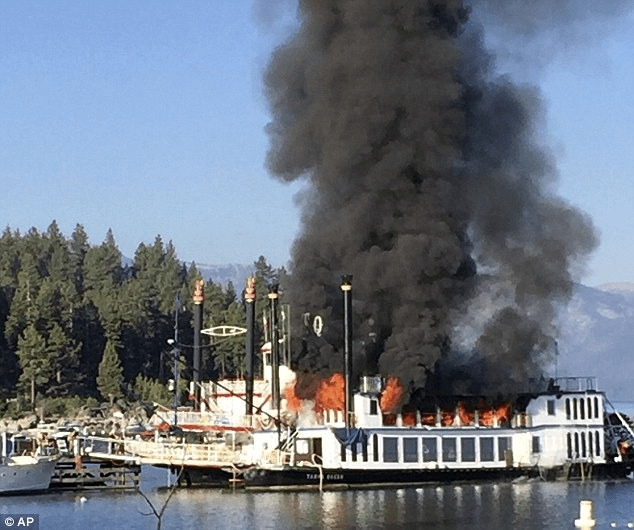
Taupo’s missed paddleboat opportunity: Does anyone recall that the paddleboat Lakeland Queen was up for sale a few years ago? I was hoping someone might have scored it for Taupo, but it was not to be and Rotorua now has it back on their waters. In any case, this recent media release mentions that particular situation marked a turning point in Rotorua Councillor Robert Lee’s tenure to being less of a team player with the rest of his fellow elected members than he was before. If I could pick my own similar moment of revelation, it would be my exclusion from late 2023 towards the Northern Access Transport Study despite my professional expertise and being elected on a platform that I could contribute on that basis.
Put it this way – imagine if a Turangi elected member was sidelined any time Turangi came up for discussion, or Maori ward councillors with anything to do with Maori. Democracydoes matter, and what you have been experiencing from me the past year or two is a symptom of what can happen when it gets treated badly.
Campbell’s still allowed? In a certain part of Scotland there are still signs like these around, and words like “Never trust a Campbell” still resound all the way back from 1692. If you want to learn a bit more about it, this 6 min documentary clip from 1974 will fill you in. Someone brought it up in a recent social media commentary riposte, so I thought to mention.
Friday piece of wisdom: I say to you all as much as myself.
Councillor Duncan here, recalling my three campaign priorities:
#1 Restore Democracy
#2 Take Back Control of Council
#3 Cap Rates to Inflation
You can read about #1 and #2 here, but today I want to talk about #3 Cap Rates to Inflation whichseems like a pipe dream to some, with abounding comments like:
Councils don’t run on bread and butter like the rest of us you know, what about the price of concrete?
What about catering for future growth?
Won’t our infrastructure fall to bits if we don’t put enough money into it?
The list can go on, but the fact of the matter is that if rates increase as per their current trajectory, anyone who doesn’t have a second fortune stashed away is going to be run off their own properties by the time they reach retirement. I am sure many have already.
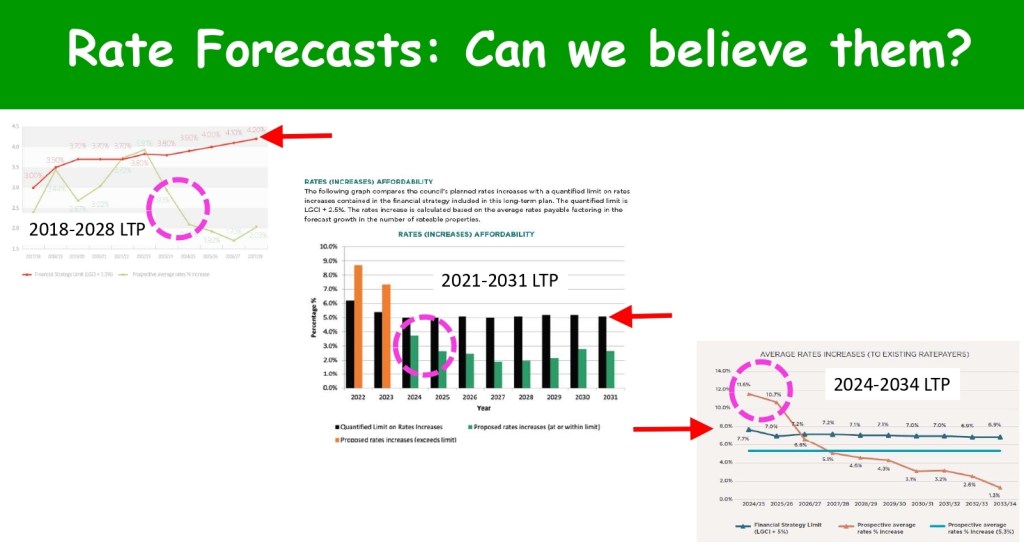
One only has to look at the last few Long Term Plan (LTP) forecasts to see that an optimism reigns which takes no account of future uncertainties, and the self-imposed limits are continually being ratcheted upwards up from a mere 3% in 2018 to 7.7% in 2024 (and these get regularly exceeded anyway). Do people realise that Council staff will always find reasons to spend more money than we can actually afford, and it is legitimately and legally on elected members to reign things in? But that hasn’t been happening in Taupo for quite a long time.
What about doing fewer niceties? We can all probably think of a few things in the district that needn’t have happened, from the very expensive Council buildingsaga from 2017 to the present day, to the Taupo town centre transformationproject which many people still complain about, to the 6km of wire rope barrier on SH1between Taupo airport and SH5 where there were no previous safety issues to speak of (okay that was NZTA and not Council). And yes, maybe even Boom Boom the dinosaur sculpture too.
What about doing stuff cheaper? Most of the Council debt goes towards infrastructure, and I know in my own professional field that smarter design can achieve a good enough result for a fraction of the price. For example these Compact Urban Roundabouts I developed a few years ago occupy much less road space than conventional designs which can make a big cost difference. So it is not all just about the price of asphalt, and having a guy or gal who knows just the right place to tap the hammer can be invaluable.
For one thing, I will tell you that the proposed $20M land disposal scheme (plus running costs) for the Turangi wastewater treatment plant is an absolute nicety. It has been portrayed to the public as necessary for environmental reasons, when that simply is not the case. It is being pushed along for cultural reasons alone, and goodness knows how much has been expended on consultants and staff time in the past five years plus. I wouldn’t mind so much if the constituents of Taupo were being properly informed, but that hasn’t been happening.
And what about that new bridge over the Waikato River we apparently so desperately need? I cover that in some detail here, but basically this Council spent $300K on a consultant last year to produce a lengthy study that not only didn’t even seriously consider options which could negate building an additional bridge altogether, but also failed to assess when the current bridge needs replacing. I found the sheer arrogance of the elected member leadership on this project to be quite astounding, and the workshop when it finally did happen in July 2025 nearly a year afterwards was a true gaslit gala of smoke and mirrors.
What about consultants? According to the Taxpayer’s Union Ratepayer Report of 2023, Taupo District Council spent over $50M on consultants and contractors the previous financial year. In comparison, Invercargill City Council and Kapiti Coast District Council with similar populations and staff numbers each spent less than $5M each on the same. So what’s going on? I haven’t been able to verify what these figures exactly do represent, but the Taxpayer’s Union are standing by them. Asking the same question again in 2025, I was told by our Council Chief Executive that this information is too laborious to readily access – and that seems strange to me, because this is an important metric that should be regularly reviewed. I think it is fine to hire a consultant if they are going to come up with better ideas to save us money, but from the examples above I can tell this is not always happening.
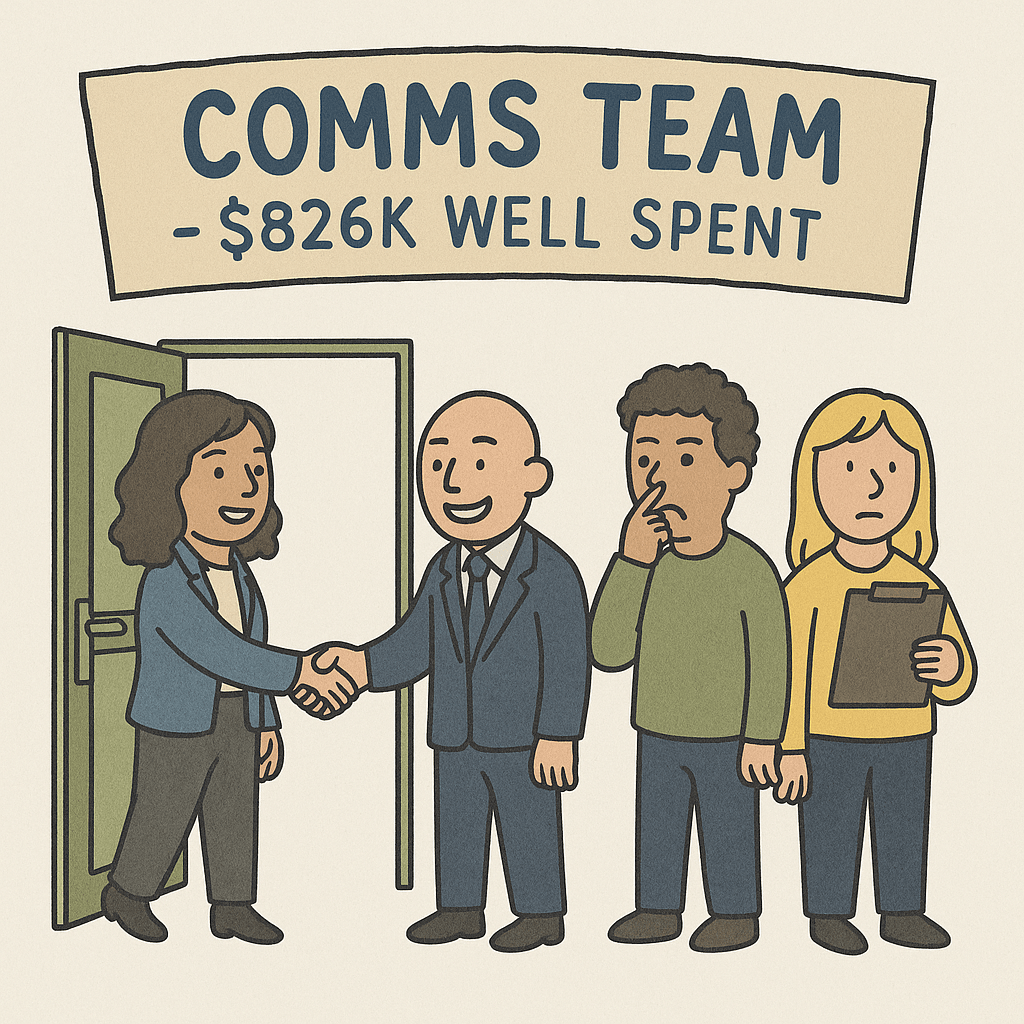
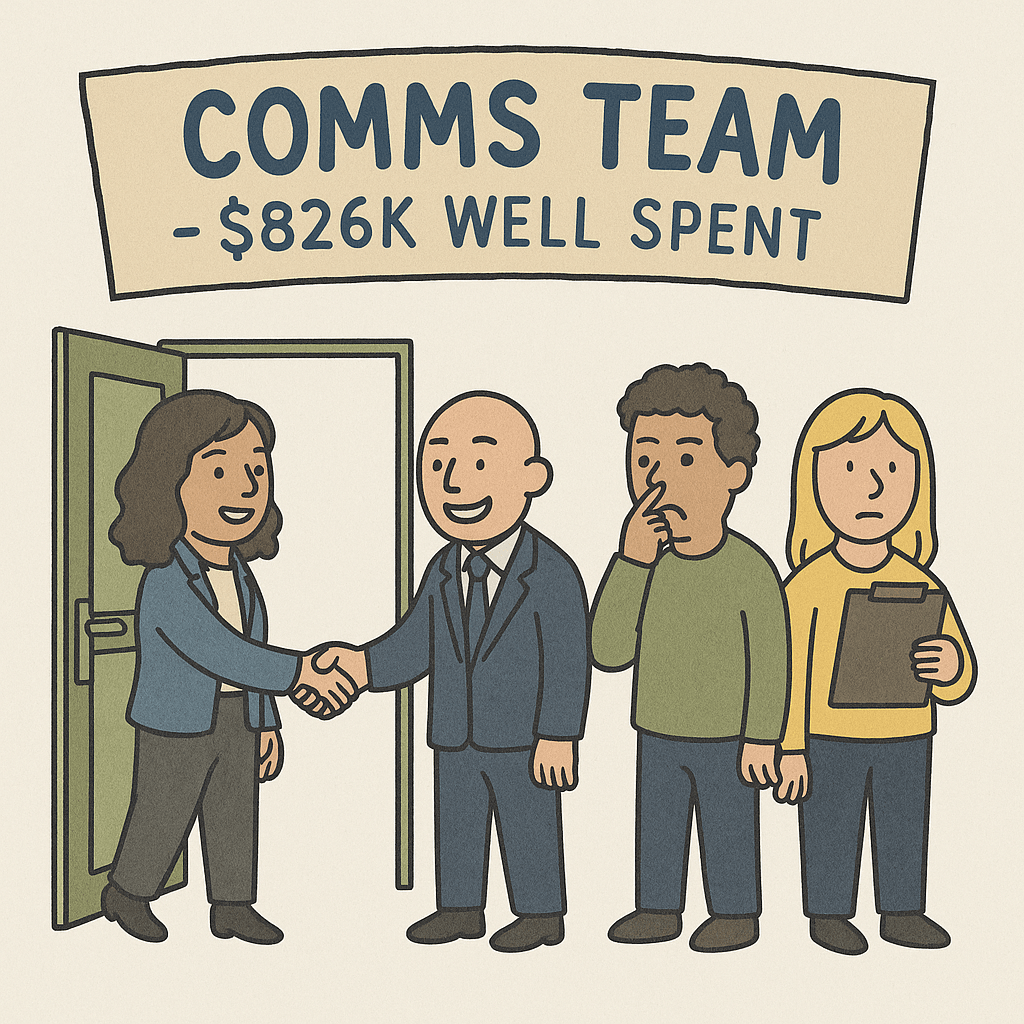
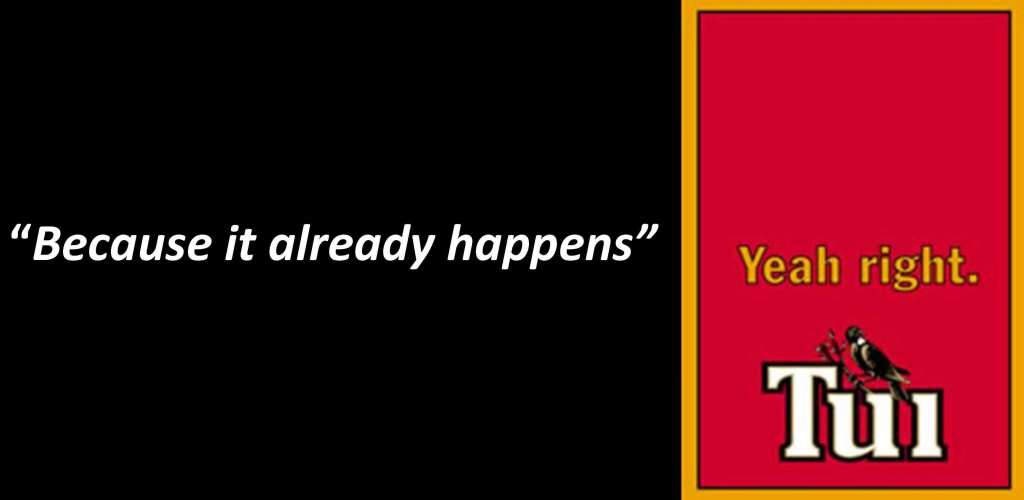
What about staff? Local amateur sleuth Sophie M Smith put out a recent article about the nearly $1M we spend each year on Communications and Public Relations staff salaries, and on top of that the $1.7M on marketing (which I understand includes the Destination Great Lake TaupoCCO which continues to claim that every dollar invested generates $800 of income for the district– yeah right). I think these aspects of Council are particularly overdue for review. Mayoral candidate Zane Cozens has mentioned that staff numbers at Taupo District Council have ballooned 30% in the past ten years, and I say what also needs to be asked is whether we are even employing the right people in the first place.
Why, oh why do things have to be this way?
The answer is: They don’t.
In an alternative universe where rates were capped a few decades ago and some common sense did prevail, for one thing I believe we would not have the current road cone nightmare – because Councils would have been so pushed that things wouldn’t have been allowed to get this far. That is one of the more visible symptoms of unrestrained bureaucratic spending, but there are also more bums on seats than necessary and probably a lot more besides.
I believe that tying Council rates to the inflation that consumers experience is not only doable, it is imperative to even be sustainable for residents to carry on living here. We just need to knuckle down and work smarter, and I know that it is possible. First term Mayor of Wanganui Andrew Tripe did it and without any magical silver bullets – so can we.
Councillor Duncan coming at you again with this weeks election highlights including a few things of interest, and we also managed to get even more snow on top of our Maunga just in time for the school holidays – so because I don’t like crowds that means I probably will be steering clear of it for the next two weeks. So who keeps talking up this global warming again?
On voting: my advice is to only vote for those you really want to get in, because any otherwise votes scattered around will reduce their chances. Remember that you don’t have to tick the number of boxes to match the number of vacant seats. And do some research on the candidates not just rely on their 150 word statements, for example why don’t you ask them about the JMA or why they haven’t yet signed the Taxpayer’s Union Pledge to keep rates to inflation? Because I say if something isn’t done about it soon, the current trajectory of Council spending habits will sooner or later run you down – just like a freight train.
Here we are then:
Drama Queen or Diva Diviner?Christine Rankin gives us her breakdown about Taupo politics on the Duncan Garner Podcast (starts at 7:39). I am not sure that we are that close to violence in the streets as Christine seems to think, but there is no doubt we are in a place of disquiet and for too long things have been swept under the carpet. I actually find these times quite interesting.
Duncans Campaign Page: If you haven’t already do please check out my Campaign Page here which includes links to myCampaign Priorities #1 Restore Democracy & #2 Take Back Control of Council. I never did get around to setting up a givealittle account, but if you want to donate to my campaign please feel free to message me privately.
Liston Heights Legacy? Last Sunday gone we had a Taupo ward candidates event put on at the Liston Heights retirement village, with a very nice afternoon tea put on afterwards. One observation made at the end included a question (my paraphrasing): “there seems to be two quite different camps, so how are you going to manage to work together?” No-one was very able to solve that particular riddle, but if I were to personify the split I would put the likes of Mayoral candidate Kevin Taylor and to some extent Rachel Shepherd on the one side with their (scaremongering) messages about the impending doom of central government intervention and implying that any changes now are bad, as opposed to the likes of Zane Cozens, John Funnell, Ann Tweedie and myself who say that change absolutely has to happen and it has to happen now. My own five-minute speech can be found here, and it includes reference to all three of my Campaign Priorities (or read the transcript see here).
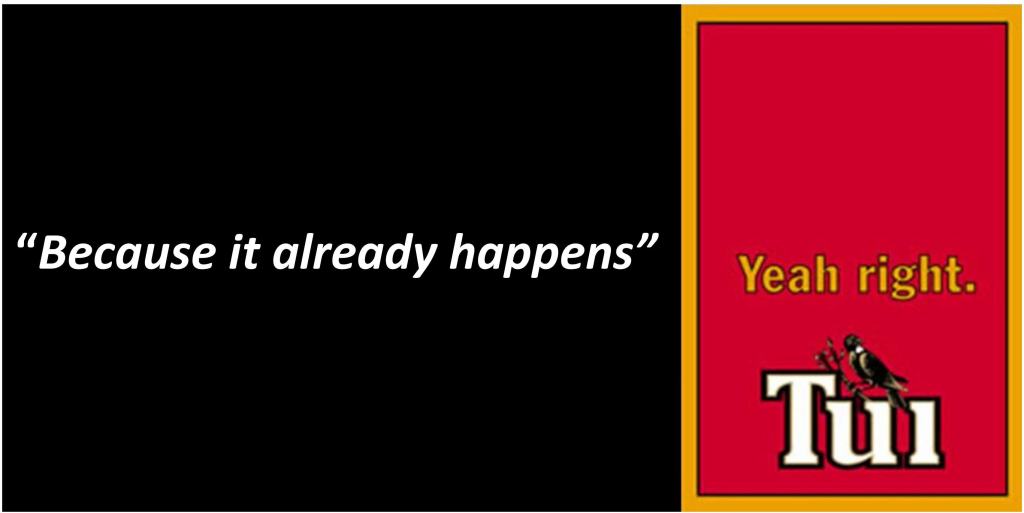
Ratepayers dollars going to a worthy tourist cause? I attended a Mayoral candidate event on Monday gone which was put on by the hospitality and tourism industry, and I have to say that two things stood out for me: First the absence of edible refreshments at a hospitality event, and second the oft-repeated line that every dollar put into tourism generates around $800 of return for the ratepayer. This mantra gets repeated so often I think the sayers actually believe it, and if it were really true then we should be doubling or trebling the $1.4M or so we put into Destination Great Lake Taupo (DGLT) every year. Heck, why not also throw in the $70MTEL Fund so that all of us can ride the bandwagon to becoming millionaires (do the math)!! Yeah right.
JMA for the record: I have been asked a few times lately about who voted for what including about public consultation, and the place to go is my JMA summary here and specifically for the voting record go to the JMA Debrief here. Basically if you agree that the public deserve to be formally consulted, then you are on the same wavelength as myself, Rachel Shepherd, Christine Rankin, Sandra Greenslade and Kylie Leonard. The rest of them don’t seem to think your opinions matter very much.
What a good idea: Local Invercargill media outletWhatsonininvers.nz recently did a poll on local body candidates. I reckon it would be great for someone local to do the same here, because otherwise all we get is this boring election.nz page which gives a daily tally but with no breakdown (because that would apparently be illegal). I reckon a sweepstake would be quite interesting – is anybody keen to set one up?
Maori Wards Obligation: I personally think that all of the other current elected members should explain their support position on Maori Wards, and also why they think the referendum is a bad idea. I know that is their position because they all agreed to a submission to Wellington back in May 2024 which you can read here. Because if anybody can best explain what Maori wards have achieved and can achieve for this district, it should be them. So why all the silence?
Money for Taupo flights? The government is throwing some money into regional aviation, but only time will tell if Taupo will manage to get any.
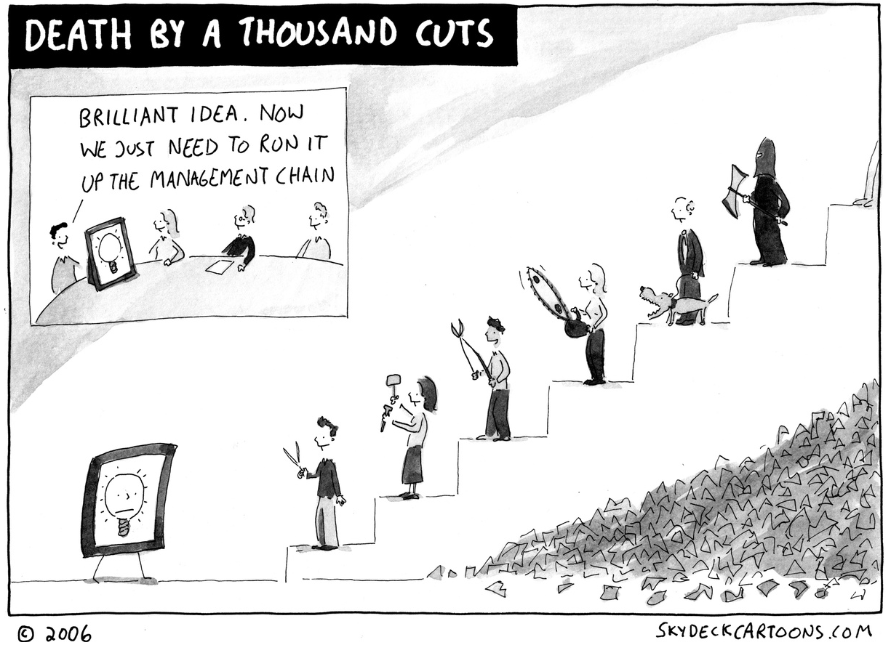
Common sense prevails but only just: NZ Water Service AuthorityTaumata Arowai seems to be showing some common sense by presenting some Acceptable Solutions for rural water suppliers. It seems in New Zealand that we always have to go down this road of sledgehammer solutions to relatively minor problems and only later back down a little, and this goes for everything from car warrants to roofing safety to traffic management. What on earth ever happened to the Kiwi pioneer can do attitude? Instead just like decline and fall of the Roman Empire, it seems we are faced by the slow death of a thousand bureaucratic cuts.
Nice job: Give credit where credit is due, Taupo ward candidate Rachel Shepherd has put together some nice video clips with a cartoon animation which you can sample here. But like most candidates in Taupo she still hasn’t signed the Taxpayer’s Union Pledge to cap rates to inflation. Doesn’t she know that unless that starts to happen, grandmas and grandpas will inevitably get forced out of their homes?
Cos positive discrimination still comes across as discrimination: Lo and behold, human rights law is seemingly acting as a barrier to Maori self-determination. But Auckland Law School Associate Professor Andrew Erueti manages to come up with some arguments that they shouldn’t apply when it comes to indigenous peoples. Funny how lawyers can spin things to their own design, and exactly why I say we need to get independent professional opinions and not just rely on Council staff.
Another word for Propaganda? Another few interesting posts by Taupo local Sophie M Smith, this time on Council marketing budgets and also a summary of the candidates. In my experience these communications or marketing departments of Councils have significantly expanded the past 20 years, and when they talk of ‘socialising‘ a message you can also interpret as ‘propagandising‘. Okay we do now live in a different world with social media all over the place, but enough has to be enough at some point.
Skyrocketing rates linked to inflation? On that note, why not have a listen to Stewart Group founder Nick Stewart who talks to Peter Williams of Taxpayer’s Union in this interview about the link between your rates bill and groceries and the inevitable crash that will happen it the current Council spending trajectories continue. Splash Planet in Hastings gets dis-honourable mention as a ratepayer funded sinkhole, which is a bit of a shame but it seems that swimming pools simply aren’t very easy to make money out of.
Friday funky educational funny: Because some people out there still don’t know what ‘White Privilege‘ actually means.
Councillor Duncan here, recalling my three campaign priorities:
#1 Restore Democracy
#2 Take Back Control of Council
#3 Cap Rates to Inflation
Today I want to talk about #2 Take Back Control of Council – and I mean from the staff, of course. Because right now a big reason that your rates keep on going up and up is because Council staff dictate what needs to happen and why, and the elected members go along with it (even if grudgingly at times). I am not saying that the staff are always wrong, but I am saying they will always find reasons to spend more money than we really can afford.
I say that elected members need to get some balls and not just let staff pull the strings.
For this to happen:
Change of leadership. Elected members need to get their act together and not just act independently, otherwise staff will continue to run the shop as they have been for too long already. That will require elected members to wisen up and practice teamwork to look out for not just their own priorities but also each other’s. Because things like that do not happen in a vacuum, without the right leadership at the helm I don’t think it’s going to happen. Departing Mayor of Invercargill Nobby Clark puts it quite well in this 10 min interview.
Staff need to be directed to follow the Local Government Act and start providing elected members with the full range of reasonably practicable options. This simply has not been happening to date, and a few examples that stand out to me include the Motutere Reserve Management Plan Review which wasn’t even necessary, and the more recent Joint Management Agreement (JMA) where elected members were led down the garden path as if there was only one way to do it. Being provided with practicable options was something I attempted to table last year through an acknowledgement of an important Wellington case, but was yet again shut down by a leadership that wasn’t prepared to entertain the notion that it wasn’t already happening. Yeah right.
Delegated Authorities need to change, and for infrastructure spends in particular.At present elected members get to sign off on Annual and Long Term Plan budgets at the beginning of each financial year, but detail is very skimpy for the hundreds of line items with often just a few words and a big $$ figure beside them. In my own professional field of transportation it is extraordinary for Council staff to say, go off and build a multi-million dollar intersection upgrade without reporting back for approval of governance – yet that is exactly what happens here in Taupo. What is most agitating for me as an engineer who is hot on value for money infrastructure, is that I know some projects could have been done for a fraction of the price.
More independent professional reviews. At present we are almost only ever presented with papers prepared from the staff viewpoint, and that can be anything from engineer or planning reports to legal opinions. Unless you happen to be a lawyer or engineer yourself, it can be very hard to push back on staff recommendations because of the accountability that goes with it. Professional independent advice does cost money, and my own preference is for elected members to be able to source their own. I reckon we could start with $10K per elected member, and that would be a bargain if it helps to get some more circumspect thinking to happen.
Dotransparency for real and not just pretend. That means audio-visual recording every Council or committee meeting that involves elected members as many other Councils already do (unfortunately there was no support last year when I tabled this to happen). It also involves elected members telling the public what is actually going on and not just carrying forth the staff censored spin as I believe happens too often around here. I have been doing that the past year or so, but am fairly exceptional and other elected members need to start doing the same.
For the main campaign page to explore all three campaign priorities please head over here
Councillor Duncan reporting in with the past weeks Council happenings, or at least the ones I noticed anyway.
The assassination of Charlie Kirk isn’t exactly of local news relevance – or is it? In my view the tolerance to hear someone else’s views, or even to let others hear them, has waned quite significantly since around 2019. Violence has been a way of solving problems for a very long time, and against those in leadership roles especially. Are we so far off from having the same happen here? I am not so sure.
Rotary rhetoric, or are they just relics? The Rotary event on Monday 8 September was well attended, and if you have two hours on your hands to hear a little more about candidates you can watch here. Otherwise, to the question: “Describe the purpose of Te Tiriti o Waitangi and how it affects your local government role?”this was my 70 second response. I did also prepare answers to several other questions about Rates Caps, Local Waters done Well, the Joint Management Agreement (JMA) and Maori wards, and you can find my written responses to those here.
There seemed to be a fixation on questions about Maori wards which I found a little odd given it is a public referendum question to decide in October, and the strict Y/N format of the questions at the end deteriorated things a little. Overall I think it wasn’t too bad an effort by Rotary who put it all on, and it would have been challenging to cater for so many candidates. But a couple of things did stick out for me: first that I am in a very small minority who openly say they would breach confidentiality – I think new candidates need to appreciate in matters of greater public interest that justifiable exceptions can be made, and also to challenge every time something is being held as confidential. And Cr Loughlin’s mentioning that staff could go to jail if they fail to adhere to legislation – I have not heard of that happening before in New Zealand, ever.
Why aren’t they signing? The Taxpayer Union pledge isn’t attracting signatures from too many Taupo ward candidates as you can see here, although for some reason they haven’t included Maori ward candidate responses (if you are in one of the other wards, you need to ask here). I find it a little strange that two of the front running mayoral candidates will sign, but only a few of us others. I am reading that as a bit of a disconnect to actually getting rates down, because any time you give The Council Machine an inch it will always take a mile.
Joint Management Agreement refresher: To piece together all my posts and info on the JMA, I have put together a special JMA page here. On that note, have a listen to Shane Jones inferring that some kind of woke virus has infected regional councils including our own Waikato one.
Race-based or just r**ist?New Plymouth Councillor censored for stating that a race-based procurement policy is r**ist. I am not sure if TDC have a similar policy for preferential treatment, but one of these days I intend to ask.
Why do we need Councils anyway? So says this guy, but I think it’s probably easier to run away in a housebus.
Works in progress but we are just about there now: Here are my candidate statements to Policy.nz, which don’t quite match the three campaign priorities I am putting out now because these were submitted several weeks ago.
Legal costs mounting? I reckon an interesting metric to compare Councils would be legal costs per ratepayer (including payouts), because I have a sneaking suspicion that Taupo District Council could be near top of the list. Just looking back to the John Hall debacle of 2023 where hundreds of building consent producer statements got signed off fraudulently over a several-year timeframe, I never did get satisfactory answers to my questions at the time. Like say: how many of these were simply vetted for quality purposes (because sloppy engineering practice is a much bigger problem than fraud)? Or even: have the processes since been improved to prevent it happening again? But the walls of The Council Machine went up very quickly with self-preservation at No.1, so I gave up trying.
Power back to the people:Auckland Transport to be stripped of most of its powers, with Minister of Transport Chris Bishop saying: “These changes mean that Auckland Council’s elected members will be directly accountable to the public for most transport decisions that affect the daily lives of Aucklanders”. I reckon the same needs to happen for elected members in Taupo, who for too long have been treated as tick-boxers for significant transport issues affecting the entire district. We just need the right leadership to get elected in.
Friday insider peek at… TRAFFESSIONALS, your local shop for traffic engineering advice:
Councillor Duncan here, and I think it’s about time to introduce my three campaign priorities:
#1 Restore Democracy
#2 Take Back Control of Council
#3 Cap Rates to Inflation
Today I’ll talk a little about #1 Restore Democracy and what I mean by that. First of all I am talking about democracy in Council Chambers, because if we can’t get it happening in there of all places it is hardly worth the bother of having elections. For this to happen:
Amend that rotten change to Standing Orders which was made by elected members in October 2024, which effectively mutes the dissent of any single elected member who can’t get prior approval by at least one other before tabling an item for public discussion. To change that back requires 75% of elected members to agree.
Cease and desist the censoring of elected members by staff in Council media outlets. That requires a directive from leadershipfor staff to stop their meddling. Following an incident in July 2024 when I submitted a Councillor Korero item for the Taupo & Turangi Times that was rejected on the basis of alleged ‘dishonesty and misinformation’, I since refused to submit any others.
But I am also talking about a better democracy for constituents as well, and greater transparency of what your elected members get up to – because right now they can take the salary and basically resurface only once every three years. For this to happen:
Publish the voting and attendance records of every elected member on every issue that comes before Council for a decision, similar to this initiative of a Councillor in Christchurch recently.
Elected members to present 250 word minimum summaries every time they attend a Council funded event of more than half a day duration. These can be published monthly and will be useful in justifying not only the expenditure, but also the value of belonging to organisations such as Local Government New Zealand (LGNZ) which host regular events around the country.
Council to undertake random surveys of constituents on singular burning issues of the day, rather than only rely on annual plan submissions which can be overwhelming in their numbers on every topic under the sun.
Consider having the monthly full Council meetings in the evenings so that the average working person can attend.
More frequent town meetings, and in my opinion residents could be the ones organising these and demanding Council representation.
I believe these things will increase transparency and accountability of what goes on in Council Chambers, and they will also better motivate both Councillors and members of the public to take part in a democracy much less worse than we have now.
Anyone else got some suggestions? I bet there are more good ideas out there.
For the main campaign page to explore all three campaign priorities please head over here
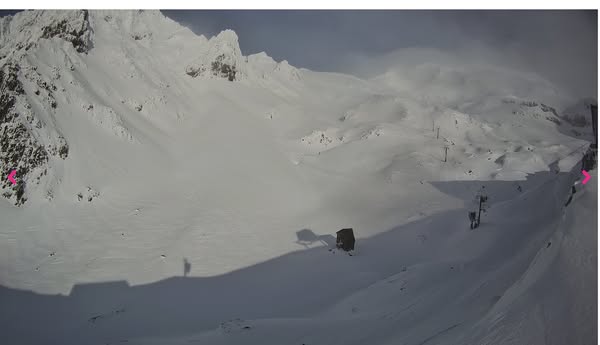
Councillor Duncan reporting in again on another Friday report, now just 36 sleeps until local body election day on October 11. And the snow has finally arrived! Yes the ski season has finally kicked off after a good dump earlier in the week and more is on the way. Wednesday was a truly bluebird day up on the slopes and I was one of those who downed tools and made the very most of it, so thankyou to the taxpayers of New Zealand who so generously donated $50M plus to keep it all going. Another $100M or so to get the Chateau up and running and we will be set for the future.
By the way, I have three campaign priorities for myself which next week I will start posting on: 1/ Restore Democracy 2/ Take Back Control of Council and 3/ Cap Rates to Inflation.
This week:
Cossie club was cosy alright: This week we had an especially interesting event put on by the Taupō Residents Group (TRG) on Tuesday night for Taupō ward candidates at the Cosmopolitan Club with a full house attendance I reckon of about 300 at least. Unless you are complete brick wall, I think most people in the room were hankering for change with the recording available here. We got to hear a little from both old and new Taupō ward candidates, and incidentally the 90 sec candidate interviews are available on the Council website here. Will I be one of those changed? We will just have to wait until October 11 to find out.
Another candidates meeting worth watching: This one hosted by Voices For Freedom (VFF) on 28th August and included Mayoral candidates John Funnell and Zane Cozens, along with the Let’s Go Taupo team of Ann Tweedie, Rebecca Stafford and Hope Woodward. So if you want to hear a little more about what these candidates are all about you can watch here.
Conflated or conflicted interests? In case you missed it, my mid-week article on this very grey area of elected members and Council business is to be found here.
Still banging on about Māori wards: Rotorua Mayor Tania Tapsell wasn’t too happy at having her own words thrown back at her from 2022 that the introduction of Māori wards had actually diminished Māori representation. Personally, I would like to see some of the positive outcomes more clearly put forth as to why they are a good idea, and especially from some of the current elected Councilor’s who decided to introduce them back in 2020 – because all I have heard so far from them is either deafening silence or rhetorical gesturing.
I wish to also remind that basically ALL of your current elected members endorsed this May 2024 submission from the Mayoropposing the government’s position to establish that the future of Māori wards be decided by public referendum. I wrote my own submission not because I necessarily disagreed with the presence of Māori Wards, but because I was uncomfortable with the assumptions being made on behalf of our community. The Council letter included this remarkable assertion:
“Through public consultation we have seen that opposition stems from a common misconception that proportionate representation can be achieved democratically through equal voting rights without a Māori ward”.
It then proceeded to ’empirically prove’ that a minority group (such as Māori) cannot be fairly represented unless a ward system is created for them. That’s quite a leap – it assumes people vote according to ethnic identity alone, and if Māori candidates don’t get elected in general wards then it’s because the majority voted them out. I don’t believe this is how most Taupō residents see democracy. I found the logic surprisingly simplistic and quite frankly, embarrassing.
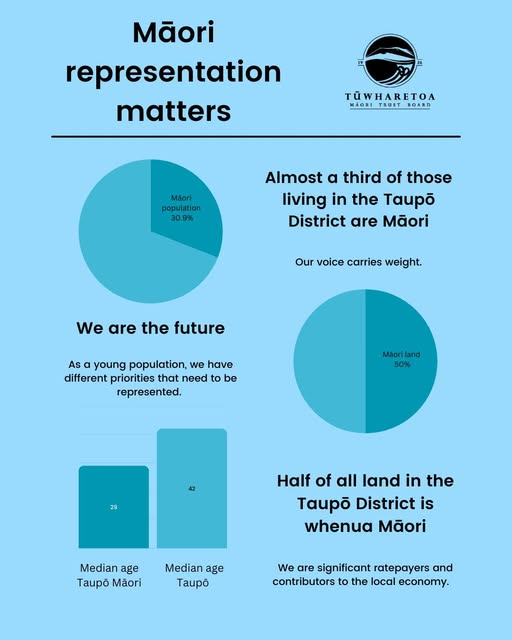
I see that Tūwharetoa Māori Trust Board is encouraging voter participation, and I applaud that because it seems to me that Māori Wards are very much a band-aid solution to the much larger problem of voter apathy. Given that Māori apparently comprise about 30% of the districts population, if that issue can be properly dealt with then in a few year’s time we could get Māori voters wanting the two Māori wards scrapped simply because they are holding them back.
Shared Paths a battleground in Christchurch: Onto something lighter, and apparently those shared paths for cyclists and pedestrians are getting some bad press further south. I can’t say that I have pedaled into more than just a couple of pedestrians on our own lakeside path. It isn’t a big deal around here, is it?
Let’s go Nuclear – literally: I reckon we already have the look with some of those geothermal towers towards Reporoa, so why don’t we just go all the way to nuclear as Thomas Scrimgeour of the Maxim Insititute puts forth. It’s all very well to talk about going electric and saving the planet, but we have to make it happen somehow and just imagine all the local jobs it would generate. We only need to get Taupō locals on board, and the government. It costs around $10-15B to build a single nuclear power station, so if the government had only spent the $70B on covid relief on these instead I reckon we could have transformed all of our futures for the better.
Most awake or most awoke? Wellington is the first place in the country to adopt a rainbow action plan, with this article even including an interactive map to see where the rainbow communities are densest. Guess what – it’s in the cities.
Council having secret agendas, surely not! Marlborough District Council gets a wrap on the knuckles from the Ombudsman for keeping things to themselves more than they should and holding unjustified workshops outside public view. Taupō District Council more or less got a clean bill of health the last time they were investigated in 2022/23, but I reckon the Ombudsman was having an off day back then because I think transparency is certainly not this Council’s best attribute. Perhaps we are just better at covering our tracks, and as I said at the time: What about all the workshops which don’t happen?
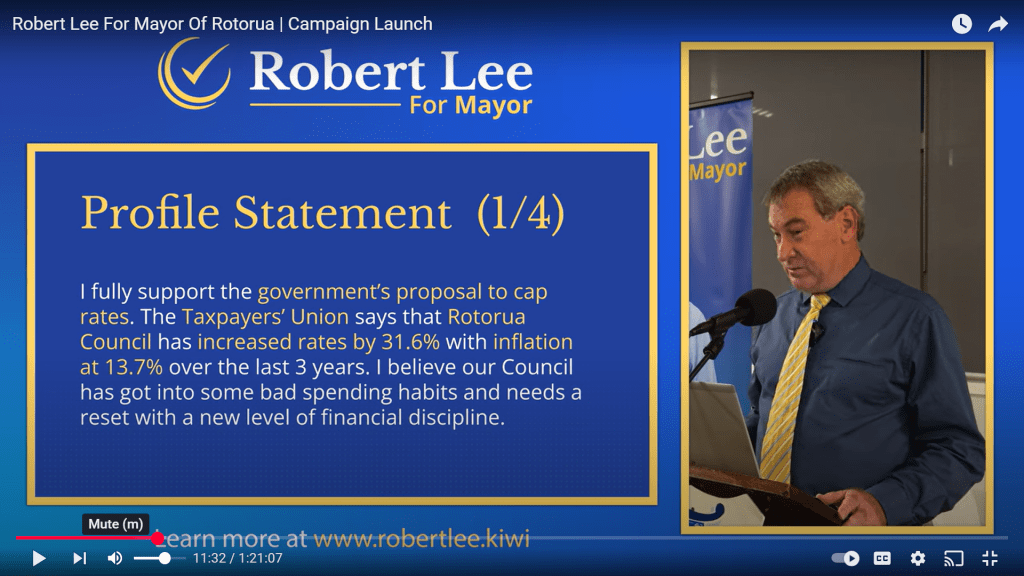
Now that’s what I call a campaign launch! A couple of weeks ago I attended the campaign launch of Robert Lee mayoral candidate for Rotorua, and it included a slideshow presentation with some of the challenges Rotorua is facing like the emergency housing hangover from covid. They have some challenges that we haven’t had to face in Taupō, but we also have a lot of things in common. Well worth a watch for Taupōites too.
Are your other elected candidates taking the pledge from Taxpayer’s Union? If not, I think you should be asking them: Why not? I think it helps to pose the question if rates aren’t tagged to inflation, in 20 years time how do they think people on a fixed income (e.g. pensioners) will be able to afford to stay in their own homes? I say something has to be done, and it has to be done NOW.
Friday old school gets interesting: Australian politician Bob Katter after he takes offence at being called Lebanese but still walking with anti-immigration marches.
Earlier this month, I submitted a formal letter of complaint to the Office of the Auditor-General regarding a potential conflict of interest involving Councillor Danny Loughlin. My concern was that as a Board Memberof the Tūwharetoa Maori Trust Board (TMTB), he had failed to step back from the Council table during the Joint Management Agreement (JMA) deliberations on July 31, 2025. That, to myself and many others, clearly crossed a line of acceptability. Mayor Trewavas declined to intervene, and the Chief Executive even refused my request for independent legal opinion ahead of the meeting. I see those responses as irresponsible, bordering on reckless disregard.
Let’s be clear: if Councillor Loughlin was simultaneously a director of a construction company bidding for a Council contract, they would almost certainly be required to recuse themselves. In fact it would be laughable if they didn’t.
So how on earth can a sitting Councillor, who is also a Board Member of a corporate entity proposing to engage in direct partnership negotiations with the Council, be reasonably considered free of any conflict of interest – financial or otherwise – when both organisations stand to benefit from the arrangement? After all, isn’t that always the reason to have any agreement at all??
My complaint was about a non-financial conflict of interest given his governance role and Iwi affiliation, and my 4 August 2025 letter can be found here.
Last week the Auditor-General responded, you can read it here. The short version: ‘It’s not our job to rule on non-financial conflicts’.
So at the end of the day it is up to politicians to police themselves, and there isn’t anything anybody can do about it. That is, apart from shaming people as Mayor David Trewavas attempted to do with me on 28 June last year in the final edition of the Taupo Times local newspaper:
“While Cr Campbell has repeatedly made his engineering qualifications known to the community, he and every councillor was elected to represent and advocate for their community, not provide specialised advice in their particular field. That would represent a significant conflict of interest, one that this councillor has repeatedly failed to grasp”.
Perhaps next term instead of trying to helpfully contribute on a topic on which I know more about than Council staff, I should instead put forth a partnership deal with my own company and vote YES to it (that is, if I get elected in October).
A broader pattern?
Councillor Loughlin isn’t the only elected member facing public scrutiny around potential conflicts of interest. A recent article by Sophie M Smith raises community questions about Councillor Yvonne Westerman’s position, particularly given her professional background in property and real estate – an industry that naturally intersects with Council decision-making.
While no formal allegations have been made, perceptions of conflicted interests continue to surface (for example, there are reports of seeing her business signage on properties listed for sale that are owned or managed by Council). Real estate, of course, is one of the few industries that could be seen – rightly or wrongly – as benefitting from early insight into proposed District Plan changes. That perception alone underscores the need for greater transparency.
So then, the bottom line is really … YOU
There are very few public spaces where this kind of blurred line between public duty and private allegiance would be tolerated. But local government seems to be the exception, and no-one including other elected members have any real power to force recusals
This is not about attacking individuals, but as public figures they shouldn’t be above receiving that either. It’s about ensuring that our decision-making remains above reproach, especially in politically and culturally sensitive areas. If the rules aren’t fit for purpose, then perhaps it’s time they got changed.
The Auditor-General mentioned at the end of their letter that they are developing some practice material around Treaty settlement entities like TMTB, which is all good and fine. But it sounds like that’s all they will be: Guidelines. I think we need something harder than that: Rules.
Until that happens:
It’s on YOU to vote in some people who you think can tell right from wrong, and will represent YOUR best interests and not just their own.
Okay Councillor Duncan reporting in again, and for at least another month and a bit I still get to use that title. Just one more Council meeting to go in September, and I will be so glad to see the backside of it. That’s not saying I don’t want to be re-elected, but we need some sweeping changes alright if I am even going to consider sticking around another three years.
There is not much happening on the Council front right now because it is the silly election season time, and because of that you can’t expect to get any sensible decisions in Council Chambers. I can tell one or two of them are nervous for their political futures, but as for myself – I can’t imagine why anybody would want to do this job without a very good reason. If my time is up then so be it, I gave it my best.
Okay so this week we have:
Free pass, or am I just being an ass? On Tuesday Council voted to approve the Notification of some District Plan changes, the most notable being the introduction of new Maori Purpose Zones (MPZ’s). I posted on Monday about my dissatisfaction with the way this seemingly race-based planning tool is being railroaded in almost unannounced and voiced this during the meeting (watch it here – please ignore any gaslighting by colleagues that this has all been well discussed before because it has not, and also note microphone management by the Chair).
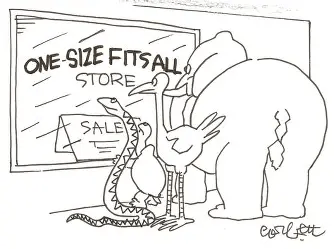
I made the point that some other Councils have considered other planning tools to assist development for communally owned land which is hard for the owners to get finance, but it was portrayed that MPZ are a one size that fits all, and that we needn’t bother about legislative requirements of the Local Government Act which requires all practicable solutions be explored and presented. To illustrate, below is a snippet from ChatGPT after I asked it for alternatives:
This matter of elected members being presented with all practicable options before making a decision was a topic which I tabled a Notice of Motion in September 2024, when I wanted Councillors to simply acknowledge an important court case from Wellington so as to ensure this sort of thing always happens. Intriguingly not one of the other elected members were supportive at the time, and the pushback included that it seemingly always happens here anyway. I think this MPZ example clearly shows that it doesn’t.
That a precedent like this for the district gets such flippant attention, to me just shows how much elected members get led by the nose, and how much of a lubricant is anything around here with the label ‘Maori’ on it. I genuinely do support the intention, but we owe it to the public, and to tangata whenua, to consider all the available tools for the job and not just a one size fits all solution. Apart from all that, what if we were talking: Chinese Purpose Zones?
Mayoral summary spot on: I reckon this summary of the Mayoral race candidates by local Sophie M Smith is a fairly accurate one and very much worth a read.
Credit Card mania, or all just part of the job? Sophie M Smith’s second piece of investigative work this week was around asserted mischievous credit card use by our intrepid Mayor of Taupo David Trewavas. I cannot confirm or deny any of the details, but I can confirm elected members have not been formally briefed about it.
Worship your Mayor? The third of Sophie M Smith’s prodigious output this week was about picking a Mayor. In my time as Councillor this last term, I reckon it might just as well have been Mayor David Trewavas and his Deputy Kevin Taylor running the place, because on any matters of true importance they could invariably be relied upon to shut down any voices of dissent especially my own. As Chairpersons they have the discretion and authority to do this under the Standing Orders of meetings, and there is very little one can do about it. Restoring democracy in Council Chambers is my one of my first priorities if elected, but that will not happen unless the leadership does change. So I really do hope that voters use their brainsand not just their heart, otherwise there’s not really much point in having elections, is there?
In the article Councillor Loughlin says: “What our community did get was a whole lot of skills, knowledge and experience that were sorely lacking at the council table. The network and connections that we bring is needed when dealing with complex issues like wastewater in Nukuhau and Tūrangi, expiring landfill consents and a second bridge crossing“. In the past three years I haven’t noticed a whole lot of that happening which couldn’t have happened anyway, but Danny is right in further saying that voters should be looking at the Council’s track record rather than just listening to what politicians say – if you are a ratepayer, I say that you only need to have a look at your skyrocketing rates bills to see that.
Better democracy happens when people actually turn up to vote, and care about who they vote for. I think Maori wards are a much second best to that.
Mayor’s not talking tripe: Listen to this interview with Whanganui Mayor Andrew Tripe who entered politics straight into the top job. He shows it can be done if you have the appropriate skills and background – and in fact a lack of institutional experience may even be helpful. Whanganui managed the lowest rates increase in the country at around just 2%, and he managed it via things like reducing his executive team, restructuring to improve efficiency, and seeking alternative funding sources. Mention was also made of a previous Mayor demanding a CEO depart if they couldn’t deliver a zero rates increase, and apparently the resignation letter was received soon after. So Mayors are not just one voice at the table after all – they do have clout.
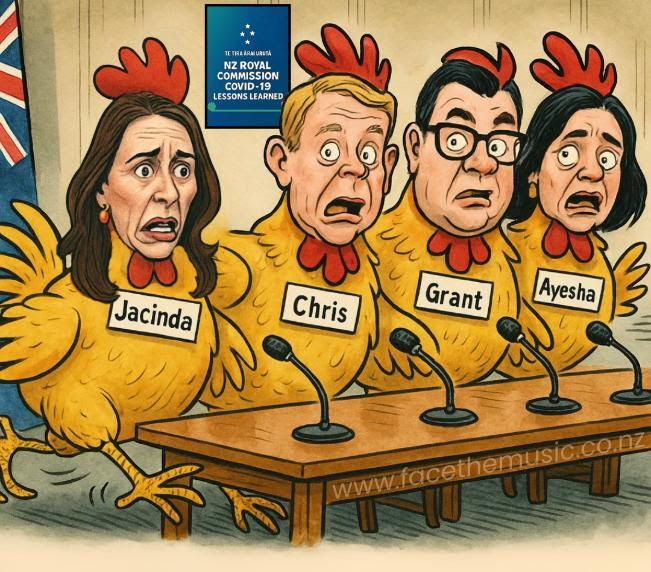
Our cowardly leaders: Following the refusal of our honoured Sir & Dame leaders to front up to the Royal Commission enquiry, the Voices for Freedom organisation have released a free copy of their report about how we were all duped during covid. Just in case anybody was thinking of it, please don’t nominate me for a knighthood because Hell will freeze over before I ever accept one of those.
Mirror on the wall: Candidate Zoran Rakovic who is standing for Selwyn District is my kind of guy who blends an eloquent writing style with laced humour. I reckon we need more people like him in local government, and my advice is to get them while you can.
Student Fight back and wins: An Auckland University law student compiled over 680 pages of evidence to win a judicial review case against Auckland Transport (AT) for installed a series of speed humps and because did not properly justify why they would not ‘unduly impede vehicular traffic’. I think this just goes to show the extraordinary effort required to push back on a Council decision, and also that the law is no panacea for justice. This judicial review established that there was some predetermined thinking going on, but did not adjudicate on whether the decision to install these raised platforms was incorrect. The reality is that we need elected representatives who can think for themselves, who can push back on Council staff with the hard questions before the decision gets made and not after.
Conduct unbecoming? There was a recent code of conduct complaint against an elected member of Taupo District Council following an incident at a committee meeting which was not audio-visual recorded. A lawyer was apparently involved, but probably not a very independent one because as far as I can tell there was grounds for grievance. More than anything else though, this episode should highlight for the sake of everybody’s protection, the importance of audio-visual recording any formal Council meetings which include elected members. This is something which I advocated to happen last September in a tabled Notice of Motion but unfortunately could garner not even a seconder let alone vote of support. This needs to change, because to have accountability we also need to have visibility.
Pssst: There was a confidential item 6.2 on Tuesday Council meeting entitled Proposed Commercial Land Sale at 155 Napier Road (which didn’t seem to me to justify secrecy given it is public land at stake). But in case the interested party is listening: don’t expect to get a sensible answer in as silly an election season as this, so perhaps try again after October.
Duncandoestaupo insurance: It has occurred to me that fickle Facebook is capable of cancelling me at any moment and for no legitimate reason, so if you haven’t already please press the subscribe button at the bottom of this page to cover that eventuality and not risk missing out in the crucial weeks ahead.
Friday reality check: Your average government minister be like:






















































 duncandoestaupo.com