
27 February 2026

In Thessalonians 5:16 Apostle Paul says:
“Rejoice always, without ceasing, in everything give thanks; for this is the will of God in Christ Jesus for you”.
Joy in all circumstances, yes it really says that – and that means both in times of pleasure and play, but also death and desertion. How can such a thing be possible? You need to know that its greatly about gratitude – for what you have and the people around you, even when they seem pretty miserable.
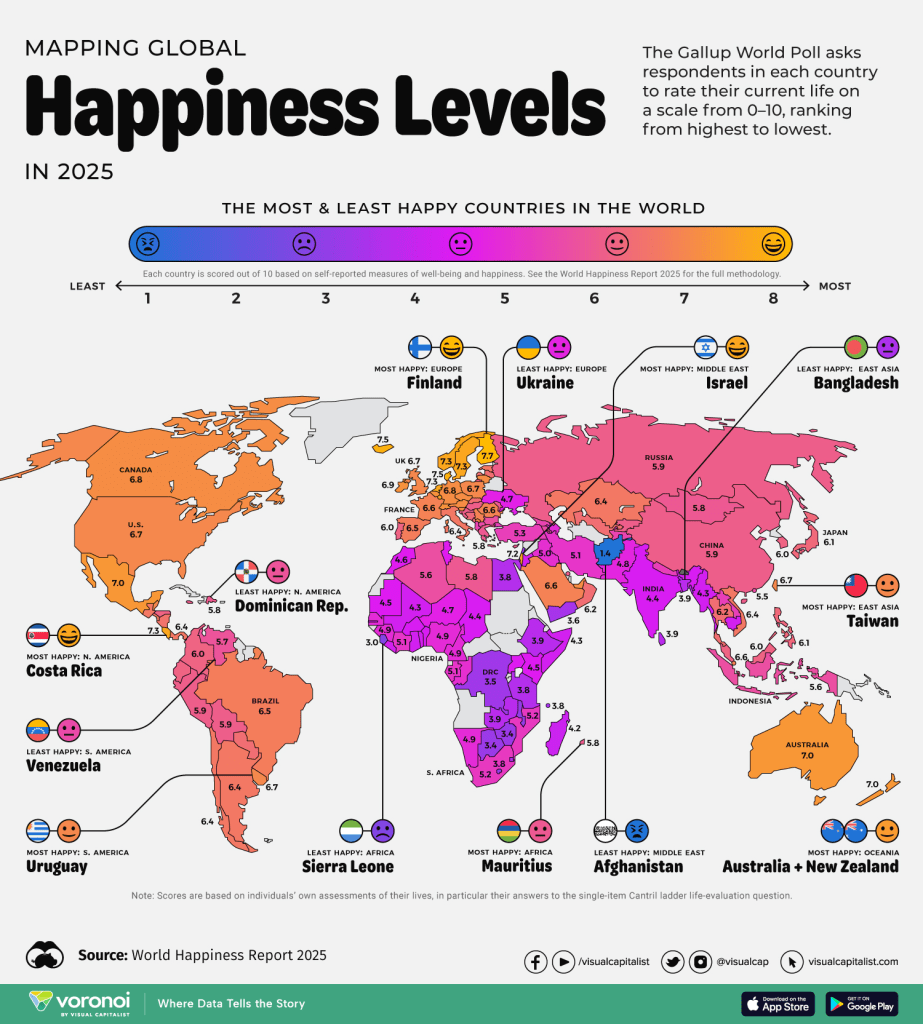
I was next going to try and say that some of the happiest people live in the materially poorest places on earth, but the below Gallop poll map seems to undermine that argument somewhat. It turns out that material prosperity does make a difference after all.
Perhaps I haven’t expressed it much before, but I do recognise the privilege being a Councillor for Taupo District Council. How on earth I managed to get elected being quite an outsider with relatively few connections in this provincial town still gets me (we migrated here from West Auckland in 2016).
BUT, and it is a big BUT – what is the point of having elections if staff effectively run the place anyway? Which would be fine if staff were perfect and always make the right decisions – BUT we all know that they don’t. Our new Mayor Funnell got elected on a platform of change, BUT I haven’t seen too much of that happening yet. Transparency and accountability are nice bywords, BUT to mean something they need to be followed up by actions. There is at least some of that starting to happen for the Waikato Rivers Joint Management Agreement (JMA), but in some other areas like freedom of expression for Elected members we seem to be going backwards.
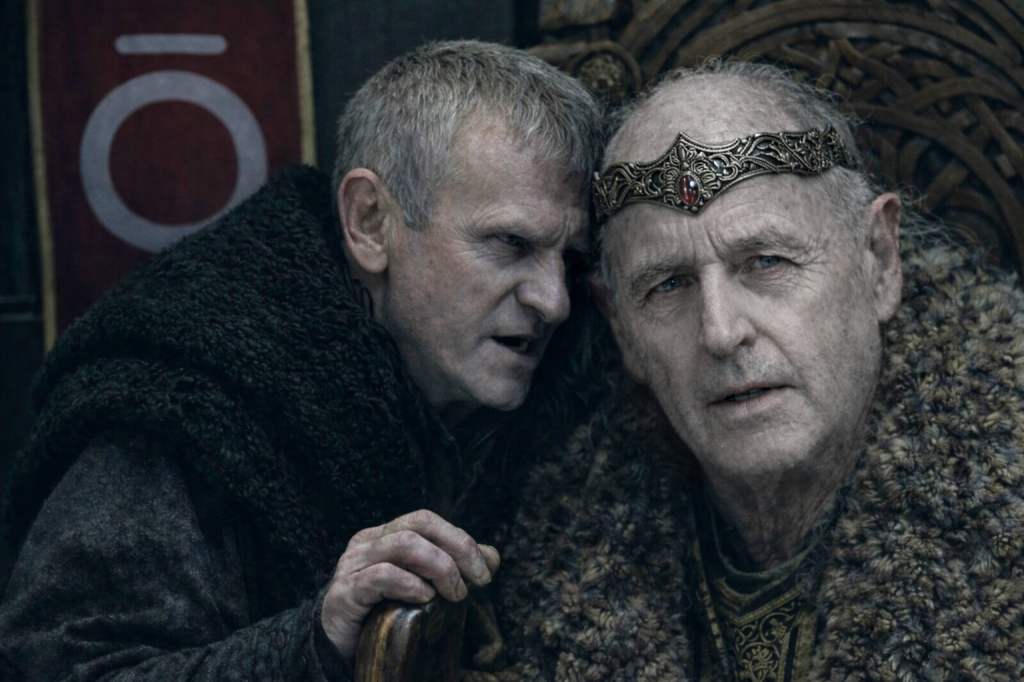
The below illustration based on Lord of The Rings was forwarded to me by a constituent that seems to illustrate the situation. Anybody have a wizards staff handy?
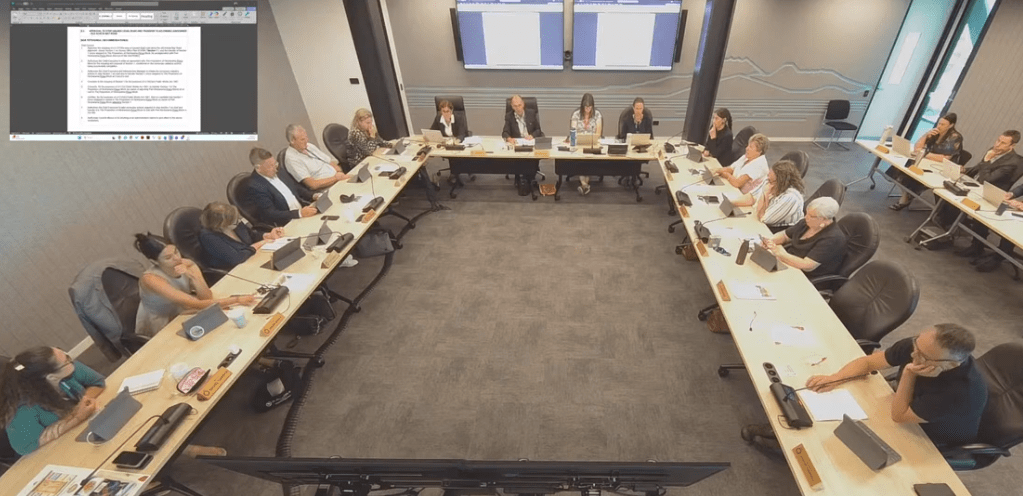
This week we did have some Council happenings, notably a lengthy full Council meeting on Tuesday where a few items of interest popped up and which you can watch Part one HEREand Part two HERE, with minutes and agendas available HERE. Like a broken record I took opportunity to again challenge the Mayor about political messaging in Council agendas (watch HERE) and also the absence of free expression for Elected Members (watch HERE and HERE). I am advocating to re-introduce the slot for general items which was deleted two years ago by the previous and nefarious Mayor David Trewavas to shut down opportunities for dissent, and to which I have previously written to Mayor John about on 2 February.

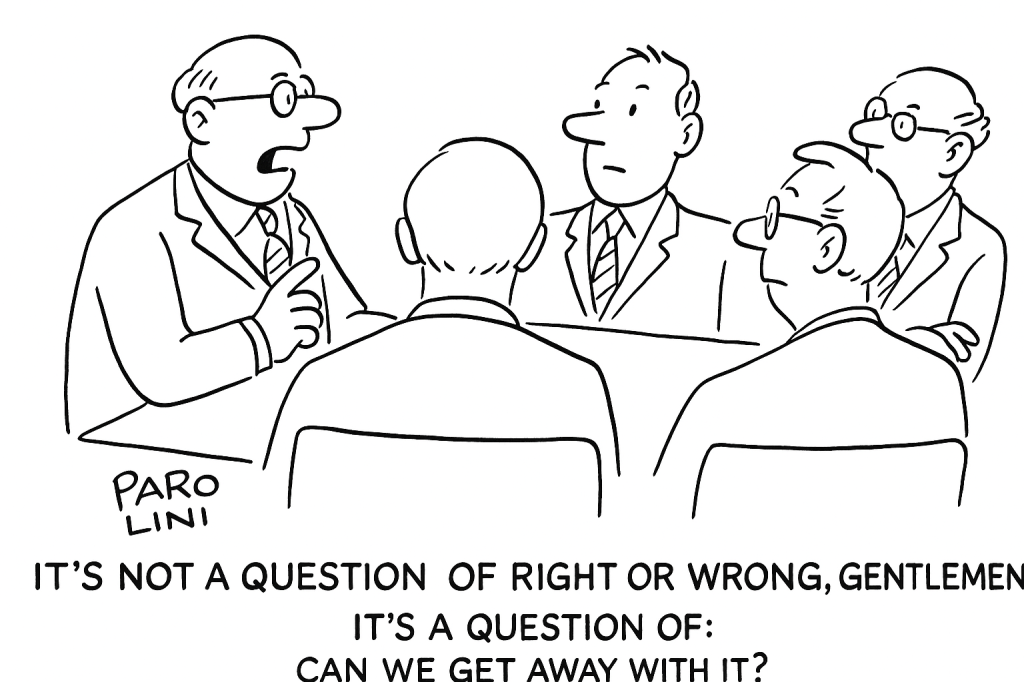
On that last note I have at times been accused of grandstanding for the purpose of self-elevation, which I find a ridiculous claim. Council Chambers is supposed to be a place where Elected Members can express alternative views in a public setting – because what on earth is the point of having elections if members of the public get a greater say like they do now? I should be allowed to talk about the state of the Nation for a few minutes if I want to, or even the state of Council catered lunches. You elected us as politicians, and there are times we need to be able to say political things.

However, on the matter of political messaging I can announce a small win. My concern was about the agenda messaging inaccurately reflecting statutory obligations with regard to Maori Engagement. The Mayor gratefully undertook a review, and the wording will now be amended to more closely align with legislation and clarify Council’s position. I appreciate that response, and respect that governance is often about incremental improvement rather than dramatic gestures.
The current wording (introduced in 2021 as far as I can tell):
“Taupō District Council is committed to meeting its statutory Tiriti o Waitangi obligations and acknowledges partnership as the basis of Te Tiriti. This requires both parties to treat and work with each other in good faith and show good will to reflect the partnership relationship. We acknowledge these responsibilities are distinct from the Crown’s Treaty obligations and lie within a Taupō District Council context”.
The proposed revised wording, not exactly what I was asking for but an improvement nonetheless, to clarify about partnership and that Council is not a Treaty partner:
“Taupō District Council is committed to meeting its statutory obligations including in relation to Te Tiriti o Waitangi/Treaty of Waitangi principles, consideration of Māori interests and meaningful engagement with Māori. In meeting its statutory obligations, Council is committed to acting reasonably and in good faith and consistently with a partnership-based approach. Te Tiriti/Treaty principles include but are not limited to active protection of Māori interests, informed decision-making and enabling effective Māori participation in Council processes”.
Okay what about some other stuff?
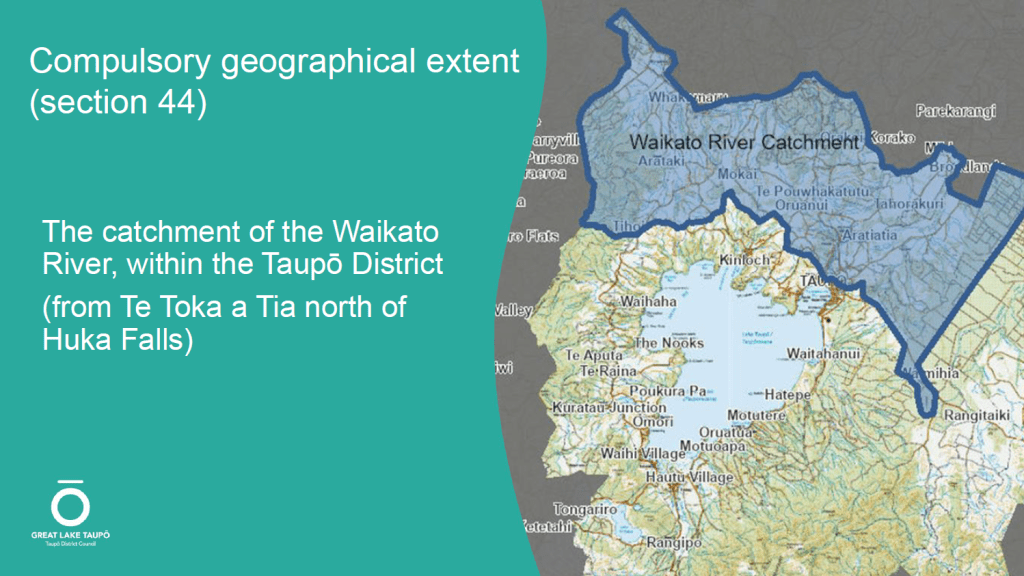
JMA saga continues: In the second of the Waikato River Joint Management Agreement (JMA) workshops of a number to come, on Tuesday we had one titled: “Outline of Mandatory Matters” (you can watch it HERE), which went smoothly enough except for some minor disquiet caused by a few comments of my own that I will restate below. However, we did at least get presented with this helpful map to demonstrate the area this JMA is obliged to cover (noting that it doesn’t include Lake Taupo):

My first point was that we needn’t be here at all and could probably have been sorted out well over 12 months ago, if elected members from the last term had simply just decided to keep things simple and stick to the mandatory requirements. Instead there was a vote by slim majority in September 2024 to include the bone of contention extras, with Cr Kevin Taylor & Cr Yvonne Westerman being the two still present who voted for the extras but declined my request for a public explanation.
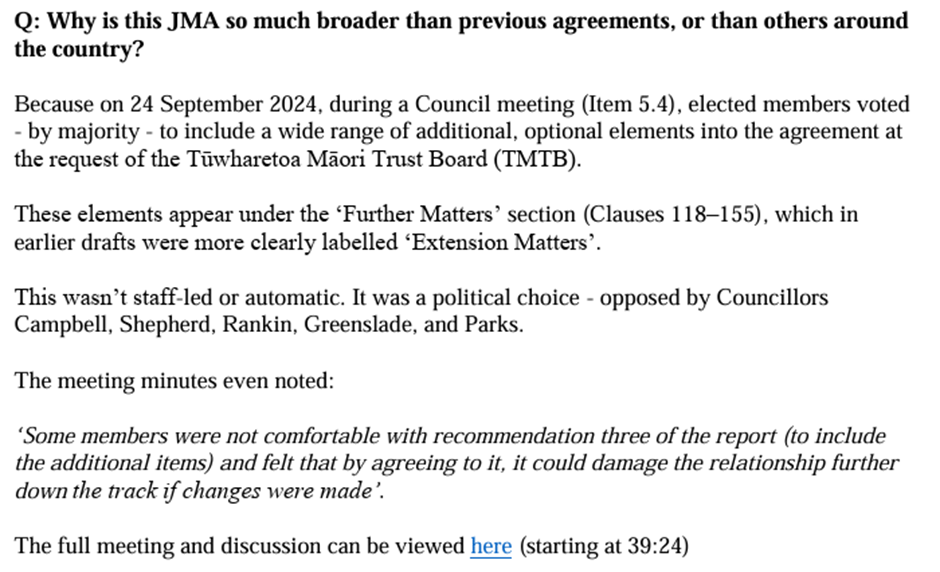
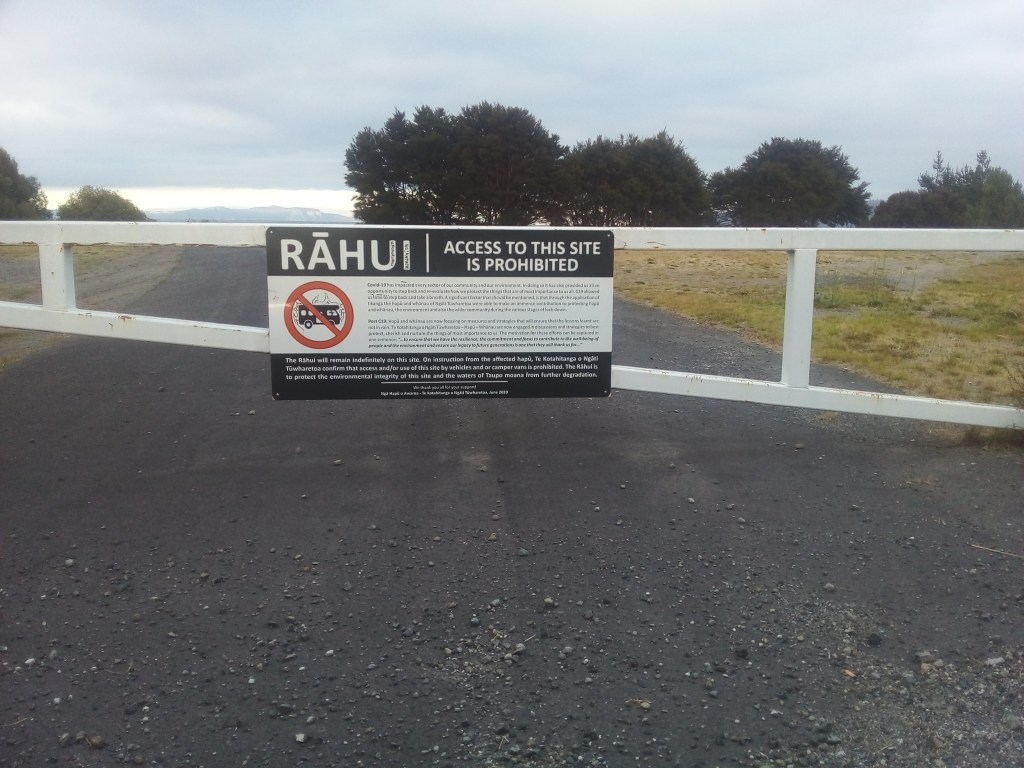
I also said that corporate Tuwharetoa Maori Trust Board (TMTB) is an entity that Council should only be warily entering into any significant partnership deal beyond that which is absolutely necessary. At least Councils have the Local Government Act which forces a minimum level of transparency and accountability, but these trust boards do not have the same guard rails to ensure they will act in the best interests of our district or even its own members. And if we are looking at examples of good governance, I don’t think the management of Five Mile Bay Recreational Reserve which has now been under occupation for over 5 years is a very shining example of why we should be entangling with outside entities like this any more than strictly necessary.
In a wider context and after my experience of the past three years, I say that a tragedy of the current Council process is that workshops like these are staff presentations only and with usually quite limited opportunity for questions. Once it comes to a full Council meeting for the decision making to actually happen, any serious debate is often quenched on the basis that it has already been worked through. I do hope that Mayor John Funnell will not let that happen this time round, and that he will push for background submitted questions by both Elected Members and the public to be properly responded to – which often enough in the past has not always happened.
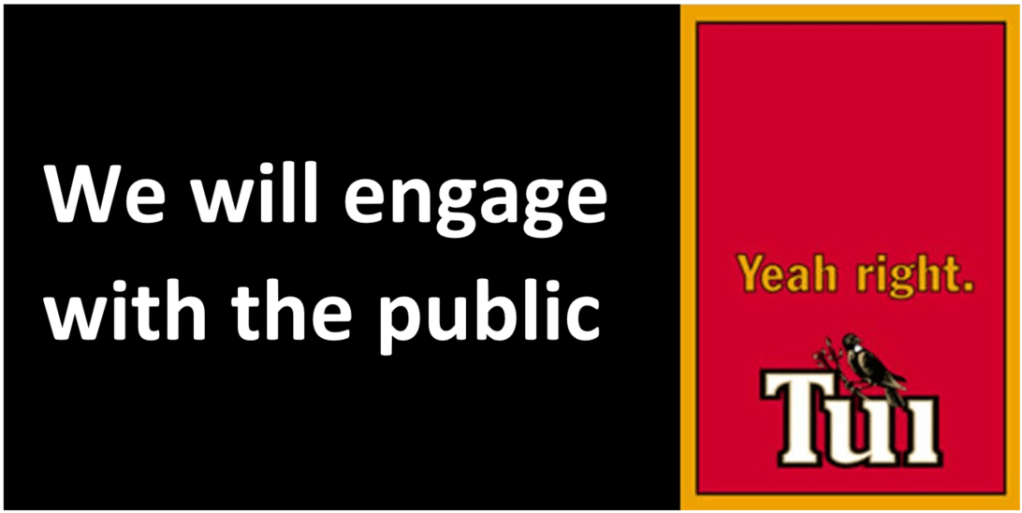
Community engagement, or just stage management? On Tuesday we also had an item which has caused something of a furore in the Turangi and Mangakino sides of town (what is it about these small close-knit communities?) which managed to retain their current committee structures instead of the promoted less formal format – many people out that way are even asking: what was the problem in the first place? I personally won’t miss the stuffiness of the former Kinloch committee which saw boatloads of staff hauling out there for an afternoon every two months or so (they will soon be getting a less formal format), but Taupo Ward will be getting some new meet-up sessions which they haven’t had before or seemed to even want (what is it with these larger more disconnected communities?).
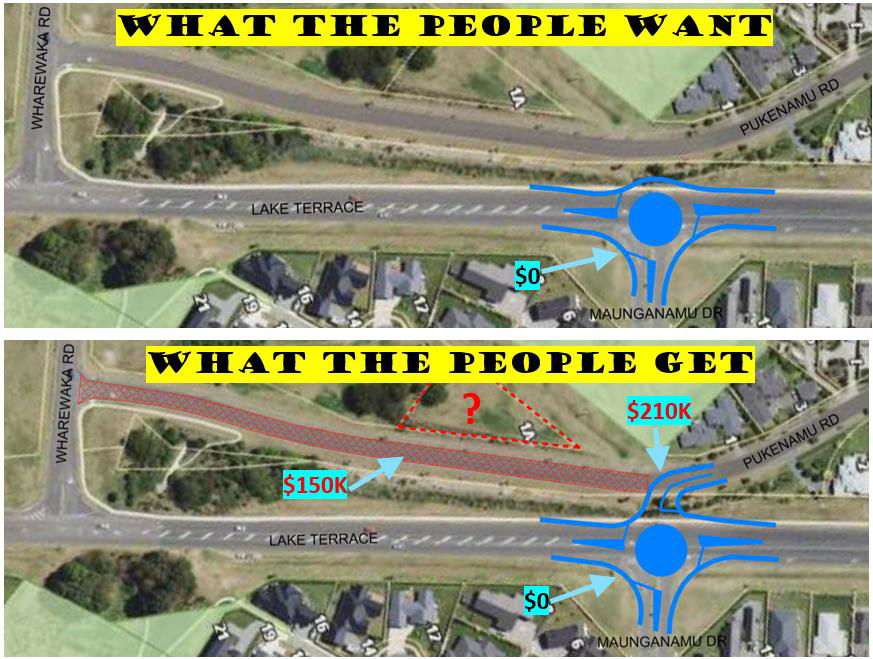
However in my mind at least, this whole exercise has been something of a red herring. Because the issue isn’t so much about public engagement – although that is still important – it is whether or not Council chooses to listen to what the public have to say and bend their will to it. I think there have been plenty of major decisions in the past where the public have been excluded (including the Taupo Town Transformation Project), but also where the public have been included but patently ignored. The Pukenamu Roundabout Project I hold up as a classic example of that, where the community engagement was actually very good and even perhaps a little over the top. But the almost universal request of Pukenamu Road residents to remain unconnected to the proposed new roundabout was rejected, seemingly on the very dubious basis that Council is not acting illegally. Why don’t we let the lawyers run Council and see how that ends up, eh? Anyway, there is still time to change our minds about that particular decision because it hasn’t been built yet.
Reporting back or not at all? At the end of Tuesdays meeting (watch HERE) I raised the issue of Elected Members attending outside conferences or events but not being formally required to report back. In my experience in the private sector this is virtually unheard of, and one outfit I worked it was mandatory to be presenting one of the conference papers to even be allowed to attend. Last term I put a Notice of Motion for mandatory 250 word summaries (preferably also for public consumption), not only for information dissemination but also to justify the attendance and expense. Unfortunately there was not any more appetite for such transparency and accountability this time round either.
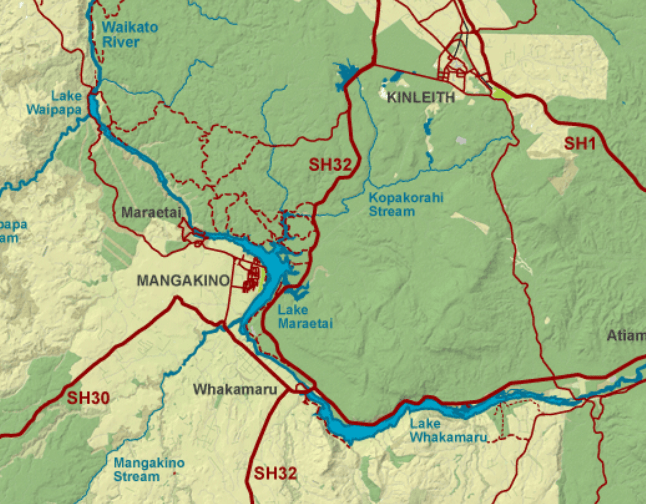
Waikato Waters continue to suffer: Councillor Hope Woodward is still banging on about the dire water quality of Waikato headwater lakes including Lakes Whakemaru and Maraetai, and she was motivated enough to recently undertake her own public survey and submit it to all sorts of agencies like Waikato Regional Council, Mercury Power Company and a host of others. You can read the survey results here, and it seems a lot of people are not very happy at all. The contents of Cr Woodwards letter is shown below:
Kia Ora Koutou, please find attached a report done in relation to a survey I initiated throughout relevant communities regarding the water quality in the upper Waikato region. I initiated this survey independently following advice from WRC that formal engagement would need to wait until the next fiscal year, funding dependent. The strength and consistency of the responses indicated that this issue warrants immediate action. This report is not intended to assign blame. It reflects community sentiment and lived experience. However, the scale of the responses makes it clear that residents and public expect coordinated leadership, transparent monitoring, and tangible action. I ask that this report is taken seriously and that agencies consider how proactive collaboration, communication and accountability can be strengthened going forward. Our lakes are central to the wellbeing and viability of our communities, particularly here in Mangakino and Whakamaru. Please confirm acknowledgement of this email and report. I look forward to further clarity regarding how this matter will be progressed. Ngā Mihi, Kaunihera/Councillor Hope Woodward Mangakino-Pouakani Ward
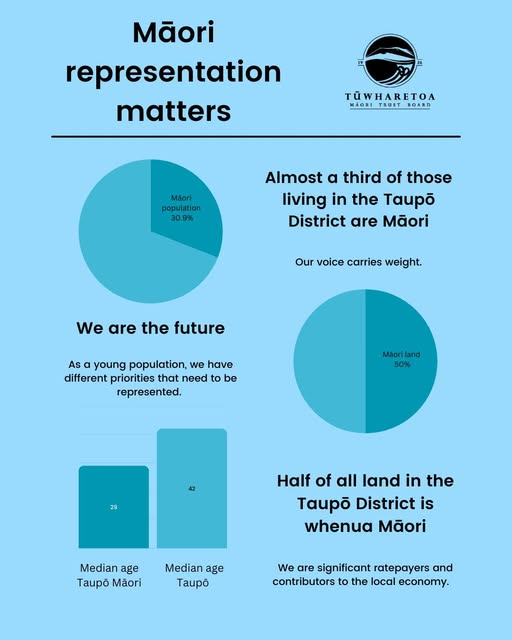
Maori Purpose Zones: Council is consulting on a couple of planning changes including this one which I did a brief item in August last year that you can read HERE which includes a link to the recorded staff presentation on the topic. The intention of these is to make it easier for communally owned Maori land to get developed, which is not a bad thing at all. The caption at right just reflect my thoughts at the time because I felt it was being foisted upon Elected Members without debate.
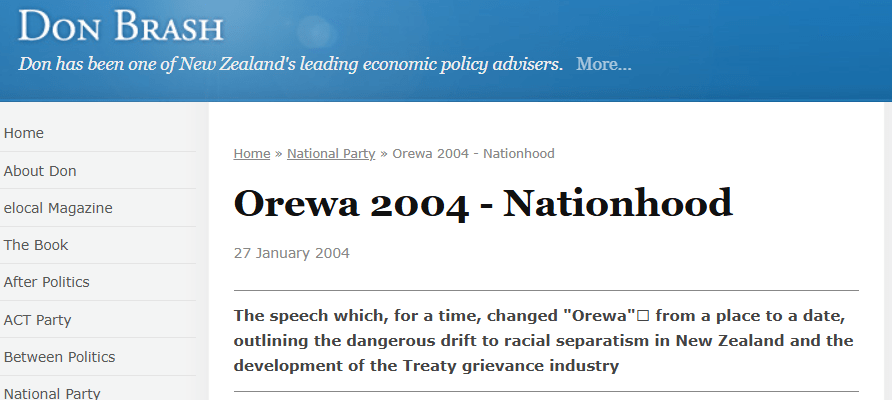
Anybody like Don Brash? Former leader of the National Party and a few years later, I think a reread of his at the time controversial Orewa speech of 2004 is a worthwhile exercise to see how very right he was on quite a few points. Hindsight can be a wonderful thing, but I wish more Kiwi’s were able to comprehend in real time.

Loyal but only to a point: On Sunday evening I attended a Loyal Party small gathering at Ploughman’s restaurant and met the forthright leader Kevin Alp along with his deputy John Alcock. I really like their idea of a universal 1% transaction tax and the abolition of all the other taxes (apparently the maths stacks up for it to work), but I am quite sceptical that enough New Zealander’s are so open-minded to put their vote Loyal’s way. I reckon it would just about take something like the French Revolution for that to happen very soon, and with the average Kiwi’s approach to life being roughly akin to our namesake bird – we will probably all go the way of the Dodo bird before that ever happens.

It can’t happen like that here: Napier Deputy Mayor gets the sack, but interestingly the Standing Orders at Taupo District Council are such that our Mayor is not able to unilaterally do that without majority support of the other elected members (snippet below). It needs majority support to get our own Deputy Mayor demoted and whether or not the Mayor agrees, and I don’t feel that enough of us are up for that quite yet.

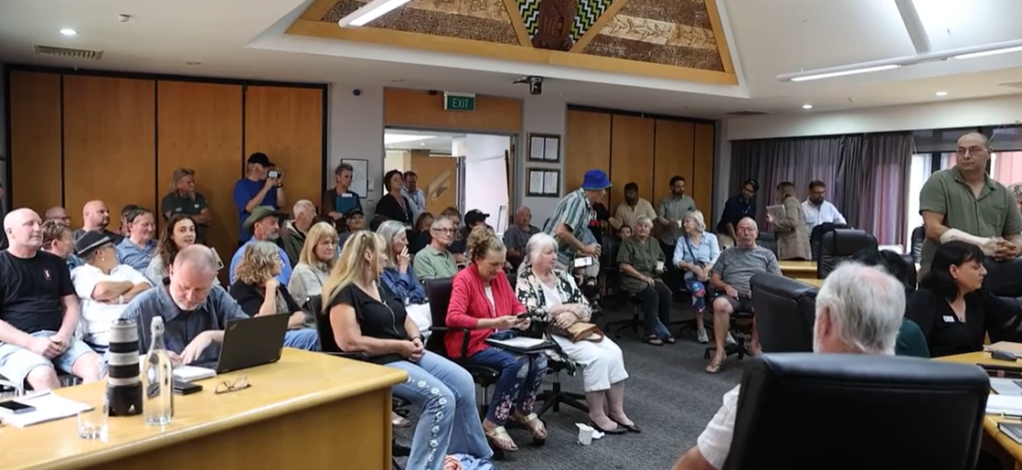
Chaos reigns in South Waikato: Mayor Gary Petley of South Waikato District Council called time out on a full Council meeting yesterday because he didn’t want 73 yr old member of the public Bruce Simpson to video record the proceedings from the public gallery. Bruce runs his own youtube channel, and is insisting upon making his own recording because of confirmed incidents where segments of the Councils own recordings have been purposely deleted in the past (you can watch his 12 min explanation HERE). So the entire meeting was postponed for another time and with a full gallery of public present keen to listen in too. Ugh, what a drop-kick of a Mayor they have in South Waikato and no wonder there were catcalls of ‘chicken‘. Some politicians are such feeble people, why on earth do people vote for them?
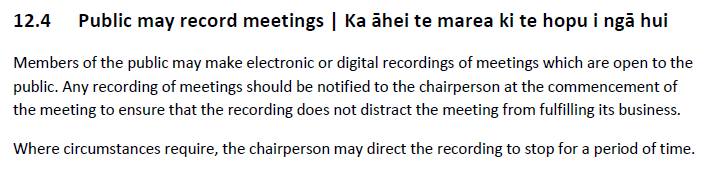
Good on ya Bruce, and thank goodness Taupo District Council isn’t as seedy and untransparent as them. And by the way, there is nothing to stop members of the public making their own recordings in a TDC Council meeting – although technically you are supposed to first ask, and below is the relevant clause from our Standing Orders (I can only imagine that the circumstances to justify a directive to stop recording should be extraordinary – yet another unfortunate loophole that could potentially be pounced upon):

Cash may be king but not at Taupo Landfill: In Public Form on Tuesday constituent Tristan Baynham spoke out against the staff induced change of policy last year to mean that cash is no longer accepted at the Taupo Landfill for apparent Health and Safety reasons (watch HERE). Tristan put forth that this is a great inconvenience for some people and asked a fairly basic question that received no good answer – what was the problem in the first place? I am not sure if there will be serious consideration to reverting back, but I stuck my oar in for it.
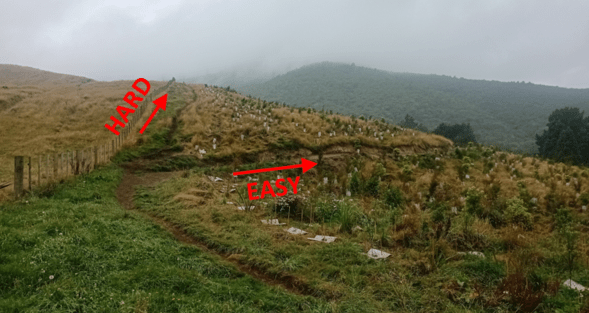
Track made easier: To those lovers of nature like me and who also like a bit of a challenge, walking/climbing up Mt Tauhara just got a little easier. Somebody has dug deep, and constructed a new easy grade track for the first (and steepest) section to encourage those less inclined to mountain climbing and more just into the walking. So whoever you are, I want to express my heartfelt gratitude because now we will get even more people up this wonderful place for solitude, reflection, and strengthening of the body.
Fridays out there: I struggled to think up something to poignantly end this week, so how about this quality investigative piece on education in the modern age:








 duncandoestaupo.com