Campaign Priority #2: Take Back Control of Council

17 September 2025

Councillor Duncan here, recalling my three campaign priorities:

#1 Restore Democracy

#2 Take Back Control of Council

#3 Cap Rates to Inflation

Today I want to talk about #2 Take Back Control of Council – and I mean from the staff, of course. Because right now a big reason that your rates keep on going up and up is because Council staff dictate what needs to happen and why, and the elected members go along with it (even if grudgingly at times).  I am not saying that the staff are always wrong, but I am saying they will always find reasons to spend more money than we really can afford.

I say that elected members need to get some balls and not just let staff pull the strings.

For this to happen:

  • Change of leadership. Elected members need to get their act together and not just act independently, otherwise staff will continue to run the shop as they have been for too long already. That will require elected members to wisen up and practice teamwork to look out for not just their own priorities but also each other’s. Because things like that do not happen in a vacuum, without the right leadership at the helm I don’t think it’s going to happen. Departing Mayor of Invercargill Nobby Clark puts it quite well in this 10 min interview
  • Staff need to be directed to follow the Local Government Act and start providing elected members with the full range of reasonably practicable options.  This simply has not been happening to date, and a few examples that stand out to me include the Motutere Reserve Management Plan Review which wasn’t even necessary, and the more recent Joint Management Agreement (JMA) where elected members were led down the garden path as if there was only one way to do it.  Being provided with practicable options was something I attempted to table last year through an acknowledgement of an important Wellington case, but was yet again shut down by a leadership that wasn’t prepared to entertain the notion that it wasn’t already happening. Yeah right.
  • Delegated Authorities need to change, and for infrastructure spends in particular.  At present elected members get to sign off on Annual and Long Term Plan budgets at the beginning of each financial year, but detail is very skimpy for the hundreds of line items with often just a few words and a big $$ figure beside them.  In my own professional field of transportation it is extraordinary for Council staff to say, go off and build a multi-million dollar intersection upgrade without reporting back for approval of governance – yet that is exactly what happens here in Taupo.  What is most agitating for me as an engineer who is hot on value for money infrastructure, is that I know some projects could have been done for a fraction of the price. 
  • More independent professional reviews.  At present we are almost only ever presented with papers prepared from the staff viewpoint, and that can be anything from engineer or planning reports to legal opinions.  Unless you happen to be a lawyer or engineer yourself, it can be very hard to push back on staff recommendations because of the accountability that goes with it.  Professional independent advice does cost money, and my own preference is for elected members to be able to source their own.  I reckon we could start with $10K per elected member, and that would be a bargain if it helps to get some more circumspect thinking to happen.
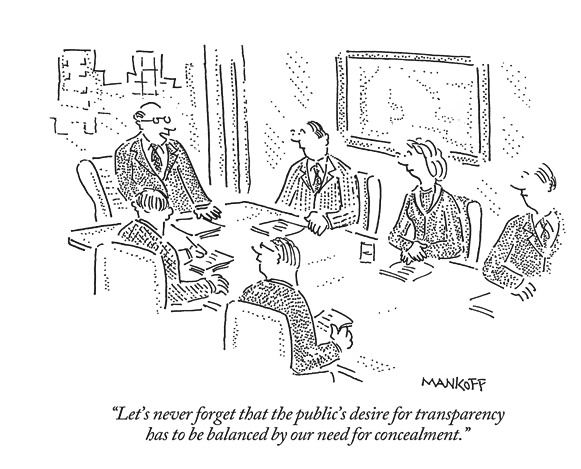
  • Do transparency for real and not just pretend. That means audio-visual recording every Council or committee meeting that involves elected members as many other Councils already do (unfortunately there was no support last year when I tabled this to happen). It also involves elected members telling the public what is actually going on and not just carrying forth the staff censored spin as I believe happens too often around here. I have been doing that the past year or so, but am fairly exceptional and other elected members need to start doing the same.

For the main campaign page to explore all three campaign priorities please head over here

Friday and its raining

12 September 2025

Councillor Duncan reporting in with the past weeks Council happenings, or at least the ones I noticed anyway.

The assassination of Charlie Kirk isn’t exactly of local news relevance – or is it? In my view the tolerance to hear someone else’s views, or even to let others hear them, has waned quite significantly since around 2019.  Violence has been a way of solving problems for a very long time, and against those in leadership roles especially.  Are we so far off from having the same happen here?  I am not so sure.  

This week we have:

In case you missed them: my candidate 90 sec interview, and I also put out some information on my campaign priority #1 – Restore Democracy. Next week will be #2 – Take Back Control of Council.

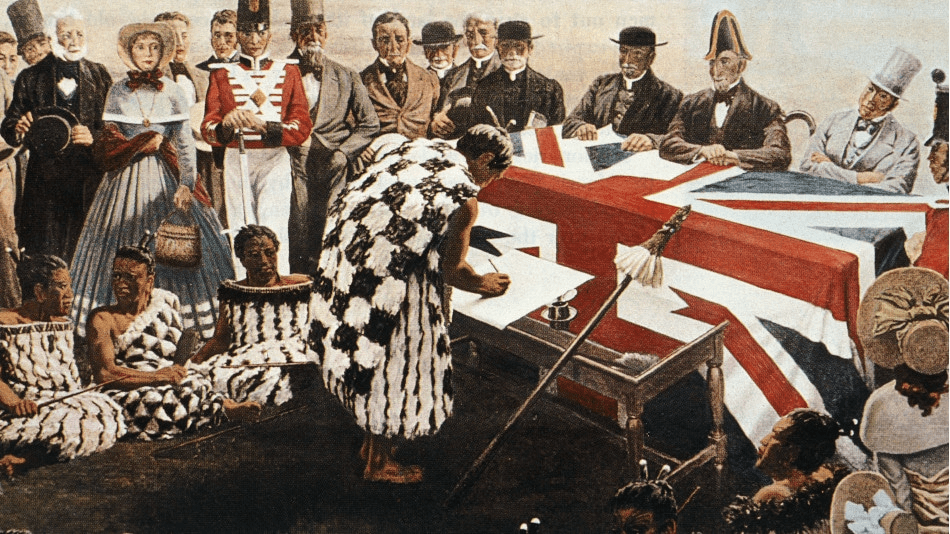
Rotary rhetoric, or are they just relics?  The Rotary event on Monday 8 September was well attended, and if you have two hours on your hands to hear a little more about candidates you can watch here.  Otherwise, to the question: “Describe the purpose of Te Tiriti o Waitangi and how it affects your local government role?” this was my 70 second response.  I did also prepare answers to several other questions about Rates Caps, Local Waters done Well, the Joint Management Agreement (JMA) and Maori wards, and you can find my written responses to those here.

There seemed to be a fixation on questions about Maori wards which I found a little odd given it is a public referendum question to decide in October, and the strict Y/N format of the questions at the end deteriorated things a little. Overall I think it wasn’t too bad an effort by Rotary who put it all on, and it would have been challenging to cater for so many candidates.  But a couple of things did stick out for me: first that I am in a very small minority who openly say they would breach confidentiality – I think new candidates need to appreciate in matters of greater public interest that justifiable exceptions can be made, and also to challenge every time something is being held as confidential.  And Cr Loughlin’s mentioning that staff could go to jail if they fail to adhere to legislation – I have not heard of that happening before in New Zealand, ever.

Mirror on the wall: Robert Lee mayoral candidate for Rotorua poses an interesting question about the Treaty of Waitangi, and what it means for Councils.  Like me, he says: not very much at all. Having said that, the Kaipara District Council legal opinion which downplays Treaty obligations to Councils was recently rejected by a South Island Mayor

Why aren’t they signing? The Taxpayer Union pledge isn’t attracting signatures from too many Taupo ward candidates as you can see here, although for some reason they haven’t included Maori ward candidate responses (if you are in one of the other wards, you need to ask here).  I find it a little strange that two of the front running mayoral candidates will sign, but only a few of us others.  I am reading that as a bit of a disconnect to actually getting rates down, because any time you give The Council Machine an inch it will always take a mile.

Joint Management Agreement refresher: To piece together all my posts and info on the JMA, I have put together a special JMA page here.  On that note, have a listen to Shane Jones inferring that some kind of woke virus has infected regional councils including our own Waikato one.

Race-based or just r**ist? New Plymouth Councillor censored for stating that a race-based procurement policy is r**ist.  I am not sure if TDC have a similar policy for preferential treatment, but one of these days I intend to ask.   

Why do we need Councils anyway? So says this guy, but I think it’s probably easier to run away in a housebus.  

Works in progress but we are just about there now: Here are my candidate statements to Policy.nz, which don’t quite match the three campaign priorities I am putting out now because these were submitted several weeks ago.

Legal costs mounting? I reckon an interesting metric to compare Councils would be legal costs per ratepayer (including payouts), because I have a sneaking suspicion that Taupo District Council could be near top of the list.  Just looking back to the John Hall debacle of 2023 where hundreds of building consent producer statements got signed off fraudulently over a several-year timeframe, I never did get satisfactory answers to my questions at the time.  Like say: how many of these were simply vetted for quality purposes (because sloppy engineering practice is a much bigger problem than fraud)?  Or even: have the processes since been improved to prevent it happening again?  But the walls of The Council Machine went up very quickly with self-preservation at No.1, so I gave up trying. 

Power back to the people: Auckland Transport to be stripped of most of its powers, with Minister of Transport Chris Bishop saying: “These changes mean that Auckland Council’s elected members will be directly accountable to the public for most transport decisions that affect the daily lives of Aucklanders”. I reckon the same needs to happen for elected members in Taupo, who for too long have been treated as tick-boxers for significant transport issues affecting the entire district. We just need the right leadership to get elected in.

Friday insider peek atTRAFFESSIONALS, your local shop for traffic engineering advice:

The Bottom Line on Conflicted Interest – is YOU

2 September 2025

Earlier this month, I submitted a formal letter of complaint to the Office of the Auditor-General regarding a potential conflict of interest involving Councillor Danny Loughlin. My concern was that as a Board Member of the Tūwharetoa Maori Trust Board (TMTB), he had failed to step back from the Council table during the Joint Management Agreement (JMA) deliberations on July 31, 2025. That, to myself and many others, clearly crossed a line of acceptability.  Mayor Trewavas declined to intervene, and the Chief Executive even refused my request for independent legal opinion ahead of the meeting. I see those responses as irresponsible, bordering on reckless disregard.

Let’s be clear: if Councillor Loughlin was simultaneously a director of a construction company bidding for a Council contract, they would almost certainly be required to recuse themselves. In fact it would be laughable if they didn’t.

So how on earth can a sitting Councillor, who is also a Board Member of a corporate entity proposing to engage in direct partnership negotiations with the Council, be reasonably considered free of any conflict of interest – financial or otherwise – when both organisations stand to benefit from the arrangement?  After all, isn’t that always the reason to have any agreement at all??

My complaint was about a non-financial conflict of interest given his governance role and Iwi affiliation, and my 4 August 2025 letter can be found here.

Last week the Auditor-General responded, you can read it here. The short version: ‘It’s not our job to rule on non-financial conflicts’.

So at the end of the day it is up to politicians to police themselves, and there isn’t anything anybody can do about it.  That is, apart from shaming people as Mayor David Trewavas attempted to do with me on 28 June last year in the final edition of the Taupo Times local newspaper:

“While Cr Campbell has repeatedly made his engineering qualifications known to the community, he and every councillor was elected to represent and advocate for their community, not provide specialised advice in their particular field.  That would represent a significant conflict of interest, one that this councillor has repeatedly failed to grasp”.

Perhaps next term instead of trying to helpfully contribute on a topic on which I know more about than Council staff, I should instead put forth a partnership deal with my own company and vote YES to it (that is, if I get elected in October).

A broader pattern?

Councillor Loughlin isn’t the only elected member facing public scrutiny around potential conflicts of interest. A recent article by Sophie M Smith raises community questions about Councillor Yvonne Westerman’s position, particularly given her professional background in property and real estate – an industry that naturally intersects with Council decision-making.

While no formal allegations have been made, perceptions of conflicted interests continue to surface (for example, there are reports of seeing her business signage on properties listed for sale that are owned or managed by Council). Real estate, of course, is one of the few industries that could be seen – rightly or wrongly – as benefitting from early insight into proposed District Plan changes. That perception alone underscores the need for greater transparency.

So then, the bottom line is really … YOU

There are very few public spaces where this kind of blurred line between public duty and private allegiance would be tolerated. But local government seems to be the exception, and no-one including other elected members have any real power to force recusals

This is not about attacking individuals, but as public figures they shouldn’t be above receiving that either.  It’s about ensuring that our decision-making remains above reproach, especially in politically and culturally sensitive areas. If the rules aren’t fit for purpose, then perhaps it’s time they got changed.

The Auditor-General mentioned at the end of their letter that they are developing some practice material around Treaty settlement entities like TMTB, which is all good and fine. But it sounds like that’s all they will be: Guidelines. I think we need something harder than that: Rules.  

Until that happens:

It’s on YOU to vote in some people who you think can tell right from wrong, and will represent YOUR best interests and not just their own.

Plan Change 47: Māori Zones or Nothing Else?

25 August 2025

Tomorrow, Tuesday 26 August from 1pm, your elected members of Taupō District Council will vote on a bundle of plan changes – some necessary and worthwhile, others quietly political.

One of them, Plan Change 47, proposes a new ‘Māori Purpose Zone’ – a separate planning framework for Māori land. Meeting agendas can be found here, and I will tell you now that tomorrows is a bit of a long read.

Let me be clear: I support removing barriers to Māori development. But I do not support doing so by bypassing public scrutiny, skipping alternatives, or building a parallel zoning regime.

Here’s the deal:

1️⃣ No other options – such as planning overlays or targeted infrastructure support (e.g. deferred Development Contributions)- have been presented to Councillors. That breaches Section 77 of the Local Government Act, which requires all practicable alternatives to be considered.

2️⃣ No exemption has been granted by the relevant government Minister to proceed. Yet Council is voting to proceed on it anyway – assuming legal approval will magically follow, or that it’ll be politically awkward to reverse later.

3️⃣ It’s being marketed as a ‘housing initiative’. But this is really about changing how planning rules apply based on group identity – not about increasing public housing, affordability, or urban supply.

Sound familiar?

Just like with the Joint Management Agreement (JMA) debate, elected members and the public are being told one thing – while staff quietly push something else entirely. Your elected members have had no workshops or meetings to properly discuss, and it is being bundled up with a pile of other stuff to help get it through.

Yes, this one will go out for public consultation – and that’s the right step.
But: Will you be told the full story?
And when submissions roll in: Will anyone actually listen?

I’m not here to make noise for the sake of it, but my instincts are telling me this is once again being railroaded. And in my experience of these particular Council Chambers, that often means there’s no room made for dissent, and no interest in real debate. Funny how all that changed when there was a lot of people in the room for the JMA decision a few weeks ago.

This isn’t about race. It’s about transparency, process, and one law for all. Isn’t that what we all want?

Addendum: For those interested, it looks like the Māori Purpose Zone was in fact discussed for about five minutes at a sparsely attended Council workshop on 27 May 2025. You can watch the recording here to see how it was presented.

Censorship on the Field

19 August 2025

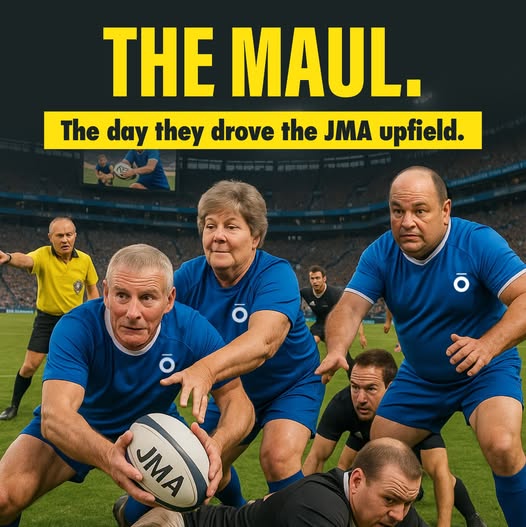
Last week, a satirical rugby-themed meme about the JMA decision vanished from Facebook –  and with it, the entire Lake Taupo account that posted it. For the record: I don’t know who they are.

The meme showed three Taupo District Council councillors in a rugby maul, ‘driving the JMA upfield’.  No swearing, no threats – just political lampooning of the kind magazines like Punch had been doing for nearly 200 years.

So why did it disappear? Not because it broke NZ law, or even any of Facebook’s own rules. More likely:

  • Moderators in California couldn’t tell satire from ‘harassment’.
  • A couple of complaints reframed it as a personal attack instead of political criticism.
  • Facebook’s system defaults to ‘remove first, maybe review later’ – but small-town politics 6000 miles away rarely gets that ‘later’.

That’s the danger. In the middle of a local election that is turning out to be quite interesting, controversial but lawful political speech can be erased with a click – leaving voters with a sanitised version of reality. And don’t get me started on our local Facebook community groups, where moderators ban and delete posts and comments as they please (is it surprising that several months ago I was inexpicably banned from the Tūrangi Noticeboard, whose admin just happens to be partnered with a Mayoral candidate?)

To prove the point, I’m reposting the meme above and this time with harmless cartoon faces, alongside it a Punch cartoon from the 1870s. A reminder that lampooning those in power is a sign of a healthy democracy, not a threat to it.

So if you want uncensored local coverage, stop relying on social media’s shifting rules and sign up for my weekly updates in the below subscription box.
No algorithms. No sudden deletions. No California filter. Just Taupō politics, as it really is.

And yes – if you’ve got satirical material worth sharing, please send it my way, and if it’s sharp enough I’ll post it. Democracy and this place called Taupo need more humour, not less of it. Because you know, that’s what life is also about.

Friday Wrap – This Council is Broken

15 August 2025

Councillor Duncan here once again, and now we’re heading into the front end of the election campaign some new faces are starting to appear. One of them, Māori ward candidate Wahine Murch, is calling for a revolution in democracy, governance, and leadership. I may not agree with her on everything, but on this point we’re aligned – this Council is a poor imitation of what it is meant to be for the people it purports to represent, and it has been going on for way too long. It is broken and needs to be rescued.

But talk is cheap, and especially at election time. Belief in good ideas is one thing – delivering under pressure is another. Voters should ask candidates, and especially incumbents who should have been evidencing this to you already: When did you last hold your ground against determined opposition? When did you stand apart from the herd? Walking the talk is harder than it looks, and if you dislike playground politics, you may dislike the reality of local government even more.

Meanwhile, Council is in near-hibernation because our illustrious Mayor apparently finds it too uncomfortable to meet and talk about any issues before the election. Still, a few things are going on:

Councillor Duncan speaks out – Here is my interview with Erica Harvey of Tauranga based Lobby For Good covers how local government protects itself from scrutiny – from both the public and elected members put in there to govern.

JMA sentiments continue to disturb This document sent to me by a constituent claims ~90% public opposition to the JMA was ignored. I can’t verify the author or data, but the gap between public concern and Council action is clear enough – and a good reason to keep pressing candidates on this. Oh, and we just have to make mention a very special Facebook post with the graphic below by an anonymous identity known as Lake Taupo which shows how much fun AI can be. However, it is quite apparent that some person(s) has reported it to Facebook as a rule breach (which it isn’t, because these are public figures and it is satire), because yesterday afternoon the Lake Taupo identity was deleted. I will probably do a fuller post about this next week, but let me tell you that censorship of that kind is one of the most insidious enemies of your local democracy and we should all be abhorring it. A California based company like Facebook cannot be relied upon to tell the difference.

Kaipara kicks back to the Treaty – Kaipara District Council has adopted an independent legal opinion on Māori obligations that avoids locking in governance  ‘partnerships’ not required by law, and some people aren’t very happy about it. In the past I have questioned some of the terminology in Taupō District Councils own planning documents, but have been abruptly flipped off with comments like: ‘go read some history’. It is quite clear to me now that statements in the Long Term Plan such as ‘Taupō District Council is committed to meeting its statutory Tiriti O Waitangi obligations and acknowledges partnership as the basis of Te Tiriti’ are there by political choice and not any legal necessity. Now that Kaipara has demonstrated that Councils can meet obligations without embedding partnerships into governance, I believe we should revisit these policies to reflect the law and the will of the whole community – and this has clear relevance to things like the proposed JMA partnership deal with Tūwharetoa Maori Trust Board.

Local government under the microscopeManagement consultant Kathryn Ennis-Carter offers us a blunt assessment of why change is urgently needed. Worth a listen, especially for any newbie candidates before they get thrown in the deep end.

Signs of silliness – New signs at Five Mile Bay remind people it’s illegal to drive on a footpath, which it always has been. Yet despite a five-page staff paper in May to justify why the signs are needed, people still do it – just amazing, isn’t it? Anyway if you come across such activity and you don’t like it happening, please just report it to the Police.

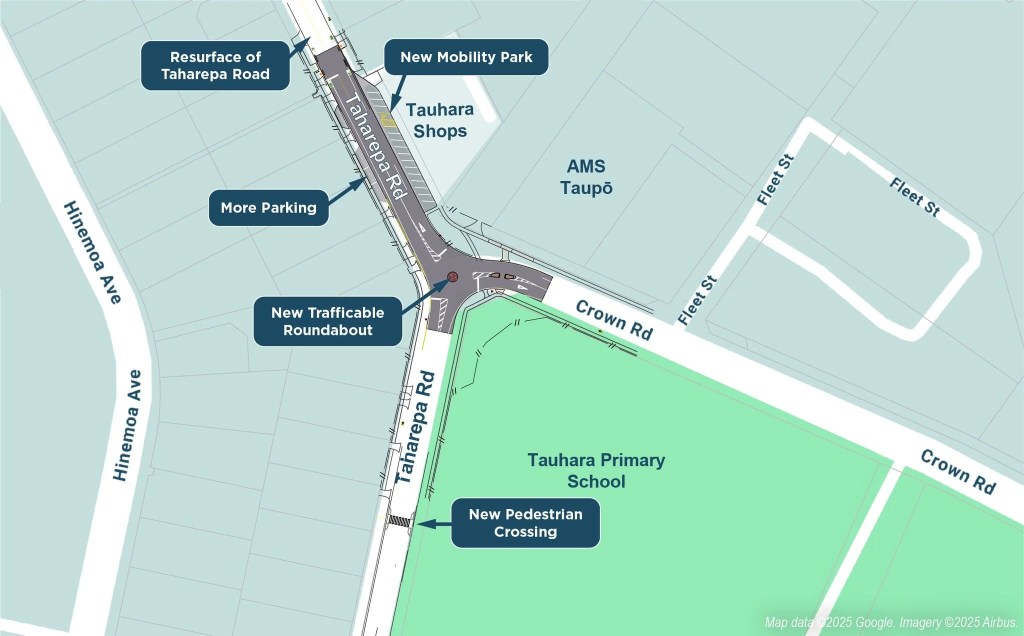
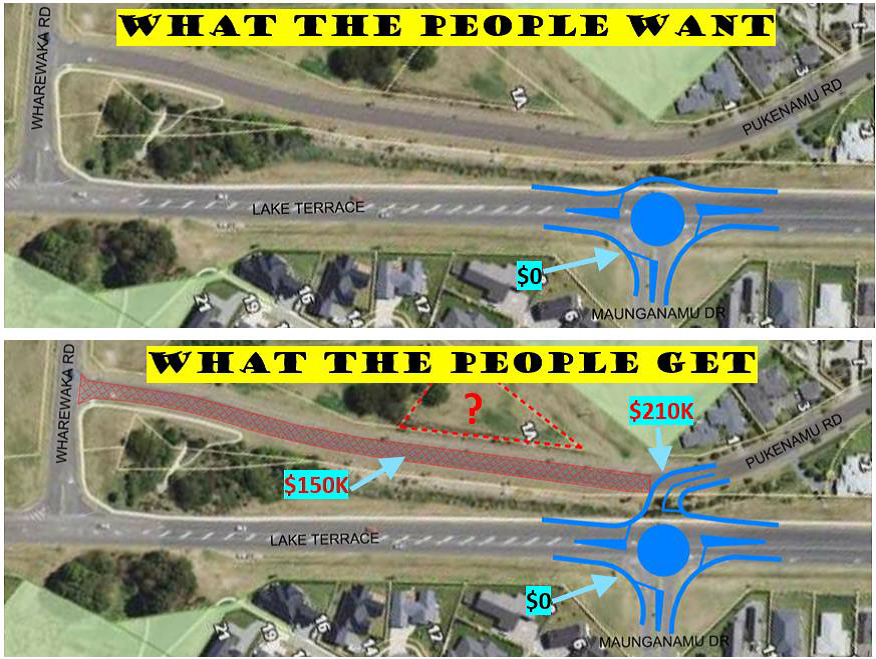
Roundabouts right, or roundabouts wrong?  Someone asked me about the two Council planned roundabouts the other day, and do they really have to be so expensive at $1.6 M and $3M apiece? The short answer is: No they don’t. To put into context, when I was a Council engineer at Waitakere City pop. 300K, I was in charge of an annual safety budget approx. $2M (2025 dollars) from which we would get at least a dozen projects including at least a few of this nature. Because civil engineering infrastructure like this contribute a mighty portion of Council debt, it is important to employ staff who really know their stuff, and I can’t help but also think that perhaps tools like rates caps would better motivate some lateral thinking.

Pukenamu pushes back – while we’re on the subject of roundabouts, the Environment Court has set a 9th September hearing date for constituent Ivan Jones’ challenge to the Pukenamu Rd roundabout. Back in January I called this exercise a $300K harassment of a residential street — and if it proceeds, it’s being submitted straight to the Taxpayers’ Union Jonesie Awards as an example of wasteful spending.

DIA financial snapshot – The Department of Internal Affairs has just released a set of financial metrics comparing councils nationwide. One figure that stands out for Taupō District Council is our revenue-to-operating-expenses ratio, which has dropped from 121% in 2022 to just 93% in 2024. In plain English, that would appear to mean that we’ve gone from a healthy surplus to barely breaking even – with not much buffer for unexpected costs. At election time, that should make you ask whether the current spending mix is sustainable, or whether we’re quietly setting ourselves up for either more debt or more rates hikes – yet one more argument for rates caps.

Taupo Airport rejig shelved – last month or so an initiative to change Taupo Airport to a full Council Control Organisation (CCO) with independent directors was squashed by several elected members including the Deputy Mayor even before they got to read the 95% prepared staff paper, I say quite transparently because it was felt that the predicted controversy might compromise their chances of getting re-elected. Yes kiddies that is how things work in this town, and I bet those same elected members are now wishing they did the same for the JMA.

Berms and bureaucracy – not that we are so short of space in the Taupo region and the soil is pretty awful anyway, but I think this Aucklander who took on the bureaucracy of Auckland Council to plant a garden on Council berm deserves a medal.  After all if you are expected to maintain it, why can’t you choose what grows there?

Fridays flippant fancy: Why can’t we be more like the French?

Friday Council Circus – Purple Sky Who Can Deny

8 August 2025

Councillor Duncan reporting again, this week we have:

JMA keeps on giving: Earlier in the week there was my JMA debrief, and here is the latest Duncan Garner interview with Christine Rankin on the hospital pass to the next Council along with a message from promising Mangakino electorate hopeful Hope Woodward. I believe this will remain a live election issue, and choose to believe that the majority of voters will act wisely if they are properly informed. Around here that hasn’t been happening for quite some time now, so I hope this JMA saga will be a blessing in disguise for some change to really happen.

Conflicted or conflated interests? An interesting blog put out by local Sophie Smith is inferring some conflicted interests with regard to Taupo District Councillors Danny Loughlin and Yvonne Westerman. Now this is a topic I have come to recognise as quite a grey area indeed. As far as I can tell, the only practical way that non-declared conflicts of interest for elected members get dealt with is: (i) by way of legal hindsight e.g. expensive judicial review; (ii) by way of independent legal foresight; or (iii) public humiliation to exert influence at the next election. On that note, I have submitted a complaint to the Auditor-General to investigate breach of conflict-of-interest obligations with regard to Councillor Danny Loughlin, who despite being a significant party to both sides of the JMA agreement did not recuse himself from the voting. Even though he declared himself not conflicted, just because I say the sky is purple doesn’t make it true either.

Road cone hotline: yes you heard that right, if you spot excessive road cone use anywhere in New Zealand there is now a hotline you can now call to make things right. So don’t be afraid to dob in Taupo District Council or NZTA for wasting your time and money.

Join the dots for your own Council: Department of Internal Affairs (DIA) has just released its long awaited financial metrics for you to be able to compare with other Councils around the country.  I haven’t looked at them yet and am no financial genius anyway, but there will be people out there giving it a crack – so why not have a go yourself?

Conspiracy to take over local government? For a good laugh, you might like to read this attempted hit piece on freedom movement tainted electoral hopefuls from the mainstream media that reads more like a campaign endorsement to me.

Need more money or just wiser decision-making? A new July 2025 report by consultants Martin Jenkins confirms what many locals already suspect: New Zealand’s councils are chronically underfunded compared to their international counterparts. While the report recommends more flexible financing tools and debt options, the real takeaway is this – councils are being asked to do more with less, often without telling the public what trade-offs are on the table. So now more than ever, if local government is to truly serve local people, we need stronger democratic guardrails, greater public input, and clearer political accountability. Did we see any of that during the recent JMA debacle?

Public forums for all to see?  I should probably mention that it is not normal for public forums at Taupo District Council to be recorded for public viewing as happens at many if not most other Councils in New Zealand. I believe it should be standard practice and have tried to argue the case before, but for the public forum at last weeks Council JMA meeting I made a specific request through the Mayor for this to happen. I think everyone deserves the same opportunity not just mayoral candidates or ex-CEO’s, and would like the practice to become standard. Because your voice matters too.

If you want to receive these updates or want others to also receive them, don’t forget to press the subscribe button below and do tell others to do the same.

Friday Art Corner: Truth Coming Out of Her Well by Jean-Léon Gérôme. To further explain: sometimes truth can offend and truth can hurt (that’s what the whip is for).

JMA Debrief

6 August 2025

The highly anticipated Council meeting to decide the fate of the draft Joint Management Agreement (JMA) was held last Thursday 31 July. The outcome – though not final- marks a critical juncture in what has become an increasingly controversial and politicised process.

It also draws a line in the sand for voters: how seriously do your current elected members take representative democracy? Based on the results, for many of them it is quite clearly: not very.

Decision: Deferment to the Next Council

After a packed and emotionally charged meeting, Council narrowly voted for Option 4: to defer the JMA decision to the incoming Council after the October election. This avoided immediate ratification of a flawed agreement, but failed to include any binding conditions. Therefore the door remains wide open for the next Council to proceed without public consultation or legal review.

A motion to make public consultation compulsory was supported only by Councillors Campbell, Rankin, Shepherd, Greenslade and Leonard – and opposed by Taylor, Williamson, Loughlin, Fletcher, Westerman, and Mayor Trewavas. Democracy lost that vote – so please take note.

The final votes on Option 4:

  • For deferment (Option 4): Mayor Trewavas, Councillors Campbell, Shepherd, Rankin, Greenslade & Leonard
  • Against (preferring adoption now): Councillors Taylor, Loughlin, Fletcher, Westerman & Williamson

The Strategic Dance of Deferral

Let’s be blunt: several councillors clearly voted strategically ahead of the election. For example:

The Mayor, who has consistently defended the JMA, now claims he voted to defer merely in order to ‘address public confusion’. Given that his was a deciding vote we can be grateful that expressed public wishes were at least heeded, but to me that just comes across as damage control and not wise or firm leadership.

The Deputy Mayor, who tabled Option 4 as his own idea to the rest of elected members just one week earlier, subsequently voted against it. That action seems less one of principle and more like election optics.

So can we please recognise that this decision wasn’t just about governance – it was also about some people hedging their bets for October.

Conflict of Interest – Councillor Danny Loughlin

Equally troubling was the participation of Councillor Danny Loughlin – a current Board Member of the Tūwharetoa Māori Trust Board, which is one half of the JMA agreement. Despite this fairly apparent non-financial conflict of interest, Councillor Loughlin did not recuse himself.

In the week or so leading to the vote, I requested two things from the CEO:

  1. That legal advice be provided in advance regarding potential conflict of interest issues of elected members; and
  2. That legal representation be present at the meeting if needed.

Both were refused, although I recently discovered that we did indeed have a Council lawyer present at the meeting (who didn’t pipe in to answer any questions).

Under the Local Authorities (Members’ Interests) Act 1968, Councillor Loughlin’s dual governance role appears to breach both ethical norms and legal expectations. Public trust in Council depends on both the appearance and reality of impartiality. This was neither.

Formal letters of complaint have now been submitted by myself to the CEO and Auditor-General, seeking a full investigation.

Legal Advice or Legal Disguise?

During the meeting I also did motion for an additional clause to be added to Option 4, so that Council:

Commissions an independent legal review of the draft JMA and makes it publicly available, with particular focus on:

(i) Conflicts of interest;

(ii) Legal implications of the expanded scope (LakeTaupō and ‘Further Matters’); and

(iii) Compatibility with national legislative changes including the RMA freeze“.

Perhaps confusing things though and a reason this motion did not receive support from any other elected members, earlier in the meeting a supposedly independent legal review from Buddle Findlay partner Paul Beverley was referenced in absentia. This previously unmentioned document was subsequently found to be a single-page memo only, which confirmed the JMA’s compliance with statutory requirements – but said nothing about risk, process integrity, or governance exposure. It was inferred in the meeting as ‘independent legal advice’ – but in practical terms functions more as a superficial legal cover than actual legal review.

It has now been confirmed that two law firms advised Council throughout this process: Buddle Findlay supported the internal drafting and negotiation of the JMA, while Simpson Grierson provided advice on the ‘assessment of significance and engagement’ – in other words, justifying why no public consultation was legally required. Neither firm was engaged to provide an independent review. Both operated within the Council’s mandate, not outside it. So if or when the public asked: ‘Who’s keeping this process honest?’ the uncomfortable answer is: No one. Council’s legal strategy wasn’t about testing risk, it was about minimizing pushback.

Contrast this with comparable cases:

Why is Taupō District Council being so reckless to settle for less? Perhaps you had better ask your elected members that question, because it won’t be them who picks up the expensive tab for any future legal challenges – it will be yourselves the ratepayer.

If any outsider or a future Council down the track is opposed to the JMA as signed up to in its current form, their best option could be to initiate a judicial review. This would challenge the legality of the agreement’s process, particularly the inclusion of non-mandatory provisions like the expansion to Lake Taupō and the vague but sweeping ‘Further Matters’ clauses. Clear weaknesses are if the public do not get consulted, and if any elected members are found to have conflicted interests. Legal costs of such an exercise could easily be in the six figures to both sides.

Public Input Dismissed

To make matters worse, the Mayor, Deputy Mayor, and senior staff framed the entire controversy as the product of ‘misinformation‘ and ‘public misunderstanding‘.

That is not only patronising – it’s dangerous. It dismisses over 500 pages of public correspondence as the confused rantings of an ignorant mob. Deputy Mayor Taylor mentioned that the views were ‘fairly evenly split’ – but that is a disingenuous claim, because around 100 templated submissions from TMTB arrived just one day prior to the meeting. In the weeks before, those in opposition outnumbered support by around ten to one.

What This Vote Really Means

This decision is a pause, not a solution. No conditions. No community assurance. No leadership.

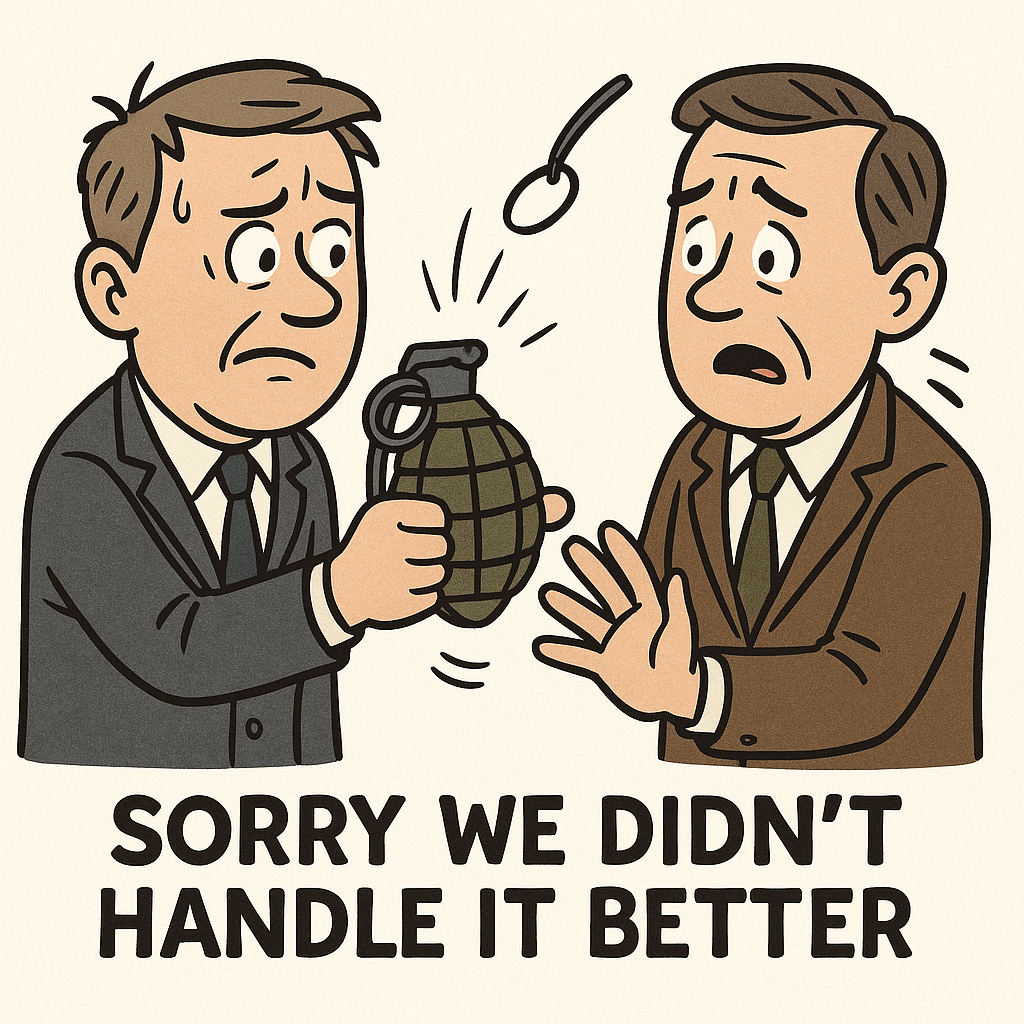
By deferring the JMA without requiring legal review or public consultation, the current Council has simply passed the political burden to whoever wins in October. It’s not a compromise – it’s a live grenade. Elected members could have made a real call to sign up to it, put it out for public consultation, or scrap it altogether and start again. Instead, temporary shelter has been taken in the delay, hoping public anger will cool and putting it onto the next Council to clean up the mess. That isn’t governance – it’s cowardice camouflaged as caution – and make no mistake, it will be costing you.

Mayor Trewavas could probably have deferred this decision months ago – just as Invercargill Mayor Nobby Clark did in a comparable case. He didn’t.

Instead, we witnessed a major policy vote held less than 24 hours before election nominations closed. That’s not just bad timing, it was arguably strategic. The public backlash which did happen was completely unexpected, primarily because the public wasn’t meant to even be fully aware of what was really going on.

This entire saga has laid bare how such a herculean effort is required to push back against a staff-led recommendation, crafted behind closed doors by those with all the resources and levers to control the narrative. That alone should be a very red flag. Now imagine what could happen when staff from a partnering corporate entity are embedded into Council operations, as was proposed and which so very nearly got signed off. Who do you think is driving policy then, and who’s left to scrutinise?

This isn’t over. The next chapter depends entirely on who voters choose to write it.

What’s Next?

  • Public scrutiny must stay high
  • Council candidates must be questioned
  • Transparency must be demanded from day one

As for me? I’ve witnessed more stupid and pre-meditated decision making in the past three years at this Council than I figure most endure in a lifetime, all wrapped in glorious red tape and presented to you as sane governance.

Friday Council Finale Finished Done

1 August 2025

Wow, what a past few weeks it has been in Council. Joint Management Agreement (JMA) antics have been happening all over the place (helpfully stirred up by yours truly), with candidate nominations for the October election closing midday today. A rule of thumb is apparently to never have major decisions like the JMA happening this close to an election, but I can see both sides to that argument – on the one hand it will be fresh in voters minds to hold existing Councillors directly accountable, but on the other you might see some distorted decision making for that very same reason. I believe we probably saw some of the later at play yesterday, and of the former we will just have to see. And I bet Mayor David Trewavas is now wishing he had emulated what Invercargill Mayor Nobby Clark did , and used his executive power to defer the decision well before it came to a head yesterday.

Anyway, let’s rattle through some of the week’s happenings:

JMA finally over…for now – I’ll be posting a fuller report next week, but for now can tell you that the JMA decision has been deferred for the next Council to grapple with after October.  But it was a packed Chambers with members of the public spilling out the door even half an hour before proceedings, and it was a close decision indeed.  I recommend watching the 17 min public forum of Topia Rameka (former CEO of TMTB) and Mayoral hopefuls Zane Cozens and John Funnell  – with Zane’s message being right on point about this saga being 100% a problem of Councils own making.  Full proceedings which lasted over 90 min are here.

Basketcase of Democracy – At yesterdays meeting the new Water Services Plan was also adopted by Council, myself being the only dissenting voice and substantially on a matter of principle:

“If these Council Chambers weren’t such a very much less than model of Democracy, I would have been given opportunity to express my own views in the so-called final debate on 24 June which lasted all of 20 minutes. Those were that a well-constructed Council Controlled Organisation (CCO) would probably have a better chance of being transparent and accountable to ratepayers, than the current very un-transparent and opaque in-house set-up that as far as I can tell is largely set to continue”.

Fewer road cones, or else – NZTA have developed a new guide to reduce the cost of traffic management and will start penalising Councils who don’t adhere . For those after a little more detail, see here.

Too late I’ve burnt my bridges alreadyInternal Affairs Minister Brooke van Velden proposes a bill to raise the current maximum allowable value of business dealings between a Councillor and their own Council from $25K to $100K.

Lawfare? Erika Harvey of Lobby For Good argues in this 30 min interview that nowadays you need to be wealthy to be able to influence your local Council. I reckon that is absolutely relevant for here in Taupo, and people who can’t afford to get lawyered up can be at their mercy – including elected members.

Head to head in Rotorua – The Rotorua mayoral race will be an interesting one I think, and from my observations Mayoral candidate and existing Councillor Robert Lee stands a more than fair chance against current Mayor Tania Tapsell. Watch this recent 10min interview where he talks rates, Iwi partnerships and his mayoral bid.

Not for me, this time anyway – After much reflection – and encouragement both to run and not to – I’ve decided not to stand for Mayor. My priority isn’t the chain of office, it’s protecting the public interest and making sure the next council serves the people and not The Machine. I believe that goal is best served by returning as an elected councillor – free to speak plainly, collaborate strategically (possibly could try a little harder at that), and ensure the next Mayor, whoever they are, is held to account by someone with their eyes open and sleeves rolled up. If one of the current leadership gets voted in then I know my job will be that much harder, so I am hoping one of the other Mayoral candidates Zane Cozens or John Funnell is successful.

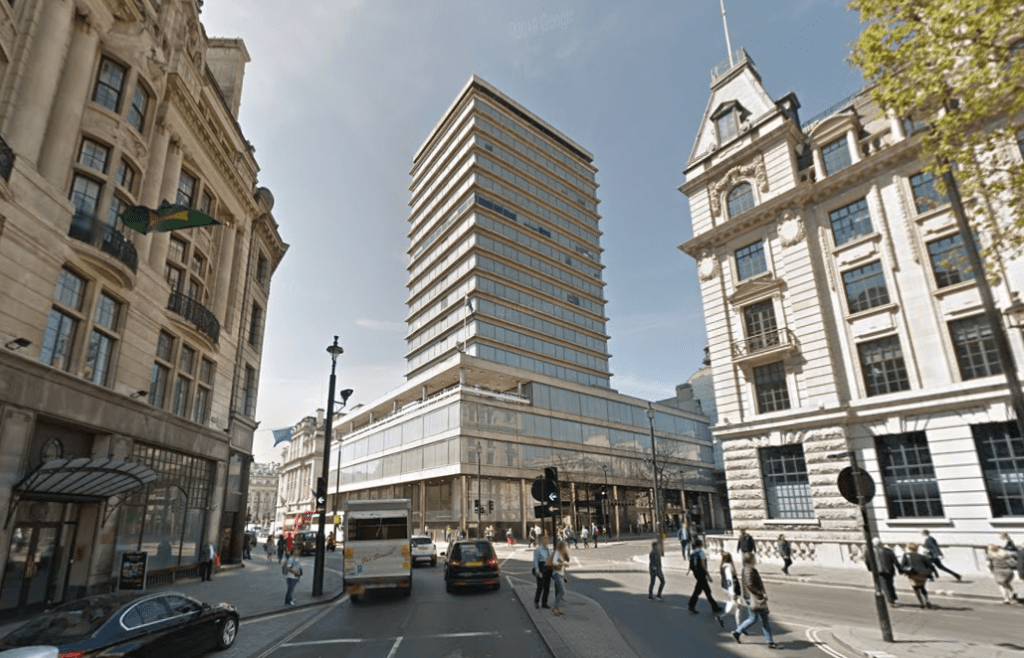
What’s my whakapapa?  For those interested, my forefathers arrived in New Zealand in the 1850’s from Scotland following the Highland Clearances, and came in a large group led by a Reverend Norman Mcleod first to Nova Scotia then onto Waipu.  My grandad Dick Campbell had a very illustrious career as a public servant, economist and diplomat with notable achievements including: saving the NZ economy during the Great Depression; negotiating trade deals with the Soviet Union; and roles as first chairman of the Public Service (1946) and acting High Commissioner to London (1958).  He was also instrumental in the planning of the controversial New Zealand House building in Haymarket, London which opened in 1963. And he had a great sense of humour, just like me.

Friday funny: Getting information out of Council shouldn’t be like this but it sometimes unfortunately is:

JMA decision draws near with continued opacity

29 July 2025

This Thursday 31 July, Taupō District Council will vote on whether to adopt the new Joint Management Agreement (JMA) with the Tūwharetoa Māori Trust Board (TMTB). The full agenda is available here

Despite growing public concern, the staff recommendation remains to adopt the agreement in full. A fourth option – deferring the decision until after the election – has now been added, but without any commitment to public consultation or independent legal review. I say that’s not a compromise, it’s kicking the can without accountability.

The JMA embeds significant co-governance over planning, consenting, and environmental functions—many of which directly intersect with the Resource Management Act (RMA). Yet just two weeks ago, the Government froze RMA plan changes due to legal instability. Council’s own policy paper (Attachment 4) makes no mention of this. Instead, it repeats that the JMA is ‘not significant’ enough to require public consultation.

It also claims that co-governance concerns are irrelevant, calling this ‘co-management’ instead. Whether that distinction holds water legally is questionable – but politically, omitting national legislative context and public concern is indefensible.

Council staff offer no updated legal analysis, no plain-English summary, and no consultation plan. The public is still being sidelined. And the public deserves legal clarity that isn’t filtered by politics or internal convenience – if this agreement is so robust, let it stand up to independent scrutiny.

I’ve also raised potential conflicts of interest involving two elected members with close family or governance ties to TMTB. The CEO’s response: ‘Up to each councillor‘ – technically accurate, but politically negligent – and potentially damaging in the event of judicial review.

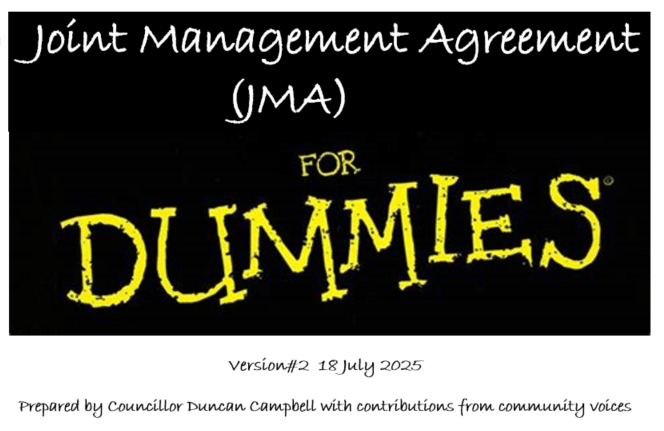
Meanwhile, staff say public feedback was ‘factually incorrect’ – referring to a Hobson’s Pledge newsletter – but offer no evidence. The referenced Attachment 5 isn’t a rebuttal, it’s an AI-generated summary that largely validates public concerns: lack of consultation, unclear governance shifts, and democratic erosion. If misinformation is being alleged, specifics so matter. Because without them, these claims look less like correction – and more like deflection. Also of note is that I circulated my JMA for Dummies to all councillors and senior staff explicitly asking for corrections – none were received.
This isn’t about obstruction – it’s about integrity, scrutiny, and public confidence. Council can and should pause this process, but only if it commits to doing the next part properly: with transparency, legal independence, and plain-English public consultation. Because anything less won’t just disappoint – it will fail the test of democracy.

And sometimes, good intentions just aren’t enough.