JMA Debrief

6 August 2025

The highly anticipated Council meeting to decide the fate of the draft Joint Management Agreement (JMA) was held last Thursday 31 July. The outcome – though not final- marks a critical juncture in what has become an increasingly controversial and politicised process.

It also draws a line in the sand for voters: how seriously do your current elected members take representative democracy? Based on the results, for many of them it is quite clearly: not very.

Decision: Deferment to the Next Council

After a packed and emotionally charged meeting, Council narrowly voted for Option 4: to defer the JMA decision to the incoming Council after the October election. This avoided immediate ratification of a flawed agreement, but failed to include any binding conditions. Therefore the door remains wide open for the next Council to proceed without public consultation or legal review.

A motion to make public consultation compulsory was supported only by Councillors Campbell, Rankin, Shepherd, Greenslade and Leonard – and opposed by Taylor, Williamson, Loughlin, Fletcher, Westerman, and Mayor Trewavas. Democracy lost that vote – so please take note.

The final votes on Option 4:

  • For deferment (Option 4): Mayor Trewavas, Councillors Campbell, Shepherd, Rankin, Greenslade & Leonard
  • Against (preferring adoption now): Councillors Taylor, Loughlin, Fletcher, Westerman & Williamson

The Strategic Dance of Deferral

Let’s be blunt: several councillors clearly voted strategically ahead of the election. For example:

The Mayor, who has consistently defended the JMA, now claims he voted to defer merely in order to ‘address public confusion’. Given that his was a deciding vote we can be grateful that expressed public wishes were at least heeded, but to me that just comes across as damage control and not wise or firm leadership.

The Deputy Mayor, who tabled Option 4 as his own idea to the rest of elected members just one week earlier, subsequently voted against it. That action seems less one of principle and more like election optics.

So can we please recognise that this decision wasn’t just about governance – it was also about some people hedging their bets for October.

Conflict of Interest – Councillor Danny Loughlin

Equally troubling was the participation of Councillor Danny Loughlin – a current Board Member of the Tūwharetoa Māori Trust Board, which is one half of the JMA agreement. Despite this fairly apparent non-financial conflict of interest, Councillor Loughlin did not recuse himself.

In the week or so leading to the vote, I requested two things from the CEO:

  1. That legal advice be provided in advance regarding potential conflict of interest issues of elected members; and
  2. That legal representation be present at the meeting if needed.

Both were refused, although I recently discovered that we did indeed have a Council lawyer present at the meeting (who didn’t pipe in to answer any questions).

Under the Local Authorities (Members’ Interests) Act 1968, Councillor Loughlin’s dual governance role appears to breach both ethical norms and legal expectations. Public trust in Council depends on both the appearance and reality of impartiality. This was neither.

Formal letters of complaint have now been submitted by myself to the CEO and Auditor-General, seeking a full investigation.

Legal Advice or Legal Disguise?

During the meeting I also did motion for an additional clause to be added to Option 4, so that Council:

Commissions an independent legal review of the draft JMA and makes it publicly available, with particular focus on:

(i) Conflicts of interest;

(ii) Legal implications of the expanded scope (LakeTaupō and ‘Further Matters’); and

(iii) Compatibility with national legislative changes including the RMA freeze“.

Perhaps confusing things though and a reason this motion did not receive support from any other elected members, earlier in the meeting a supposedly independent legal review from Buddle Findlay partner Paul Beverley was referenced in absentia. This previously unmentioned document was subsequently found to be a single-page memo only, which confirmed the JMA’s compliance with statutory requirements – but said nothing about risk, process integrity, or governance exposure. It was inferred in the meeting as ‘independent legal advice’ – but in practical terms functions more as a superficial legal cover than actual legal review.

It has now been confirmed that two law firms advised Council throughout this process: Buddle Findlay supported the internal drafting and negotiation of the JMA, while Simpson Grierson provided advice on the ‘assessment of significance and engagement’ – in other words, justifying why no public consultation was legally required. Neither firm was engaged to provide an independent review. Both operated within the Council’s mandate, not outside it. So if or when the public asked: ‘Who’s keeping this process honest?’ the uncomfortable answer is: No one. Council’s legal strategy wasn’t about testing risk, it was about minimizing pushback.

Contrast this with comparable cases:

Why is Taupō District Council being so reckless to settle for less? Perhaps you had better ask your elected members that question, because it won’t be them who picks up the expensive tab for any future legal challenges – it will be yourselves the ratepayer.

If any outsider or a future Council down the track is opposed to the JMA as signed up to in its current form, their best option could be to initiate a judicial review. This would challenge the legality of the agreement’s process, particularly the inclusion of non-mandatory provisions like the expansion to Lake Taupō and the vague but sweeping ‘Further Matters’ clauses. Clear weaknesses are if the public do not get consulted, and if any elected members are found to have conflicted interests. Legal costs of such an exercise could easily be in the six figures to both sides.

Public Input Dismissed

To make matters worse, the Mayor, Deputy Mayor, and senior staff framed the entire controversy as the product of ‘misinformation‘ and ‘public misunderstanding‘.

That is not only patronising – it’s dangerous. It dismisses over 500 pages of public correspondence as the confused rantings of an ignorant mob. Deputy Mayor Taylor mentioned that the views were ‘fairly evenly split’ – but that is a disingenuous claim, because around 100 templated submissions from TMTB arrived just one day prior to the meeting. In the weeks before, those in opposition outnumbered support by around ten to one.

What This Vote Really Means

This decision is a pause, not a solution. No conditions. No community assurance. No leadership.

By deferring the JMA without requiring legal review or public consultation, the current Council has simply passed the political burden to whoever wins in October. It’s not a compromise – it’s a live grenade. Elected members could have made a real call to sign up to it, put it out for public consultation, or scrap it altogether and start again. Instead, temporary shelter has been taken in the delay, hoping public anger will cool and putting it onto the next Council to clean up the mess. That isn’t governance – it’s cowardice camouflaged as caution – and make no mistake, it will be costing you.

Mayor Trewavas could probably have deferred this decision months ago – just as Invercargill Mayor Nobby Clark did in a comparable case. He didn’t.

Instead, we witnessed a major policy vote held less than 24 hours before election nominations closed. That’s not just bad timing, it was arguably strategic. The public backlash which did happen was completely unexpected, primarily because the public wasn’t meant to even be fully aware of what was really going on.

This entire saga has laid bare how such a herculean effort is required to push back against a staff-led recommendation, crafted behind closed doors by those with all the resources and levers to control the narrative. That alone should be a very red flag. Now imagine what could happen when staff from a partnering corporate entity are embedded into Council operations, as was proposed and which so very nearly got signed off. Who do you think is driving policy then, and who’s left to scrutinise?

This isn’t over. The next chapter depends entirely on who voters choose to write it.

What’s Next?

  • Public scrutiny must stay high
  • Council candidates must be questioned
  • Transparency must be demanded from day one

As for me? I’ve witnessed more stupid and pre-meditated decision making in the past three years at this Council than I figure most endure in a lifetime, all wrapped in glorious red tape and presented to you as sane governance.
Friday Council Finale Finished Done

1 August 2025

Wow, what a past few weeks it has been in Council. Joint Management Agreement (JMA) antics have been happening all over the place (helpfully stirred up by yours truly), with candidate nominations for the October election closing midday today. A rule of thumb is apparently to never have major decisions like the JMA happening this close to an election, but I can see both sides to that argument – on the one hand it will be fresh in voters minds to hold existing Councillors directly accountable, but on the other you might see some distorted decision making for that very same reason. I believe we probably saw some of the later at play yesterday, and of the former we will just have to see. And I bet Mayor David Trewavas is now wishing he had emulated what Invercargill Mayor Nobby Clark did , and used his executive power to defer the decision well before it came to a head yesterday.

Anyway, let’s rattle through some of the week’s happenings:

JMA finally over…for now – I’ll be posting a fuller report next week, but for now can tell you that the JMA decision has been deferred for the next Council to grapple with after October.  But it was a packed Chambers with members of the public spilling out the door even half an hour before proceedings, and it was a close decision indeed.  I recommend watching the 17 min public forum of Topia Rameka (former CEO of TMTB) and Mayoral hopefuls Zane Cozens and John Funnell  – with Zane’s message being right on point about this saga being 100% a problem of Councils own making.  Full proceedings which lasted over 90 min are here.

Basketcase of Democracy – At yesterdays meeting the new Water Services Plan was also adopted by Council, myself being the only dissenting voice and substantially on a matter of principle:

“If these Council Chambers weren’t such a very much less than model of Democracy, I would have been given opportunity to express my own views in the so-called final debate on 24 June which lasted all of 20 minutes. Those were that a well-constructed Council Controlled Organisation (CCO) would probably have a better chance of being transparent and accountable to ratepayers, than the current very un-transparent and opaque in-house set-up that as far as I can tell is largely set to continue”.

Fewer road cones, or else – NZTA have developed a new guide to reduce the cost of traffic management and will start penalising Councils who don’t adhere . For those after a little more detail, see here.

Too late I’ve burnt my bridges alreadyInternal Affairs Minister Brooke van Velden proposes a bill to raise the current maximum allowable value of business dealings between a Councillor and their own Council from $25K to $100K.

Lawfare? Erika Harvey of Lobby For Good argues in this 30 min interview that nowadays you need to be wealthy to be able to influence your local Council. I reckon that is absolutely relevant for here in Taupo, and people who can’t afford to get lawyered up can be at their mercy – including elected members.

Head to head in Rotorua – The Rotorua mayoral race will be an interesting one I think, and from my observations Mayoral candidate and existing Councillor Robert Lee stands a more than fair chance against current Mayor Tania Tapsell. Watch this recent 10min interview where he talks rates, Iwi partnerships and his mayoral bid.

Not for me, this time anyway – After much reflection – and encouragement both to run and not to – I’ve decided not to stand for Mayor. My priority isn’t the chain of office, it’s protecting the public interest and making sure the next council serves the people and not The Machine. I believe that goal is best served by returning as an elected councillor – free to speak plainly, collaborate strategically (possibly could try a little harder at that), and ensure the next Mayor, whoever they are, is held to account by someone with their eyes open and sleeves rolled up. If one of the current leadership gets voted in then I know my job will be that much harder, so I am hoping one of the other Mayoral candidates Zane Cozens or John Funnell is successful.

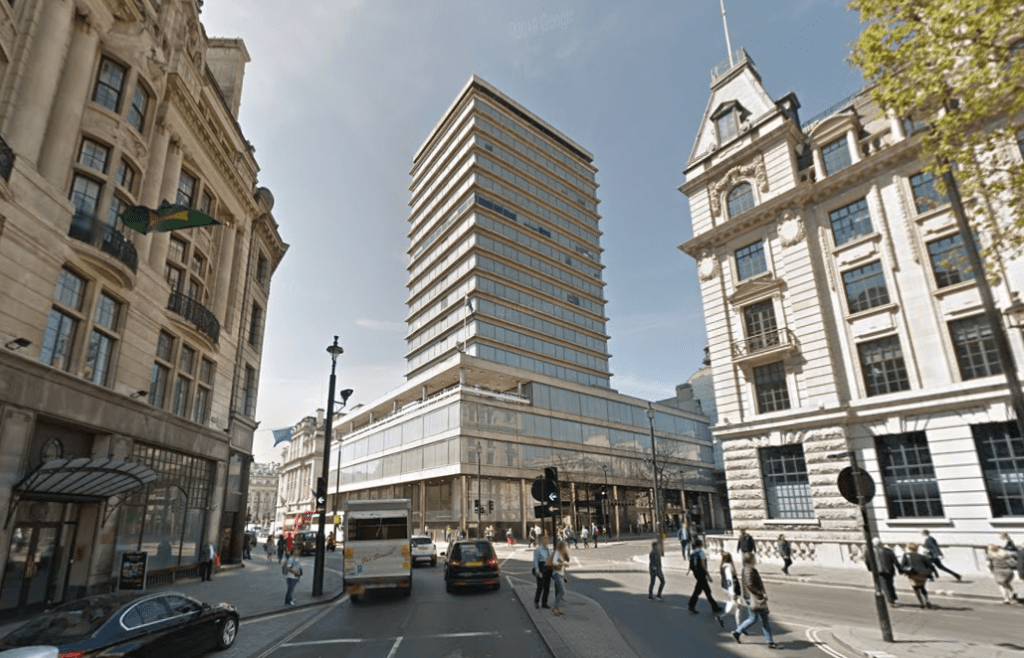
What’s my whakapapa?  For those interested, my forefathers arrived in New Zealand in the 1850’s from Scotland following the Highland Clearances, and came in a large group led by a Reverend Norman Mcleod first to Nova Scotia then onto Waipu.  My grandad Dick Campbell had a very illustrious career as a public servant, economist and diplomat with notable achievements including: saving the NZ economy during the Great Depression; negotiating trade deals with the Soviet Union; and roles as first chairman of the Public Service (1946) and acting High Commissioner to London (1958).  He was also instrumental in the planning of the controversial New Zealand House building in Haymarket, London which opened in 1963. And he had a great sense of humour, just like me.

Friday funny: Getting information out of Council shouldn’t be like this but it sometimes unfortunately is:

JMA decision draws near with continued opacity

29 July 2025

This Thursday 31 July, Taupō District Council will vote on whether to adopt the new Joint Management Agreement (JMA) with the Tūwharetoa Māori Trust Board (TMTB). The full agenda is available here

Despite growing public concern, the staff recommendation remains to adopt the agreement in full. A fourth option – deferring the decision until after the election – has now been added, but without any commitment to public consultation or independent legal review. I say that’s not a compromise, it’s kicking the can without accountability.

The JMA embeds significant co-governance over planning, consenting, and environmental functions—many of which directly intersect with the Resource Management Act (RMA). Yet just two weeks ago, the Government froze RMA plan changes due to legal instability. Council’s own policy paper (Attachment 4) makes no mention of this. Instead, it repeats that the JMA is ‘not significant’ enough to require public consultation.

It also claims that co-governance concerns are irrelevant, calling this ‘co-management’ instead. Whether that distinction holds water legally is questionable – but politically, omitting national legislative context and public concern is indefensible.

Council staff offer no updated legal analysis, no plain-English summary, and no consultation plan. The public is still being sidelined. And the public deserves legal clarity that isn’t filtered by politics or internal convenience – if this agreement is so robust, let it stand up to independent scrutiny.

I’ve also raised potential conflicts of interest involving two elected members with close family or governance ties to TMTB. The CEO’s response: ‘Up to each councillor‘ – technically accurate, but politically negligent – and potentially damaging in the event of judicial review.

Meanwhile, staff say public feedback was ‘factually incorrect’ – referring to a Hobson’s Pledge newsletter – but offer no evidence. The referenced Attachment 5 isn’t a rebuttal, it’s an AI-generated summary that largely validates public concerns: lack of consultation, unclear governance shifts, and democratic erosion. If misinformation is being alleged, specifics so matter. Because without them, these claims look less like correction – and more like deflection. Also of note is that I circulated my JMA for Dummies to all councillors and senior staff explicitly asking for corrections – none were received.

This isn’t about obstruction – it’s about integrity, scrutiny, and public confidence. Council can and should pause this process, but only if it commits to doing the next part properly: with transparency, legal independence, and plain-English public consultation. Because anything less won’t just disappoint – it will fail the test of democracy.

And sometimes, good intentions just aren’t enough.

Friday Council Update: Mayhem and The Madness

25 July 2025

Councillor Duncan here with your Friday Council round-up.

Politics never used to interest me much, and office politics even less. I left corporate life in 2015 for freedom and not committees, so how on earth did I end up here? Because after moving to Taupō, my engineering brain concluded that if you want something fixed, you can’t just complain about it – you have to get your hands dirty.  I don’t regret that decision at all, but I’ll be honest: the path forward after October is looking pretty murky.

The future of Mayor David Trewavas is uncertain in the wake of the JMA fallout. So far, only Zane Cozens is officially in the race, but I’m aware of at least two serious contenders waiting in the wings, and yes – some are encouraging me to also throw my hat in the ring. But the mayoralty is no small job, the pay’s fine but it’s not about the money – it’s about whether you believe you can steer the ship any better than the other guy or gal.

Meanwhile, things in Council chambers have gotten… strange. The Mayor has without explanation abruptly cancelled our regular Tuesday elected member meetings until after the election. I’ve never been a fan of those closed-door catchups anyway, but the timing feels off. There seems to be some acrimony in the air, or is it just me?

Anyway, to the updates:

Let’s Go Taupō Public Meeting – Right On!

On Monday night, Hope Woodward, Ann Tweedy, and Rebecca Stafford of the Let’s Go Taupo team hosted a powerful evening on rates, debt, and the need for change.

  • Hope called for people-first leadership and questioned inflated priorities (for original video see here).
  • Ann exposed the compounding rate hikes and the illusion of fiscal responsibility.
  • Rebecca broke down unsustainable debt ratios and the lack of transparency.
  • Myself also proposed smarter alternatives to overblown infrastructure and called for a culture shift from spending back to service (transcript here).

The vibe was serious but hopeful. Taupō people seem to be waking up, and are tired of being treated like they’re not – finally. Watch the entire meeting here: Part 1 | Part 2

JMA Update – Vote Looms but Questions Remain

The agenda for the 31 July Council meeting is now out, with staff still recommending we adopt the JMA in full. We now are presented with an Option 4 to defer until after the election – which sounds like a compromise, but without commitments to public consultation or independent legal review, I say that deferral is just kicking the can. I’ve also raised concerns about:

  • The Govt’s recent freeze on RMA plan changes,
  • Potential conflicts of interest involving some elected members closely linked to TMTB.

The responses so far? Vague or none at all, and no doubt you’ll probably be hearing more about this topic before the meeting next Thursday.

Trees Get Real Democracy (even if you don’t)

This week, Council spent nearly 40 minutes debating the fate of a few trees in Ferney Place Reserve. The original request? Topping them to improve mountain views for a resident 500m away who is prepared to pay.

The outcome? A full-on misfire, staff treating it as a removal request, and a debate that took twice as long as approving a multi-million-dollar water reform initiative.
The verdict? The trees are staying – for now anyway. Watch it here, much better than anything on Netflix.

Lake Terrace Silver Birches – Going, going, gone

As for the three silver birch trees being removed this week from Lake Terrace, I didn’t support it back in May due to insufficient information and posted my reasons at the time here

LGNZ Decision Clarified

Contrary to earlier reports, Waikato Regional Council is staying with LGNZ—but just barely.

Enrolment Reminder

Not yet enrolled to vote? Deadline is 31 July. Especially for non-resident ratepayers of whom too few take advantage – this is your chance to be heard so enrol here

Tools for the Troublemakers

Looking to challenge authority more effectively? These Council run workshops next week cover information about how to form an incorporated society – which can limit your legal exposure in a dispute with Council or government. Know your rights and get informed.

Friday Funny (or is it?)

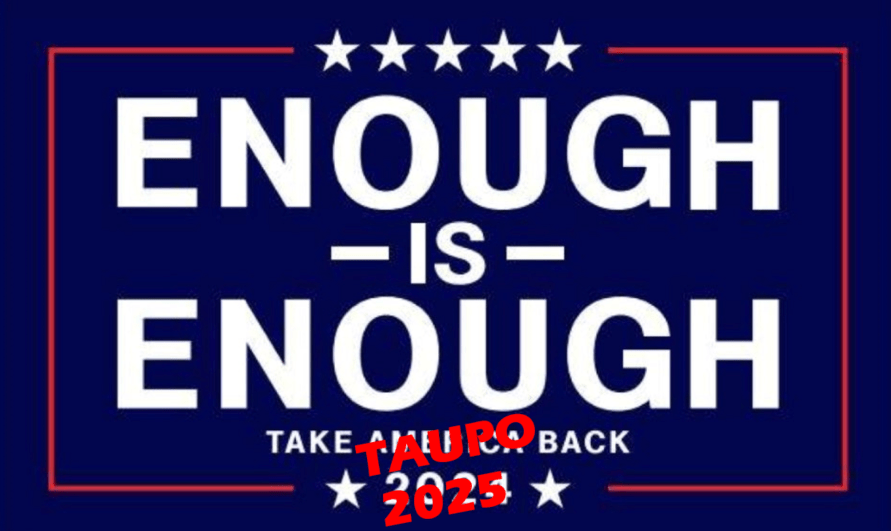
I didn’t make this AI image and probably shouldn’t post it, but it’s already doing the rounds so what the heck.

Humour aside, if it’s hinting at something deeper – a merging of performance, power, and perception – then what does that say about local politics in Taupō?

Friday Council Countdown

18 July 2025

Councillor Duncan of Taupo District Council again, and these Friday posts may be a regular thing for a while because there is a lot happening in the enthralling space of local government right now:

REALLY?  We have the monthly meeting of the ‘Tree committee’ next Tuesday 22 July (my shorthand for the Taupo Roads and Reserves Committee).  This time we have a six-page staff report that recommends declining a resident request for removal of several large trees on a reserve some 500 metres away from their property to improve their view of the mountain.  I am not sure what intrigues me the most – that anyone could be so bold to even ask, or that this Council feels itself so obliged to seriously entertain.  I look forward to lengthy and vigorous debate on this matter of great importance.

STOP!  Some unsafe roundabout designs are currently being tendered for construction by the engineers at Taupo District Council, the two locations being Crown Road / Taharepa Road and Tauhara Road / Taharepa Road.  Don’t get me wrong, these are good places for a roundabout – but one of these designs if not amended I am 100% sure will result in some pretty poor road safety outcomes. On this you will just have to trust me because I do it for a living, so keeping an eye on it.  

ABOUT BLEEDING TIME: Local government minister Simon Watts introduces the Local Government Amendment Bill to Parliament which includes rates caps and stronger transparency and accountability measures, see: Bill to ‘refocus’ councils enters Parliament – Inside Government NZ

ADVICE WITH A WARNING: To any budding candidates for the coming local body election, I offer you this insightful 9 min piece of advice from Christchurch Councillor of 18 years Sue Wells.  However BE WARNED: as helpful as this message is no doubt intended, this message is calibrated to moderate the ambition of any elected member who might dare to challenge the status quo – so please don’t be entirely like her.  See: What to expect when you’re elected – a beginner’s guide for local government candidates by Sue Wells

SORRY BUT YOU HAVE TO PAY ANYWAY: Former Taupo District Council CEO Gareth Green apologies for the unforeseen additional 3% rates increase:  Independent review of New Plymouth District Council plan finds significant errors | The Post

A NEW LOW – Mayor Trewavas & Councillors Taylor, Westerman & Fletcher all attended the Local Government New Zealand (LGNZ) Superlocal annual conference in Christchurch 16 & 17 July.  Sounds like there was a bit of excitement with some protests outside:  Local Government New Zealand Hits New Low | Scoop News

EXPOSE: Find out yourself: What Is the Tūwharetoa Māori Trust Board, Really?

JMA SAGA KEEPS ON GIVING: The July 31 Council meeting when this all gets decided draws nearer, and Councillors continue to receive communications from concerned citizens daily.  Here are a few recent news items including an interview of Christine Rankin who also encourages people to start giving a damn this next local body election; Public turnout high for JMA workshop and also of relevance: Government to stop Council plan changes | Beehive.govt.nz

IS THAT EVEN ALLOWED? Against the wishes of the Council CEO but for greater transparency, I am releasing a copy of the 26 June staff assessment which concluded that public consultation for the JMA is not required.  

PUBLIC MEETING: This MONDAY 21st July 6.30pmish at the REAP Centre with the theme of 𝐖𝐡𝐲 𝐀𝐫𝐞 𝐑𝐚𝐭𝐞𝐬 𝐑𝐢𝐬𝐢𝐧𝐠? Speakers include myself and a bunch of others, flyer will follow so keep an eye out.

FRIDAY FUNNY: What do you think of the next ratepayer funded contribution to the Taupo Sculpture Trail:  The 𝐓𝐇𝐄𝐒𝐀𝐔𝐑𝐔𝐒?

Still Missing in Action: Public Consultation on the JMA

7 July 2025

Thank you to everyone who turned up or tuned in to last Thursday’s Council workshop on the draft Joint Management Agreement (JMA). The public gallery was packed, and clearly this issue has touched a nerve—not just locally, but nationally too. But before another week rolls over this issue, let’s pause and look closer—because the fine print always matters.

Let’s be clear: no final decision has been made yet. But what concerns me—and many others—is the way this process has unfolded. The 2025 draft agreement expands the scope of the 2009 JMA considerably, yet it was progressing quietly behind closed doors. Only when outside attention was forced upon it did this matter finally surface in a more visible way.

Unfortunately, some of the information now coming from Council leadership is adding to confusion. For example:

  • The Mayor erroneously stated in a recent media interview that the JMA would help clean up emergency spills into Lake Taupō. In reality, this is a Regional Council responsibility—just like the threatened gold clam invasion. These are pointedly not covered by the JMA, even though they easily could be if that were the goal. In fact, as a purported mechanism for keeping Lake Taupō clean and green, I have doubts that this JMA contributes anything too meaningful.
  • He also referred to Lake Taupō as a “private lake,” which is not only legally debatable but contextually misleading.
  • The Mayor claimed the 2009 JMA was never consulted on. Yet records indicate it arose from a series of public hui and community engagement processes connected to the 2005 plan change. It may not have met a strict legal definition of consultation, but it certainly reflected a more community-facing era.

Another point worth clarifying: It’s often claimed that iwi or Māori entities own 60–65% of the land in the district, including the lakebed. However, the most reliable figure available for communally owned Māori land is closer to 35%, even with Lake Taupō included. In terms of financial contribution, this equated to just 4.15% of total Council rates intake in 2023/24. That gap between land ownership and fiscal input is worth bearing in mind when we talk about “partnership”.

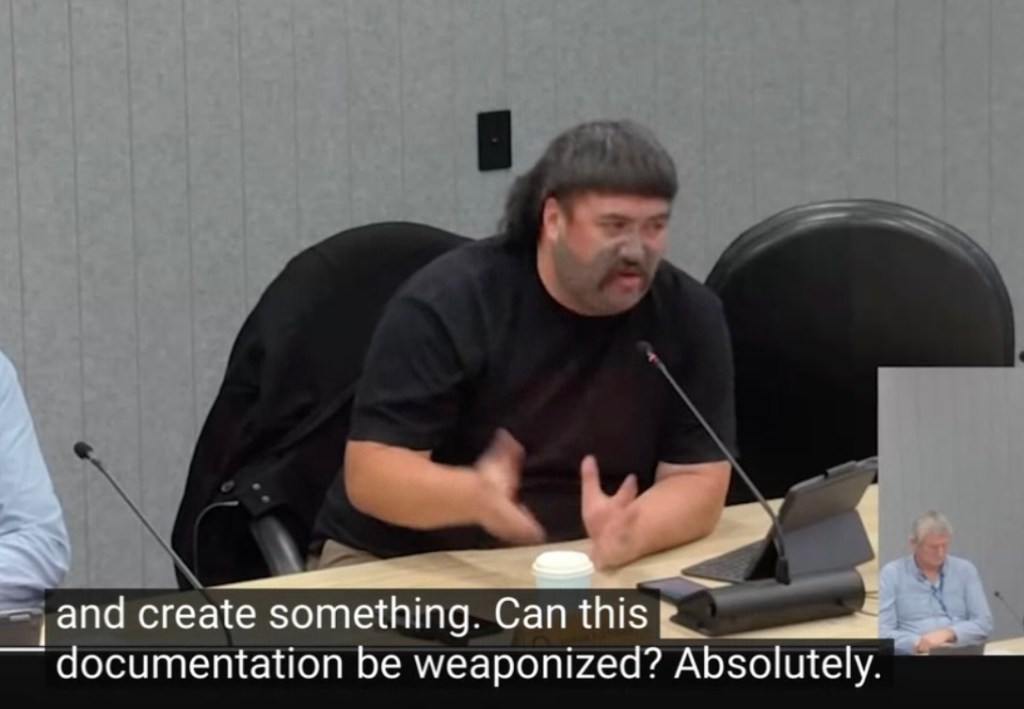
And then there are the words of one of our own councillors, spoken at the workshop itself:

“Can this documentation be weaponized? Absolutely.”

That should raise more than eyebrows. It should raise accountability.

Bottom line: If the public is confused, they should be invited in—not shut out. If the agreement is sound, it should stand up to scrutiny. But if it contains embedded obligations or shifts in governance, then we owe it to Taupō residents to test that publicly—before it gets signed, not after.

Council staff say that doesn’t need to happen. I disagree.

The JMA will be tabled for decision at the next full Council meeting on 31 July. Councillors will have three choices:

  1. Sign the agreement by majority vote
  2. Defer it until after the election
  3. Open it up for public consultation

You can read the source material for yourself here:

Recent media coverage: here, here & here

As always, I welcome feedback directly—respectful disagreement included.

Let’s not sleepwalk into a governance shift without the public’s eyes wide open. 

“Let’s be careful out there” – and not just on the streets.